
The knowledge keepers: Indigenous women leading forest governance on five continents
Day of the World's Indigenous Peoples
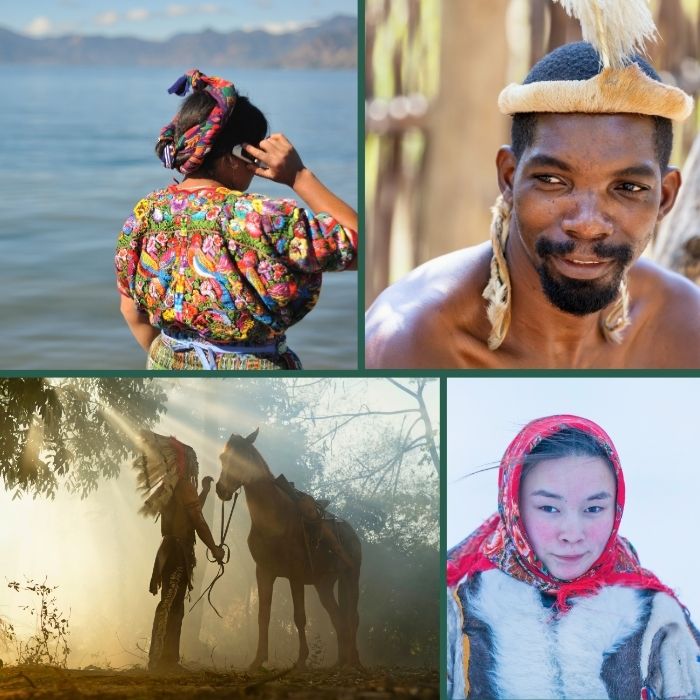
On the International Day of the World’s Indigenous Peoples, we honour Indigenous women protecting forests and shaping a sustainable future. In collaboration with the Forest Stewardship Council (FSC), we share 5 inspiring stories of women whose leadership and knowledge are creating lasting impact.
August 6, 2026
A river that purifies. A community whose very name means ‘caretakers of the forest.’ A word – inayan – that teaches that whatever we do has consequences. Around the world, Indigenous women are leading forest governance in courtrooms, committees, and communities, carrying knowledge passed down through generations.
Marking the International Day of the World’s Indigenous Peoples on 9 August, and as part of FSC’s Where Women Took the Forest campaign, we spoke with six women from five continents about identity, leadership, and the forests they call home. Their words are below, as told to FSC.
Minnie Degawan (Kankanaey-Igorot, Philippines), Managing Director of the FSC Indigenous Foundation · Tolita Davis-Angeles (Cobble Cobble, Barunggam Nation, Australia), Chair of the FSC First Nations Committee and founder of Gandan Yarnings · Sara Omi Casamá (Emberá, Panamá), lawyer and president of the Territorial Women Leaders of Mesoamerica · Peggy Smith (Miskwaanakwadook, Red Cloud Woman; Cree ancestry, Canada), member of the FSC Canada Indigenous Chamber · Cindy Kobei (Ogiek, Kenya), lawyer and advocate for Indigenous Peoples’ rights · Yu-An Chen (Iupi’i ’akuyayana; Tsou Tribe, Chinese Taipei), Chairperson, Chiayi County Alishan Indigenous Tfuya Community Cooperative.
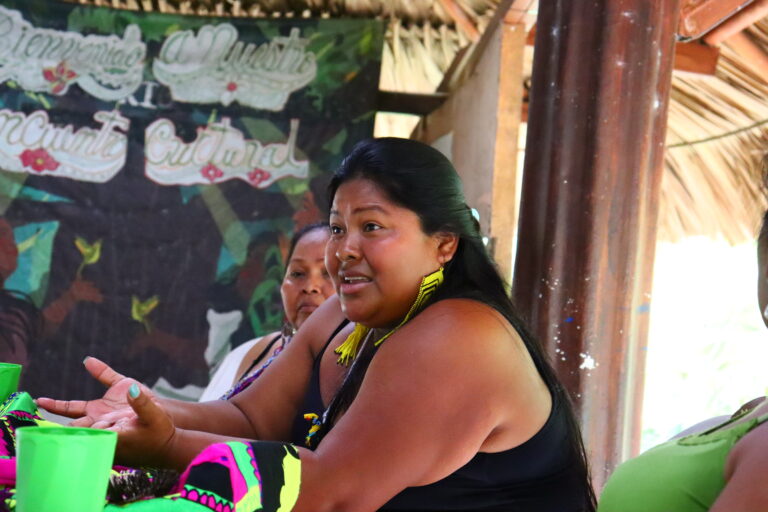
Sara Omi Casamá (Embera, Panama)
What the forest means
Ask six women from six peoples on five continents the same question: what does the forest mean to you? And you hear six answers, and one.
Degawan: “When I go into the forest, I feel complete, because I’m in something of which I am a part. In truth it is a symbiotic relationship where we need the forest, and the forest needs us.”
Davis-Angeles: “The feeling of being on Country [the Aboriginal English expression for ancestral lands and one’s living connection to them] means everything to me. It’s the one place I feel completely whole, safe, content, connected. I never feel lost there, because I know the forest will show me the way home.”
Omi Casamá: “The forest is a place of tranquility; it’s like being at peace. What I like most about the forest is the river. I feel that the river purifies me, soothes me, and gives me the energy I need to continue on this path.”
Smith: “I remember once an Anishinaabe elder, a very wise woman, said to me, ‘If you’re looking for guidance, go to the forest and sit. Just be there, and the answers will come to you.’ And it’s true, the forest brings me peace, relaxation, and answers.”
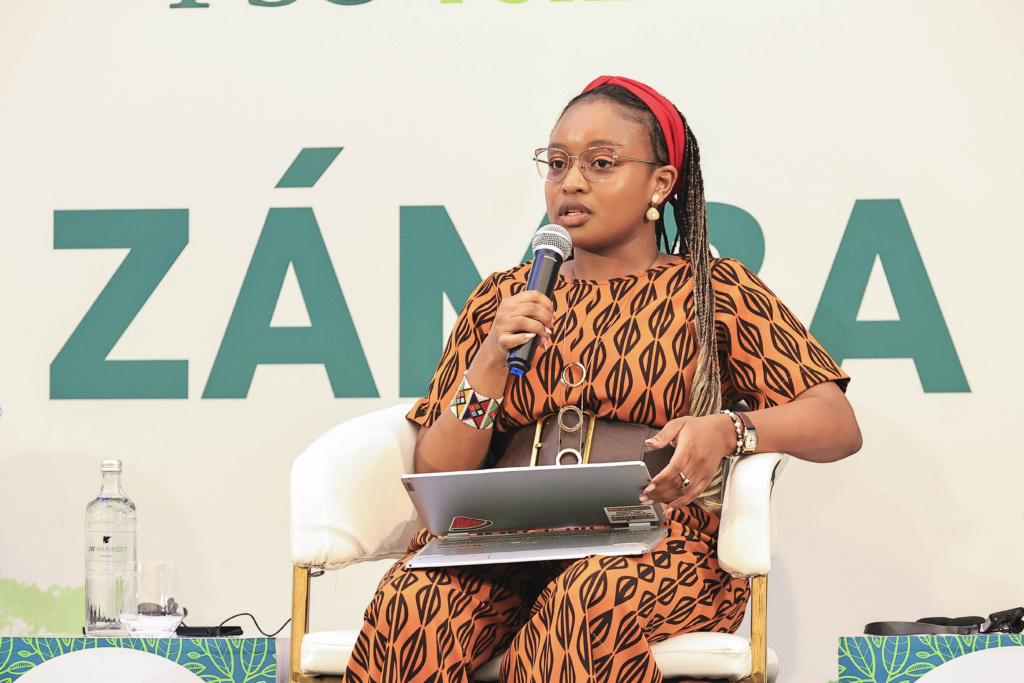
Kobei: “The name of my community, ‘Ogiek’, means ‘caretakers of the forest’. We are not just people who live in the forest, we are people who take care of the forest. The forest is our home.”
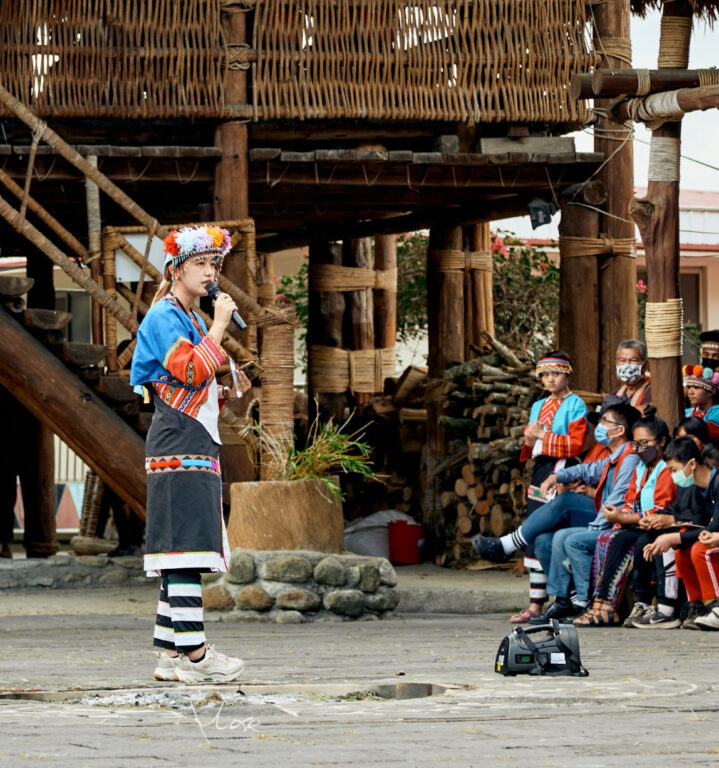
Yu-An: “Most of my childhood memories are from the mountains and forests. Now when I go back to the forest, I recall those childhood memories. It is a very relaxing and comfortable place for me.”
The forest is where their stories begin. It is not where they end – because for each of these women, a moment came when caring for the forest meant stepping into the rooms where decisions about it are made.
Cindy Kobei (Ogiek, Kenya)
The moment the path changed
For Minnie Degawan, that moment came at a courtroom door in Manila, where she had been asked to translate for elders from a village near her own.
Degawan: “I still remember the moment when I entered the court and saw a row of flip-flops lined up at the door. And inside, there were two groups of men: the lawyers dressed in very formal court attire, and the elders dressed in their traditional clothing and barefoot, because it is their culture to leave their footwear at the door. It was such a shock – I had never seen this divide illustrated so visually. I had come to Manila to study to become a doctor, but after that I realized that there was a greater need to bring the voices of the people to the capital.”
Sara Omi Casamá met the same divide in a law classroom in Panamá – and became the first Indigenous woman in her country to become a lawyer.
Omi Casamá: “At the same time that I was learning about my rights as an Indigenous person, I was also studying law from a Western perspective. In the classroom, we never heard about the rights of Indigenous Peoples, or about the work they were doing. That was very striking to me. It felt like a transition from being a young woman to becoming a grown woman who understands the problems and needs of her community, and how to turn them into opportunities.”
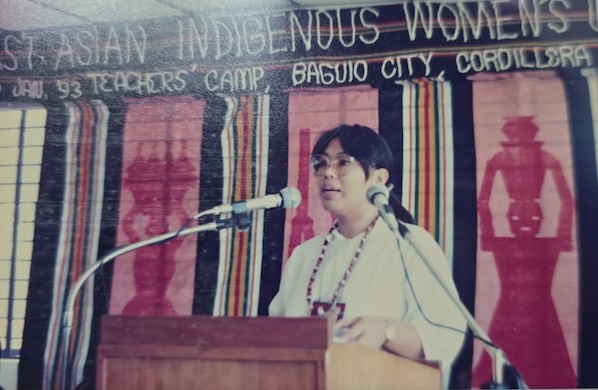
Minnie Degawan (Kankanaey-Igorot, Philippines)
Leading by listening
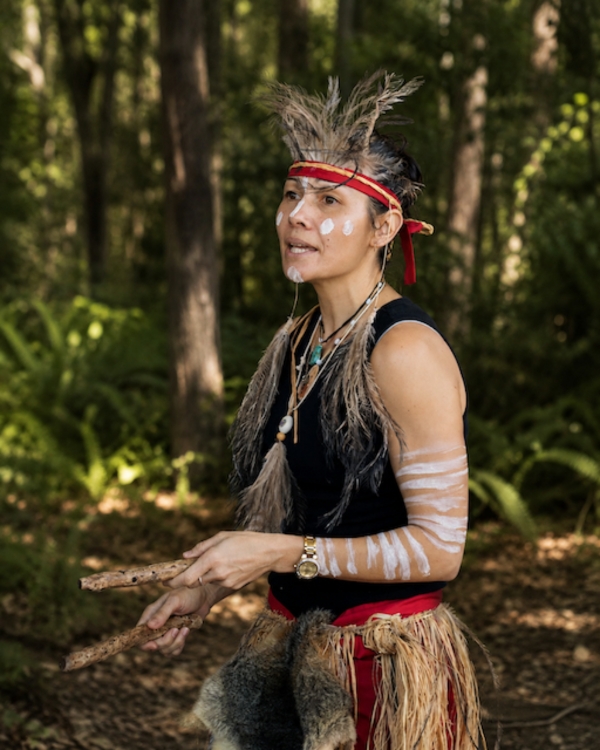
Governance, in these women’s hands, can look like listening as much as standing at a podium.
Davis-Angeles: “I started my consultancy, Gandan Yarnings, as a way of having Indigenous voices heard. Gandan means elder sister, and ‘yarning’ is how we do business – we sit and have a yarn, we yarn things out. I’ve always been told that we’ve got two ears and only one mouth, so we should be listening twice as much as we’re speaking.”
Yu-An: “Leadership doesn’t necessarily mean standing at the front and speaking, or mimicking a strong, commanding leadership style. Women have their own strategic qualities, including listening, empathy, and caring for others – not different to men, but bringing a greater variety of qualities. Women don’t need to take on unlimited responsibility or sacrifice themselves to prove their commitment. It is enough to take part and lead in our own way.”
Tolita Davis-Angeles (Cobble Cobble, Barunggam Nation, Australia)
Where knowledge meets the system
And increasingly, the knowledge these women carry is entering the formal systems of forest governance – universities, ministries, and courts – and forest management itself.
Smith: “I’m interested in the idea of ‘two-eyed seeing’, being able to use both an Indigenous perspective and a Western science perspective together for forest management. In northwestern Ontario there is an Indigenous community in discussion with the provincial Ministry of Natural Resources about how they can modify their forest management practices to protect yellow birch, which has several medicinal uses. It’s heartening to see those kinds of discussions going on, but I still see some reluctance to take traditional knowledge seriously.”
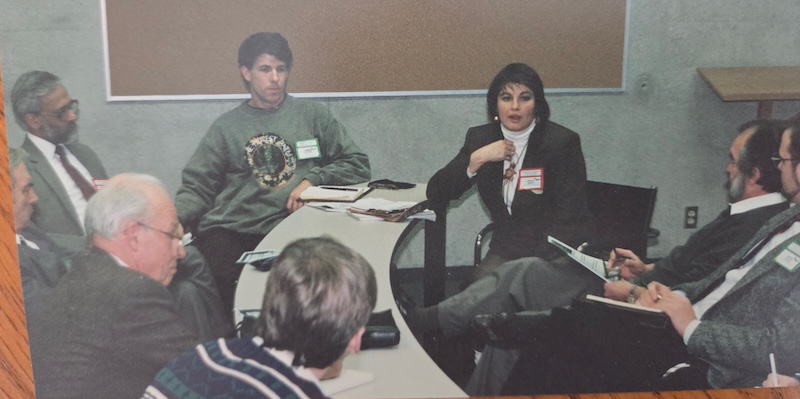
Kobei: “When we go to court, and we need to prove that the community has lived in the Mau Forest for however many years, it is women who are able to provide the evidence, because they are the knowledge holders. Women’s knowledge is valuable on this matter because they tend to be more connected to the community, they’re more connected to their children, they serve a whole generation of people.”
Davis-Angeles: “Ranger groups, like forestry in general, have tended to be heavily male-dominated, but now we are seeing support for women ranger programmes, recognizing that we need women out there caring for Country alongside the men, particularly around women’s sacred places and medicine trees.”
Peggy Smith (Miskwaanakwadook, Red Cloud Woman; Cree ancestry, Canada)
To the ones who come next
Six paths, one direction. We asked each woman what she would say to the Indigenous women who follow.
Kobei: “Be proud of your identity. Be proud of the community you come from. Listen to the women who have gone before you – they have walked the journey, they know the challenges, and they have lessons they want to share. And do not be afraid to be a leader.”
Davis-Angeles: “Every day when I drop my daughter off at school I tell her, ‘You’re strong, you’re smart, and you’re resilient’. And I really hope that she sees that the more she uses her voice, the taller that she stands – for herself, and for those who can’t speak and stand – the bigger the impact she will have in her lifetime.”
Degawan: “My advice is to remember inayan. One of the concepts of inayan is that we are but a small dot in the whole scheme of things. I strive to teach my daughter that even if you think you are a big dot, you are still just a dot, and your role is to be part of something much greater than yourself. And if our dot can connect with the other dots, together we can become a beautiful rainbow.”
Six women, five continents, one thread: the knowledge was always there and increasingly, so are the decisions.
These conversations are a first door into their stories. Over the coming weeks, as part of Where Women Took the Forest, we will share each woman’s journey in full in our Knowledge Keepers series from the Mau Forest to the Cordillera to Alishan.
Follow #WhereWomenTookTheForest on FSC’s channels.
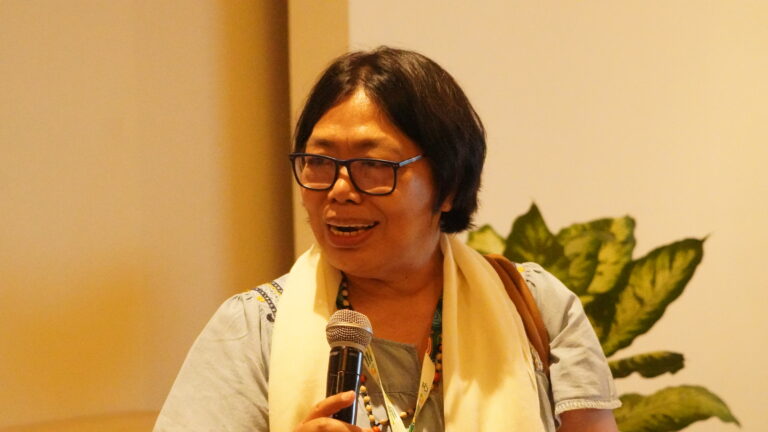
Minnie Degawan (Kankanaey-Igorot, Philippines)
Originally published by the Forest Stewardship Council (FSC).
Learn more about FSC’s work with Indigenous Peoples, forests, and communities.