
News

COP30 Outcomes Report

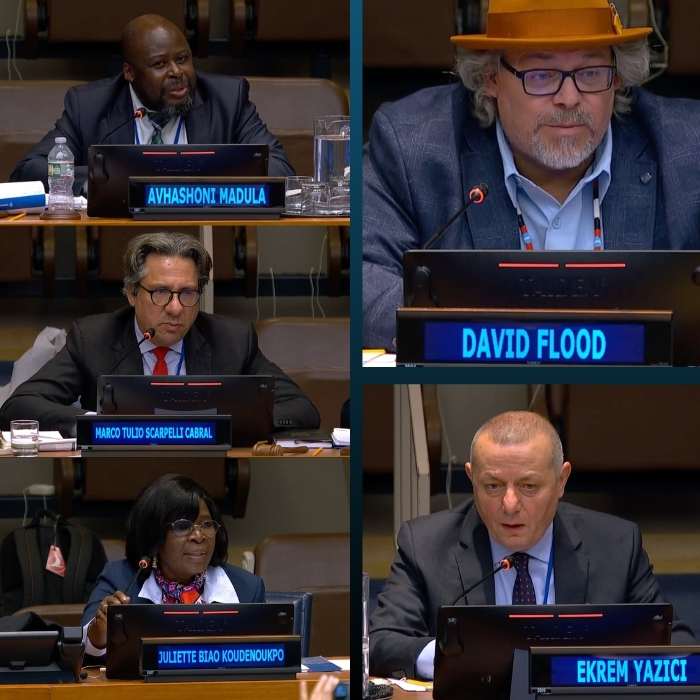
Forests, Indigenous Peoples, and Key Advances for Climate Action

This Results Report presents the main advances, challenges, and key messages from COP30 in 2025, in Brazil, related to forests and Indigenous Peoples, and what they mean for territorial rights, governance, and climate action.

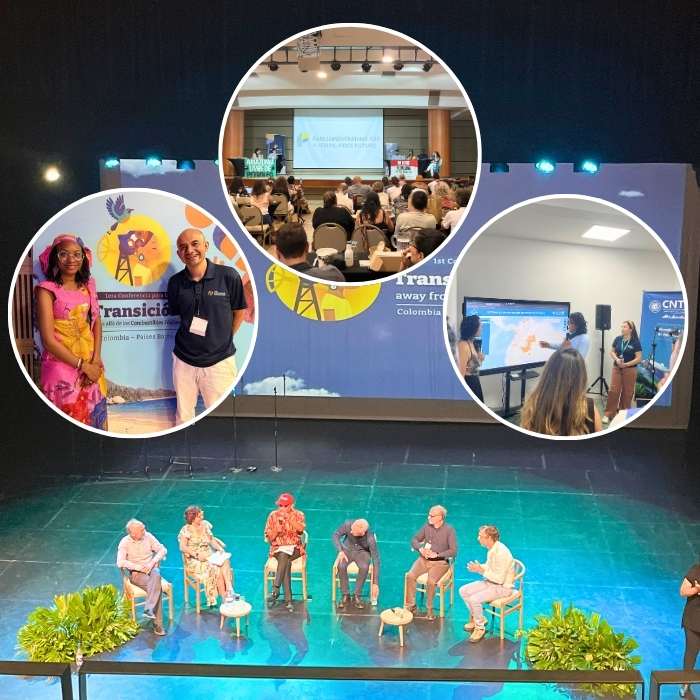
As part of this effort, the Forest Stewardship Council and the FSC Indigenous Foundation worked together during COP30, collaborating on side events, engagement activities with strategic allies, spaces for dialogue, and other coordination actions to highlight Indigenous priorities and strengthen their participation and advocacy.

We invite you to read the full report to learn about the results, their implications, and the opportunities that are opening up for the upcoming UNFCCC processes.


News

WWF & AJET’s Report on Indigenous Peoples and Just Energy Transition

Report and webinar on Indigenous Peoples and Just Energy Transition.

On December 10th, the World Wildlife Fund (WWF), together with Alliance for a Just Energy Transformation (AJET), launched the report “Indigenous Peoples & Just Energy Transition,” supported by the FSC Indigenous Foundation.  

Webinar’s highlights:

Sergio Bonati, Climate and Energy Officer in WWF Spain, positioned the report as a foundation for continued AJET work, provided policy recommendations like upholding Indigenous rights including FPIC, and shared two case studies from the report: 

  • “Solar Grandmothers” in Madagascar—local women trained as solar engineers. 
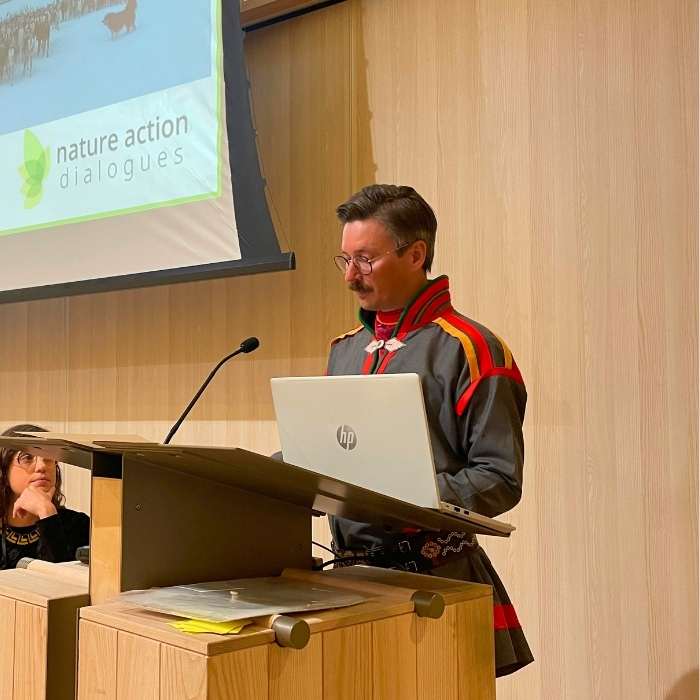
  • The Sámi in the Arctic facing disrupted reindeer migration routes due to mining, climate change, and renewable energy infrastructure. 

Minnie Degawan (Kankanaey-Igorot) Managing Director of the FSC Indigenous Foundation

  • Reflected on Human Rights Day, pointing out ongoing violations such as criminalization of Indigenous defenders. 
  • Warned against a “green transition” that harms Indigenous peoples through mineral demand or poorly planned renewable projects. 
  • Urged a narrative shift and invited partners to see Indigenous inclusion not as a cost, but a path to sustainable outcomes

Whitner Chase, Senior Manager at Seneca Environmental

  • Explained how Seneca Environmental helps bring tribally owned renewable energy certificates (RECs) to market, connecting tribal projects with corporate buyers. 
  • Encouraged collaboration and highlighted the economic and sovereignty benefits of tribally owned clean energy projects. 
  • Shared present-day success stories from large-scale solar projects providing revenue and jobs to wind energy serving thousands of homes and reducing reliance on fossil gas. 

Bryan Bixcul (Maya-Tz’utujil), Global Coordinator at SIRGE Coalition: 

  • Described ongoing fights from governments pushing to remove references to mining impacts to the Indigenous movement continuing to advocate for no-go zones, FPIC, and protection mechanisms. 
  • Shared key COP30 achievements for Indigenous peoples: 
    • Explicit recognition of rights to self-determination
    • First-ever UNFCCC recognition of Indigenous peoples in voluntary isolation
    • Reference to the UN Guiding Principles on Business & Human Rights, creating obligations for companies—not just states. 

Dean Cooper, Global Energy Lead, WWF, provided the opening and closing remarks: 

  • Framed the report as a tool to raise awareness and promote Indigenous engagement as partners, not stakeholders, in the energy transition. 
  • Reiterated that the report is the beginning, not the end, of this work. 
  • Highlighted key themes raised: 
    • Energy, climate, and nature are interconnected. 
    • Indigenous rights and land stewardship are central, not optional. 

Learn how you can be part of the Alliance for a Just Energy Transformation here.

Questions and Answers from the webinar:

Q: Thank you for the report. When will it be available in Spanish?

A: Many thanks for your question. We have not planned for a translation at the moment. But please check AJET’s and WWF’s web page and social media for any news on translation. Thanks!

Q: What an excellent point that relationships are expected from Indigenous Peoples perspective; and a keen insight that shifting the narrative is necessary. Is there an agreed-upon approach to ensure consistency around this message as it pertains to FPIC?

A: As the report highlights there is a plurality of contexts and therefore there can be no one template for FPIC, each community has its own protocol and this must be respected. What is essential is the recognition that Indigenous Peoples are diverse and therefore building respectful relationships is essential.

Q: Clean energy certificates can sometimes replicate the problems of carbon offsets, allowing companies to buy credits instead of reducing their own emissions. What safeguards are in place to prevent certificates from becoming another loophole that lets firms keep polluting?

A: We see clean energy certificates as an effective tool to enable the development of new renewable energy projects and we believe that indigenous communities should be able to access this revenue stream as easily as other renewable energy asset owners. However, all of our customers have comprehensive climate strategies, of which the purchase of clean energy certificates is pursued alongside internal emission reduction efforts.

Q: The success story from Native America is very interesting, and I believe the ability to become a land or company owner is essential. Do you think other countries—where legal rights to land are contested by the government—could move in a similar direction? And are there any other lessons to be learned from those community?

A: Absolutely – to both of your questions! There are far too many lessons to be learned in a 10-minute presentation! Feel free to reach out at wchase@senecaenvironmental.com for any further discussion in your specific context.

Q: How can youth get involved 🙂

A: You play a key role by engaging your communities and carrying Indigenous knowledge and priorities into global spaces. You can reach out to the International Indigenous Youth Forum on Climate Change (IIYFCC) and help shape climate and energy solutions grounded in rights, culture, and self-determination.

Q: Whitner, could we get in touch with SENECA through you?

A: Yes, feel free to reach out at wchase@senecaenvironmental.com

Access the shared presentations here.

🔗 Watch the webinar on YouTube: 

How to Enable Automatic Translation for YouTube Subtitles 

  • Click the Settings ⚙️ icon (bottom-right of the video). 
  • Select Subtitles/CC
  • Choose the available subtitle language first (often English (auto-generated)). 
  • Open Settings ⚙️ again → click Subtitles/CC → choose Auto-translate
  • Select your preferred language from the list (+80 languages, including Indigenous languages like Maori and Quechua) 
  • Not all mobile devices show the option the same way; sometimes you must update the app. 
News

Climate Week NYC 2025: From Rights to Partnerships – Working with Indigenous Peoples for Nature

FSC Indigenous Foundation at Climate Week New York 2025

Working with Indigenous Peoples for Nature FSC-IF

We’re heading to New York for Climate Week NYC (September 21–28), joining hundreds of partners and Indigenous leaders to accelerate real, nature-positive climate action. 2025 is a pivotal year on the road to COP30 in Brazil, and this moment helps us build momentum for our joint advocacy for Indigenous-led solutions and funding opportunities.

Our participation at Climate Week in the Nature Hub 

Our participation includes two sessions at the Nature Hub in New York designed to share practical approaches for scaling Indigenous-led climate and biodiversity solutions: 

From Rights to Partnerships: Working with Indigenous Peoples for Nature 

This one-hour dialogue, hosted by the FSC Indigenous Foundation on September 23rd, will challenge the prevailing narrative around Indigenous Peoples’ rights. For years, many international declarations have affirmed these rights, yet implementation often falls short. Our session calls on the private sector, governments, and philanthropic organizations to move beyond symbolic recognition and toward genuine partnerships that uphold rights while tackling the environmental crisis we face. 

We will also examine common barriers that stakeholders encounter when engaging with Indigenous communities, such as navigating diverse cultural and social norms, or knowing who to consult with, amongst other things. Alongside these challenges, we will highlight success stories where partnerships have delivered lasting and sustainable solutions. The discussion will show how collaboration, equitable financing and high-integrity data can drive investment in community-led nature-based solutions. 

Banner From Rights to Partnerships Speakers

From Rights to Partnerships: Partnerships for Success — Corporate/Indigenous Learning Circle 

In this Nature4Climate (N4C) roundtable, we will participate as panelists together with Indigenous leaders, businesses and investors. The conversation will explore how to co-create strategies for conservation and climate resilience that go beyond compliance. It will present funding models, co-governance frameworks and practical examples that demonstrate how companies and Indigenous communities can work together to protect ecosystems, strengthen climate action and build trust-based, enduring partnerships. 

These sessions are delivered in partnership with: 

  • Indigenous Chambers of Commerce 

Our presence at Climate Week NYC is strengthened through our close collaboration with the Forest Stewardship Council (FSC). Together, we are advancing a shared vision: forests and Indigenous Peoples are vital to solving the climate and biodiversity crises. We stand alongside partners who champion sustainable forest management, credible certification systems, and innovative tools such as FSC Verified Impact. 

Through joint efforts at the Nature Hub and coordinated advocacy throughout Climate Week, we’re demonstrating how inclusive governance, trusted data, and high-integrity standards can unlock funding and partnerships that deliver for people, forests, and the planet. 

News

FSC Remedy Forum in Jakarta: Reflections on sacred balance between Forests and People

The FSC System Integrity Unit convened the Asia Pacific Remedy Forum in Jakarta, uniting diverse stakeholders to advance understanding of the FSC Remedy Framework.

The Forest Stewardship Council (FSC) – System Integrity Unit hosted the Asia Pacific Remedy Forum in Jakarta, Indonesia, bringing together rights holders, Indigenous leaders, NGOs, companies, researchers, and government representatives to deepen understanding and engagement around the FSC Remedy Framework. 

What is the FSC Remedy Framework? 

The FSC Remedy Framework is a standardized system that guides how companies must address past environmental and social harms linked to forest conversion. 

It promotes restoration through social and environmental remedy, ensures transparency in how FSC deals with non-conforming companies, and provides fair roadmaps for remedy. Its ultimate goal is to restore forests and communities, improve the integrity of the FSC certification scheme, and establish measurable conditions for potentially ending disassociation and rebuilding trust. 

A New Chapter for Remedy 

Since its entry into force on July 1, 2023, the FSC Remedy Framework has aimed to address social and environmental harms resulting from forestry operations. Indonesia, as the pilot setting for implementation, provided a vital case study on opportunities and challenges. The Jakarta forum served not only as a platform for consultation but also as a space for healing, dialogue, and reconciliation; highlighting the positive potential of remedy to restore forest ecosystems, protect biodiversity, and provide redress for affected communities. 

Voices from the Forum 

Representing the FSC Indigenous Foundation, Nicholas Mujah (FSC-IF Council Member), Praful Lakra (FSC Permanent Indigenous Peoples Committee PIPC Co-chair, Asia region), Minnie Degawan (FSC-IF Managing Director), and Dian Intarini (Indigenous Peoples Global Manager for Forestry and Certification) actively participated in the Jakarta Remedy Forum, bringing diverse perspectives from leadership, governance, and community engagement.  

During the forum, attendees expressed that if rights are misunderstood, overlooked, or only superficially acknowledged, remedies risk becoming merely symbolic and may reproduce harm rather than repair it. Nicholas underscored this point, reminding participants how critical it is to understand right holders’ rights within the Forest Stewardship system.  

 Furthermore, Praful shared insights from his region, India, stressing the need to integrate Indigenous knowledge into the process and drawing lessons from the remedy of mining there. As Co-Chair of the Permanent Indigenous Peoples Committee (PIPC), Praful’s participation carried particular significance. Together with Marchus Colchester (FSC Board of directors and PIPC Liaison), who also engaged in the forum, their presence highlighted the importance of ensuring Indigenous perspectives are consistently heard in FSC processes. Having PIPC represented at the event created a valuable space for dialogue, knowledge sharing, and reflection that can help strengthen decision-making at the global level. 

From left to right: Praful Lakra (PIPC Co-chair, Asia region), Marchus Colchester (FSC BoD), Nicholas Mujah (FSC-IF Council member), Dian Intarini (Indigenous Peoples Global Manager for Forestry and Certification)
 
From left to right: Isnadi from Riau, Kuspawansyah from East Kalimantan, Nicholas Mujah (FSC-IF Council member) and Minnie Degawan (FSC-IF Managing Director) 

Moreover, Minnie reminded participants that for Indigenous Peoples, remedy is not a checklist of consultations or activities, but about restoring balance and safeguarding relationships: with the land, communities, and the unseen. 

“Forests are our relatives,” she said. “They are the resting places of our ancestors, where we bury our children’s umbilical cords to connect them to Mother Earth. To sustain the forest is to sustain the Earth and the community. Remedy, for us, means restoring that sacred balance.” 

Minnie stressed the need for clearer communication on what the Remedy Framework is, and what it is not. She emphasized that without this clarity, communities risk false expectations and further harm.  

At the heart of her message was the call to reframe Free, Prior, and Informed Consent (FPIC) as a process of relationship-building rather than a procedural step, reminding participants that consent is rooted in trust, equity, and mutual understanding.  

Finally, Dian Intarini suggested that remedy actions should be aligned with national policies on community empowerment and land rights, for example Indonesia’s Village Law, to support the long-term sustainability of these actions. 

Key Observations 

Over three days, the agenda moved from exploring solutions for accelerating remedies, to presentations on social and cultural healing in unresolved conflicts, to a closed meeting with rights holders reflecting on their concerns and expectations.  

The forum succeeded in fostering open, constructive dialogue, though it also revealed a disconnect in how stakeholders understood the framework and highlighted tensions between Indigenous Peoples and migrant/transmigrant communities that require sensitive approaches. Amid these dynamics, the FSC Indigenous Foundation emerged as a trusted, neutral facilitator and willing to continually support the process. 

Looking Forward 

As the FSC Remedy Framework continues to take shape, the lessons from the Jakarta forum remind us that remedy must be intentional, inclusive, and rooted in respect for Indigenous Peoples’ rights and worldviews.  

The work ahead will not be easy, but as Minnie emphasized: “We have survived genocide and colonization by moving thoughtfully and carefully. Let us not rush, but ensure that remedy truly heals.” 

1 2 3 9