
News

Indigenous Peoples have solutions to address water-related problems 

Connection and exchange between Native American Tribes and Indigenous Peoples of Latin America on challenges, lessons learned, and innovative models.
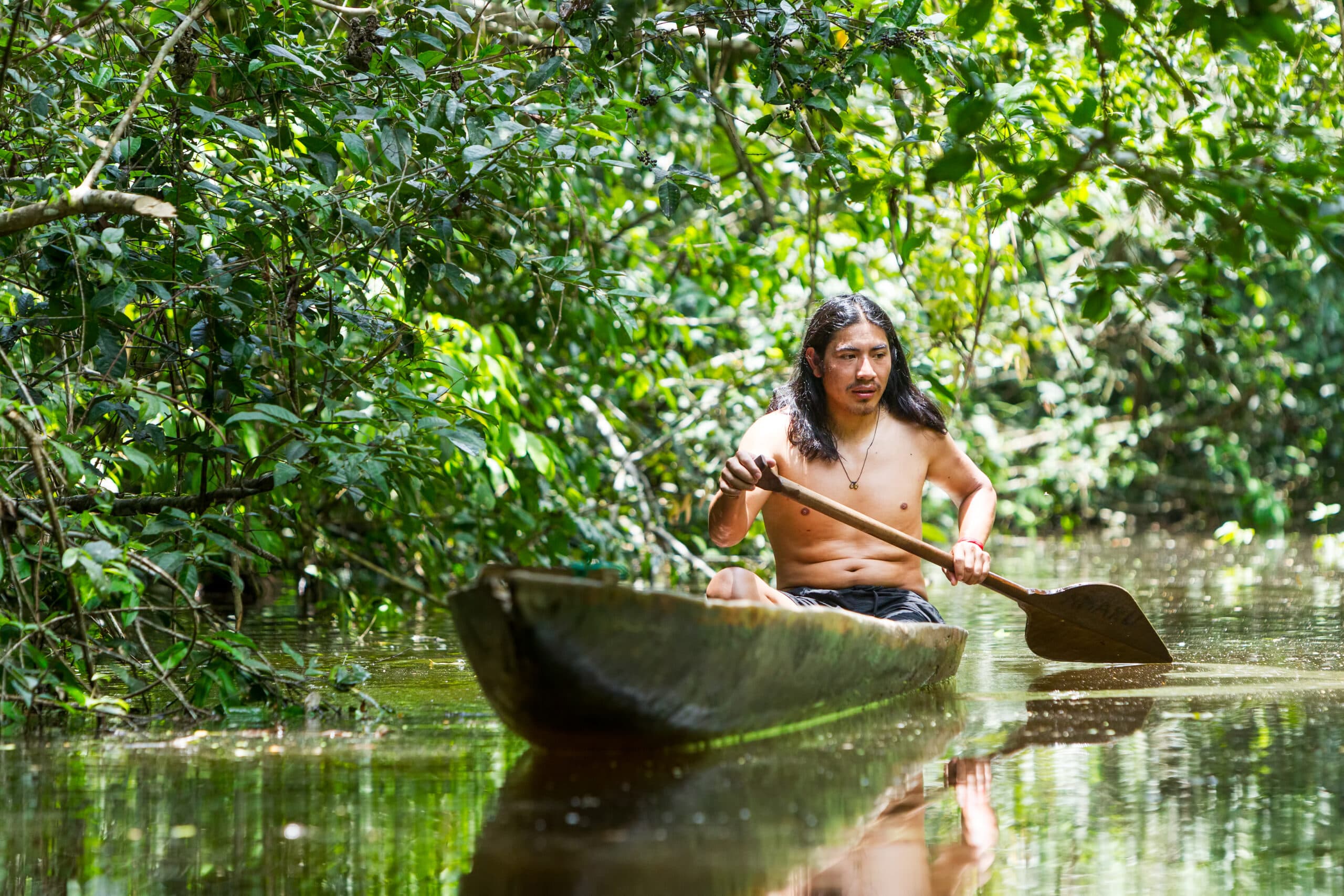
man in boat, Ecuador Amazon

“Water is the backbone for sustainable development,” commented Francisco Souza, Managing Director of the FSC Indigenous Foundation (FSC-IF), in a webinar on Opportunities for Indigenous Peoples and Water Rights. 

On May 11, 2022, the FSC-IF’s Indigenous Peoples Alliance for Rights and Development (IPARD) and the White House Council on Native American Affairs (WHCNAA) Committee on International Indigenous Issues organized this webinar to open a discussion on the struggles, experiences, and lessons learned by Native American Tribes in the United States to benefit from and take advantage of their water resources. Members of Indigenous Peoples organizations in Latin America were invited to have the opportunity to connect and exchange with Native American Tribes. 

The event began with an introduction by Francisco Souza who presented the current situation of water as a resource and central element in the development of productive activities and society. In recent decades there has been an increase in water needs and, if this situation continues, a water deficit is expected by 2030. Faced with this situation, Indigenous Peoples are key actors in the mitigation and resolution of the problems caused by lack of water. Their traditional and ancestral practices are essential to carry out actions that recognize the value of water as a fundamental element of biodiversity, nature, and forests. Indigenous Peoples have the solution to address the impact of water-related problems.  

The experiences and lessons from Indigenous Peoples should be shared, as well as their views on water and the recognition of their rights. Dr. Souza also highlighted the importance of collaboration among Indigenous Peoples, associations, and other organizations that work together for this purpose. 

The event continued with a background of the U.S. Federal Indian Act by the Deputy Solicitor for Indian Affairs in the U.S. Department of the Interior, Ann Marie Bledsoe Downes. She shared the history of Tribes and their relationship with governments, the legal context, and the agreements that have developed over time on water rights. Then Principal Deputy Assistant Secretary of Department of the Interior Wlzipan Garriot took the floor to highlight the contribution made by Indigenous Peoples in the preservation of natural resources such as water and the importance of recognizing the achievements made for the health and welfare of the planet.  

After the previous comments, the Panel composed of the Gila River Indian Community and the Columbia River Inter-Tribal Fishery Commission shared their experiences with water resources, rights, and opportunities.  
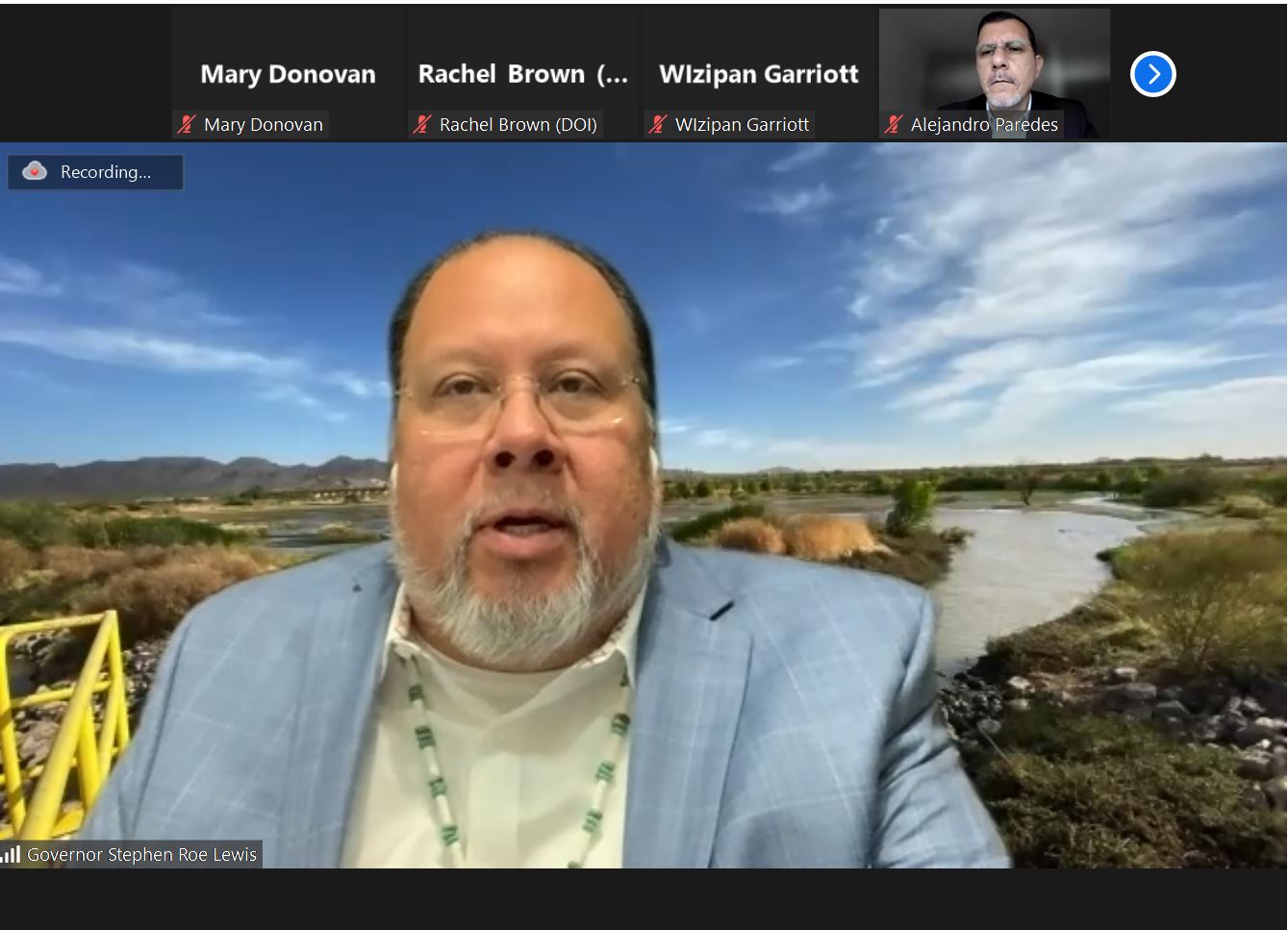
First, Governor Stephen Roe Lewis presented the case of the Gila River Indian Community including its water plan, how it was implemented, and how it has been maintained over time. It is one of the most successful plans in terms of its results, which include increasing the opportunities for members to cultivate their lands in a sustainable manner and rehabilitating parts of the Gila River.  

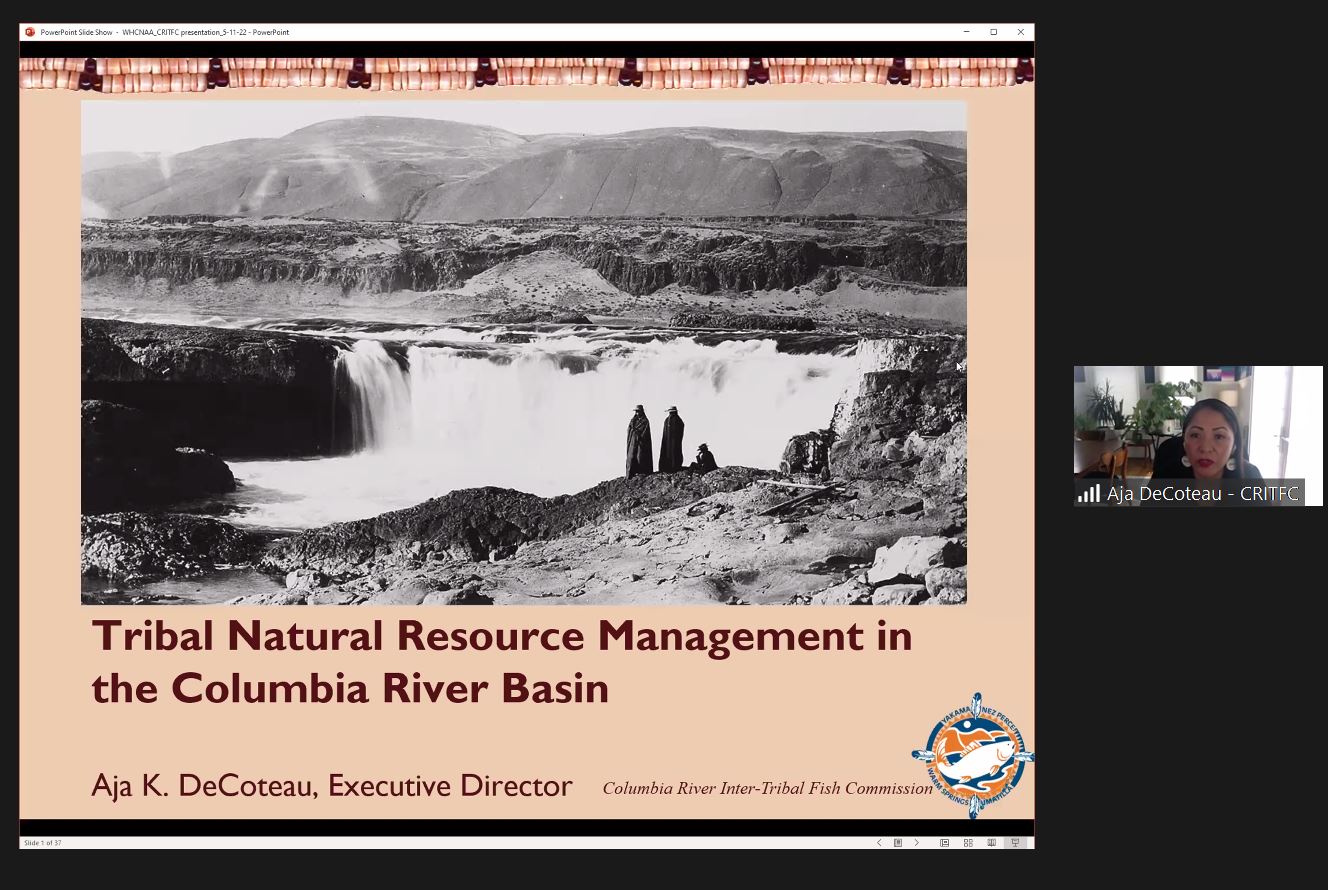
The Panel culminated with the participation of Aja K. DeCoteau, Executive Director of the Columbia River Inter-Tribal Fishery Commission. She gave a presentation on the Columbia River Basin and the opportunities that the river offers, being a source of numerous resources such as salmon, and the center of diversity in fauna and flora. The river provides power, irrigation, and water supply in addition to being a  method of navigation, source of recreation, and the basis of culture and tradition of the Tribes and their ancestors.   

The creation of the dams impacted the Tribe’s way of life through flooding, leading to loss of land and other resources. One of the major consequences was the decline of the salmon population. In response, the Tribes have developed protection laws and defined a plan with goals that involve bringing the fish back into the ecosystem, protecting treaty rights and sovereignty, and providing services to the people and fishermen who inhabit the river areas. As a result of this process, the Indigenous Tribes are now leading a joint approach to the ecosystem, combining Indigenous knowledge with science and involving a new generation of leaders.   
Finally, Indigenous Peoples organizations in Latin America will connect with Native American Tribes through the IPARD Program to continue to exchange, learn, and collaborate on the opportunities water resources offer for Indigenous Peoples in developing their sustainable economic models. 

View a recording of the event here.  
News

Global Forest Summit 2022

Three members of the FSC-IF Council will be speaking at conference aimed to take stock of the situation of the world's forests

Forests play a central role in the fight against climate change and preventing biodiversity loss. The guardians of the world’s forests – Indigenous Peoples and local communities – must also play a central role as drivers of solutions.

The Global Forest Summit brings together multilateral organizations, scientists, the private sector, NGOs, and Indigenous Peoples to provide a platform to stay up to date on global forest trends. The summit shares the latest data on deforestation, restoration, and sustainable management of the world’s forests and inspires concrete, rapid and sustainable steps on a global scale.

Speakers at the summit from the FSC-IF Council include Hindou Oumarou Ibrahim, Coordinator of the Association of Peul Women and Autochthonous Peoples of Chad (AFPAT) and Coordinator of the Indigenous Peoples of Africa Coordinating Committee (IPACC), Gregorio Mirabal, Coordinator of the Indigenous Organizations of the Amazon Basin (COICA) and Kim Carstensen, Director General of the Forest Stewardship Council (FSC). The summit will take place on March 24, 2022.

Find more information and register here.

News

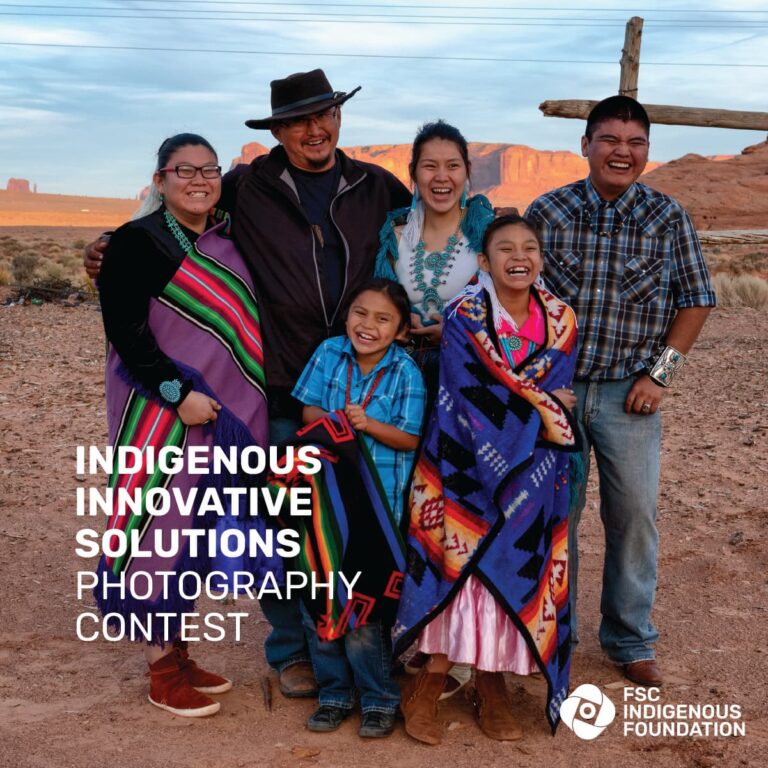
Indigenous Innovative Solutions Photography Contest

We know that the best way to defend the rights and promote the solutions created by Indigenous Peoples is for Indigenous Peoples to communicate their own visions, with their own words and images.

Indigenous innovative solutions Photography contest

We want to encourage Indigenous communicators and photographers to tell their stories, those of their communities and cultures through photographs.

It is for this reason that today we are launching our Photography Contest “Indigenous Innovative Solutions”, to learn more about their realities, problems, proposals, and innovative solutions to defend their rights, manage their territories, and protect Mother Earth.

The FSC-IF is a global organization created by and for Indigenous Peoples that seeks to provide long-term solutions that support the world’s Indigenous communities. Our mission is to co-create Indigenous-nature-based solutions with Indigenous Peoples around the world. We focus on promoting Indigenous Peoples’ rights, holistic self-development, and self-sufficiency.

Join our network of visual storytellers and participate in this contest after checking the Terms and Conditions.

For questions and concerns please contact :

Mary Donovan, Communications Officer of FSC Indigenous Foundation, at m.donovan@fsc.org    

Terms and Conditions

Who can participate?

The contest is especially intended for communicators, photographers, and storytellers from the diverse Indigenous Peoples around the world.

We promote non-discrimination and intergenerationally, for this reason the contest has no age limit and encourages the participation of women and young people.

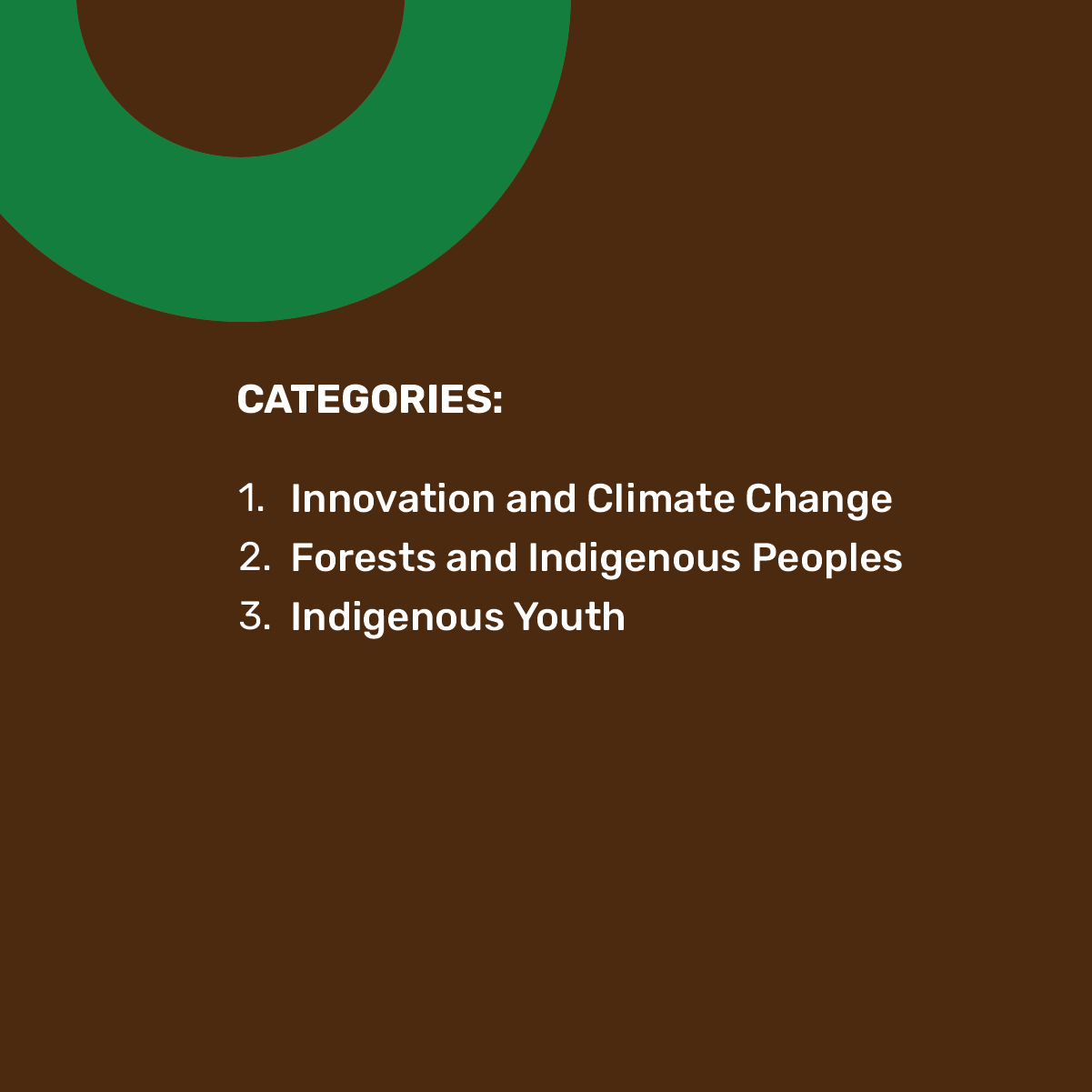
What are the categories?

Innovation and Climate Change. This category is open to communicators, photographers, or amateur storytellers from Indigenous Peoples of any age. This theme includes:

  • Indigenous-based innovative solutions related to climate change, forest fires, deforestation, biodiversity, water management, territory management, etc.
  • Traditional knowledge based on innovative solutions.
  • Innovative solutions based on the traditional and ancestral work of Indigenous communities in forest and biodiversity conservation.
  • Community-led efforts to adapt or to mitigate climate change.

Forest and Indigenous Peoples. This category is open to communicators, photographers, or amateur storytellers from Indigenous Peoples of any age. This theme includes:

  • Indigenous Peoples’ relationship with nature.
  • Indigenous Peoples and biodiversity.
  • Traditional knowledge for sustainable forest use, management, and conservation.
  • Indigenous landscapes, governance and management.

Indigenous Youth. This category is open to young communicators, photographers, and storytellers up to 20 years old.  This category includes:

  • Indigenous innovation and climate change
  • Forests and Indigenous Peoples
  • Indigenous youth and women innovative actions

Terms of the contest

  • All submitted pictures must be original.
  • Each participant is allowed to submit one picture per category.
  • Pictures containing recognizable individuals must have a prior consent for the use of the picture, attached to the registration mail.

Conditions of the contest

  • By submitting a picture, the person to whom it belongs automatically allows the FSC Indigenous Foundation to use the image in communication and promotional materials.
  • Pictures of individuals who do not have authorization for the use of the image will not be eligible.

Elegibility criteria

Only pictures that meet the following requirements will be eligible to compete:

  • All participants must be members of an Indigenous People.
  • All pictures must be original.
  • Pictures that have already received awards or recognition prior to this contest are not eligible.
  • For the third category, Indigenous Youth, photographers must be 20 years old or younger.

Awards and recognitions

We recognize and reward the work of communicators, photographers, and storytellers. The first three places in each category will receive a symbolic and economic recognition.

  • First place: $1,000 (one thousand U.S. dollars).
  • Second place: $600 (six hundred U.S. dollars).
  • Third place: $400 (four hundred U.S. dollars).

Jury

The contest will have the assistance of an expert panel composed of renowned Indigenous photographers from around the world, who will evaluate and select the winning photographs.

The evaluation will consider the following criteria:

  • Color.
  • Composition.
  • Creativity.
  • Relevance to the chosen category.

How to participate?

To participate in the contest, you must follow the next steps:

  • Download and read our terms and conditions.
  • Choose the category in which you want to participate.
  • Select the photo with which you want to participate. Please remember the picture must have a minimum resolution of 1500 pixels on the longest side and the file must have a maximum weight of 25 MB.
  • Send us an email with your picture attached to fsc.if@fsc.org. The email must include the following information:
    • First and Last Name.
    • Age.
    • Country.
    • People to which you belong.
    • Date and place where the picture was taken.
    • Short description of the picture.
  • If your picture contains the likeness of one or more persons, please attach a consent letter for the use of the picture.

News

Conversation with the first Indigenous woman lawyer in Panama

Sara Omi speaks about her journey and the importance of empowering Indigenous women and girls.

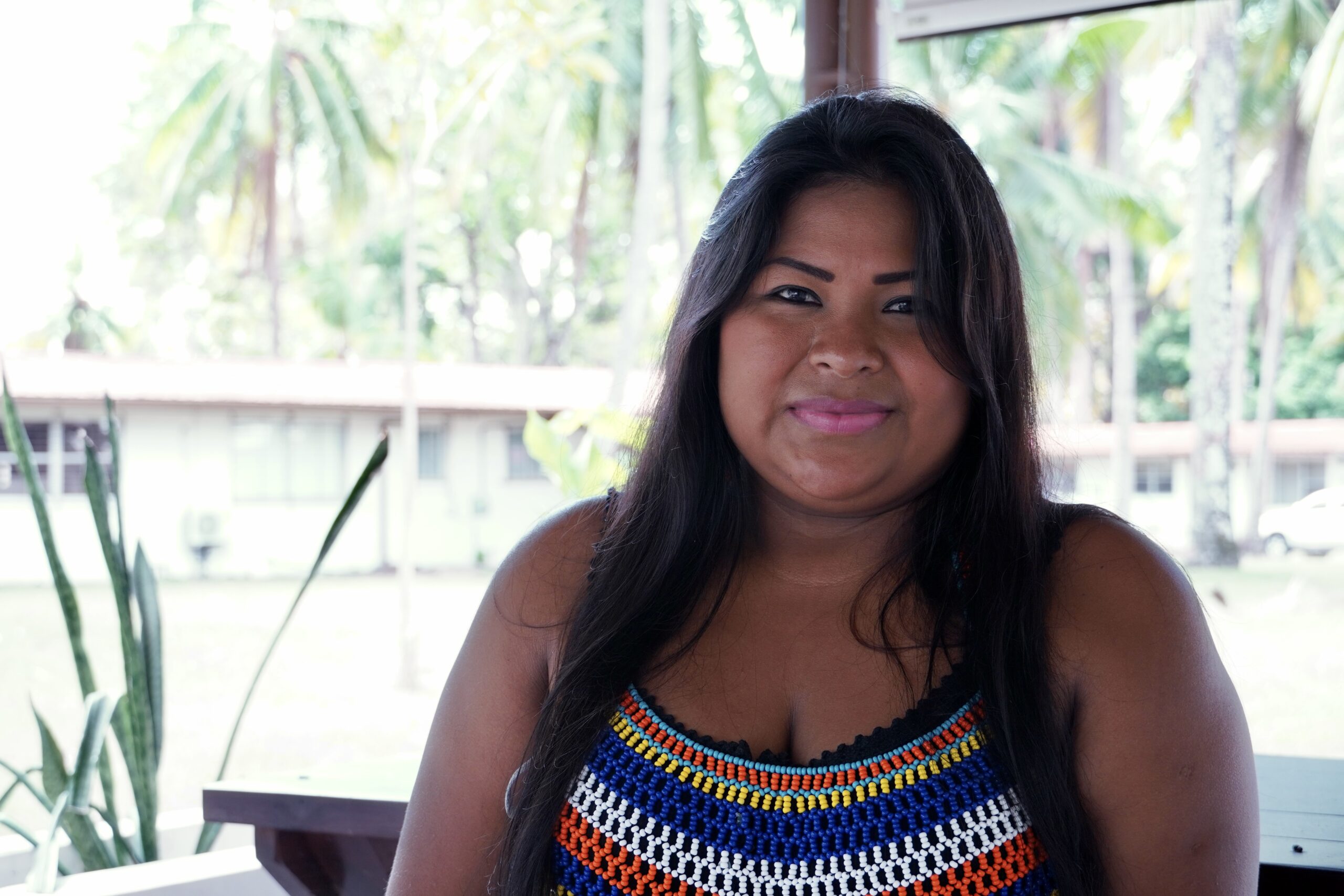
Sara Omi Indigenous Woman Leader from Panama

For every two Indigenous men in Panama who graduate from university, only one Indigenous woman graduates. Of the 16% of the Indigenous population over 10 years of age in Panama who cannot read or write, 63% are women compared to 37% of men.  

It is now the time to put Indigenous women in the driver’s seat towards a different future for them and for their communities, where they can build and manage Indigenous-based solutions from their communities to the scale of the challenges facing our planet.  In Panama, we have Sara Omi Casamá, an Indigenous woman of the Emberá People, who has broken barriers along her life as an Indigenous woman and leader. She is a member of the AMARIE association of women artisans, President of the Territorial Women Leaders of Mesoamerica of the Mesoamerican Alliance of Peoples and Forests, and the first Indigenous woman in Panama to become a lawyer.  

As the FSC Indigenous Foundation is committed to the empowerment of Indigenous women as leaders, providers of solutions, and an integral part of the holistic self-development of their communities, in honor of International Women’s Day, we had a conversation with Sara on Indigenous women’s rights.

Listen to her words below. 


1 17 18 19