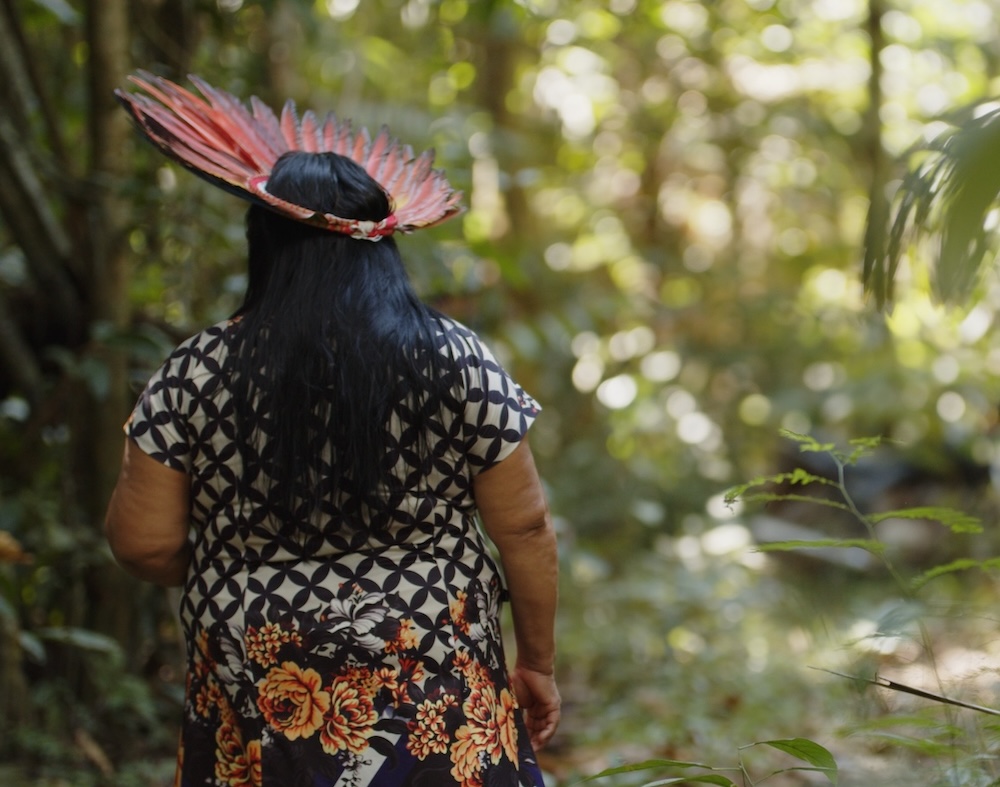
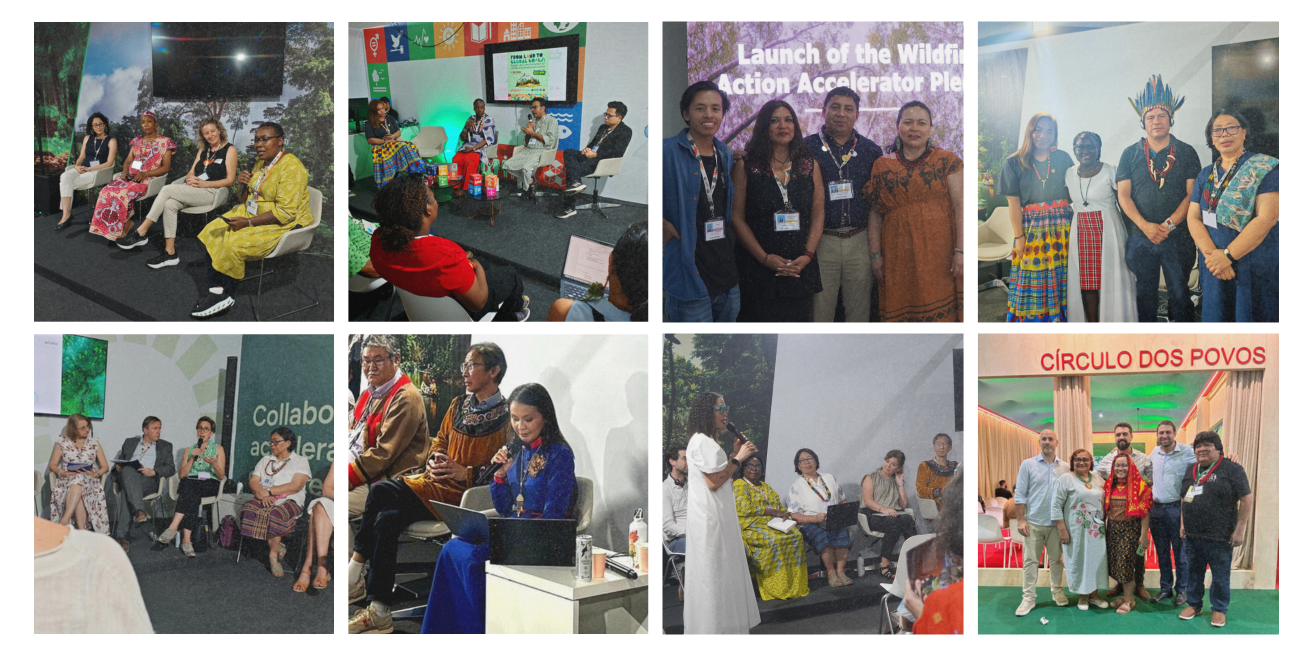
Indigenous voices in Chiang Mai, Oaxaca, Yeosu, New York, and Bonn.
FSC IF
Photos: Minnie Degawan: FSC/Christoph Söldner, other photos: FSC-IF
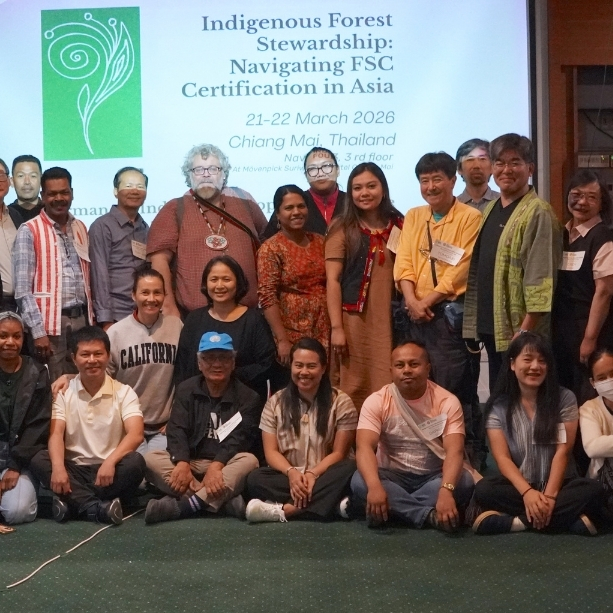
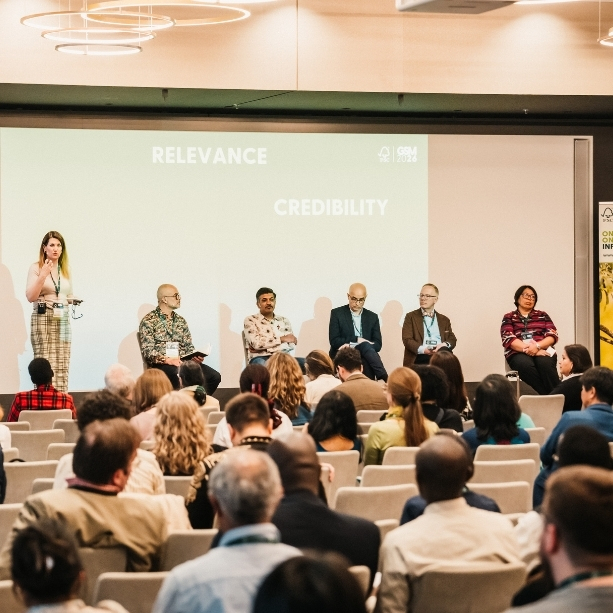
PIPC Asia Regional Meeting:
In Chiang Mai, a crucial dialogue unfolded, where Indigenous leaders challenged systems, shared lived realities, and reimagined the future of forest governance in Asia.
UNPFII in New York:
“Ensuring Indigenous Peoples’ health, including in the context of conflict.”
Protect their rights. Protect the Forests. Protect the Earth.
FSC-IF Highlights of the month and upcoming activities
FSC IF
Across territories and regions, Indigenous leadership continues to shape climate and forest action, and February was a month of connection and collaboration that strengthened this shared commitment in the FSC Indigenous Foundation.
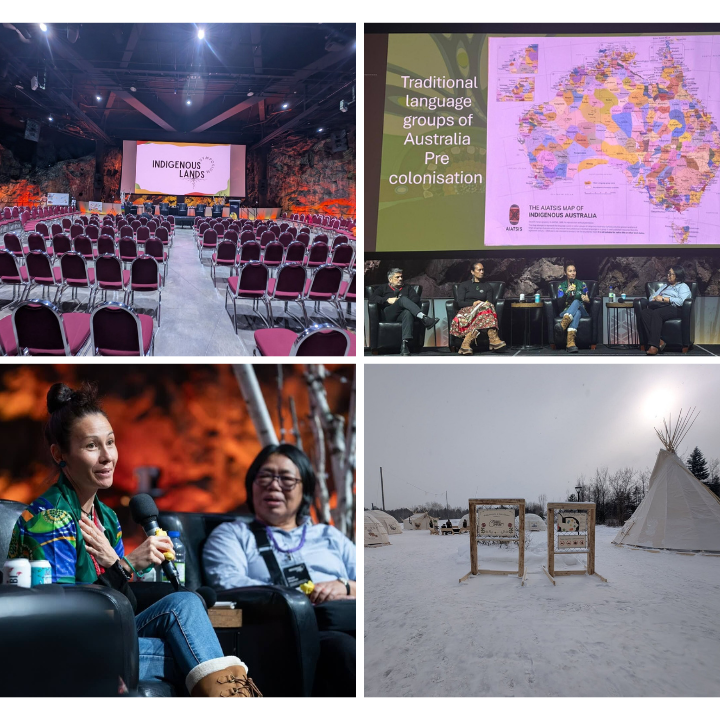
Indigenous Lands Symposium 2026 in Canada
The Indigenous Lands Symposium brought together leaders, Elders, youth, and partners from across Canada and beyond to center resurgence, restoration, and Indigenous rights in forest stewardship. The gathering created space for powerful dialogue on land governance, Free, Prior and Informed Consent, and the global relevance of Indigenous knowledge systems in addressing climate and biodiversity challenges.
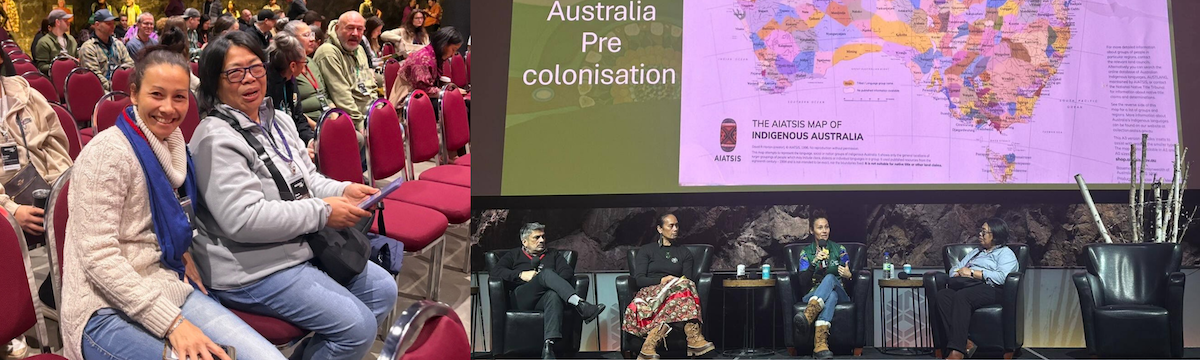
FSC Aus/Nz Melanie Robertson, Tolita Davis-Angeles, and Jacqueline Lorangi
A dedicated Indigenous exchange with FSC Australia and New Zealand further strengthened cross-regional relationships, as leaders shared experiences of asserting rights, advancing Care for Country, and leveraging tools such as FSC certification to support Indigenous-led stewardship. The week underscored the strength of international solidarity and the importance of learning from one another to advance Indigenous leadership worldwide.
At the symposium, the panel “Beyond the Boreal” featured FSC-IF managing director Minnie Degawan, FSC PIPC alternate for Oceania Tolita Davis-Angeles, and Indigenous leader Jacqueline Lorangi, who shared cross-regional perspectives and lessons from around the world, with Minnie providing an overview of the key global challenges facing Indigenous Peoples and forest stewardship, and Tolita speaking on “the impacts of colonisation and how this is limiting First Nations Care for Country and how mechanisms like Forest Stewardship Council certification present pathways to increase First Nations opportunities to implement Care for Country practices.”
Webinar on Community-Led Forest Economies
In the WRI webinar, Indigenous leaders from across regions reaffirmed that securing land rights, strengthening community forest governance, and ensuring direct access to climate finance are essential to advancing climate action, protecting biodiversity, and sustaining Indigenous-led economies.
Among the panelists in the webinar were Ms. Alina Santiago and Kalea Aquino, both Indigenous women from the FSC Indigenous Foundation, who shared outstanding community leadership stories in forest stewardship and beyond.
Watch the recording:
Boosting Indigenous Nature-Based Business Models
Indigenous women’s leadership continues to drive meaningful action in forest conservation. In the Emberá Purú community in Panama, leaders like Briceida Upua are strengthening local knowledge and stewardship of their territories. From January 22 to 25, FSC Indigenous Foundation, in coordination with Health in Harmony and If Not Us Then Who, facilitated community workshops to review bioacoustic monitoring results based on a biodiversity baseline established in their forests.
Listen to Briceida’s story:
Through this collaborative process, 211 species were validated, including 199 birds, five mammals, and seven amphibians. This marks a significant advancement in community-led biodiversity knowledge. The initiative reinforced the importance of forest conservation and upheld the community’s rights to manage and use this information under the principles of Indigenous data sovereignty, demonstrating the vital role Indigenous women play in safeguarding their lands and knowledge systems.
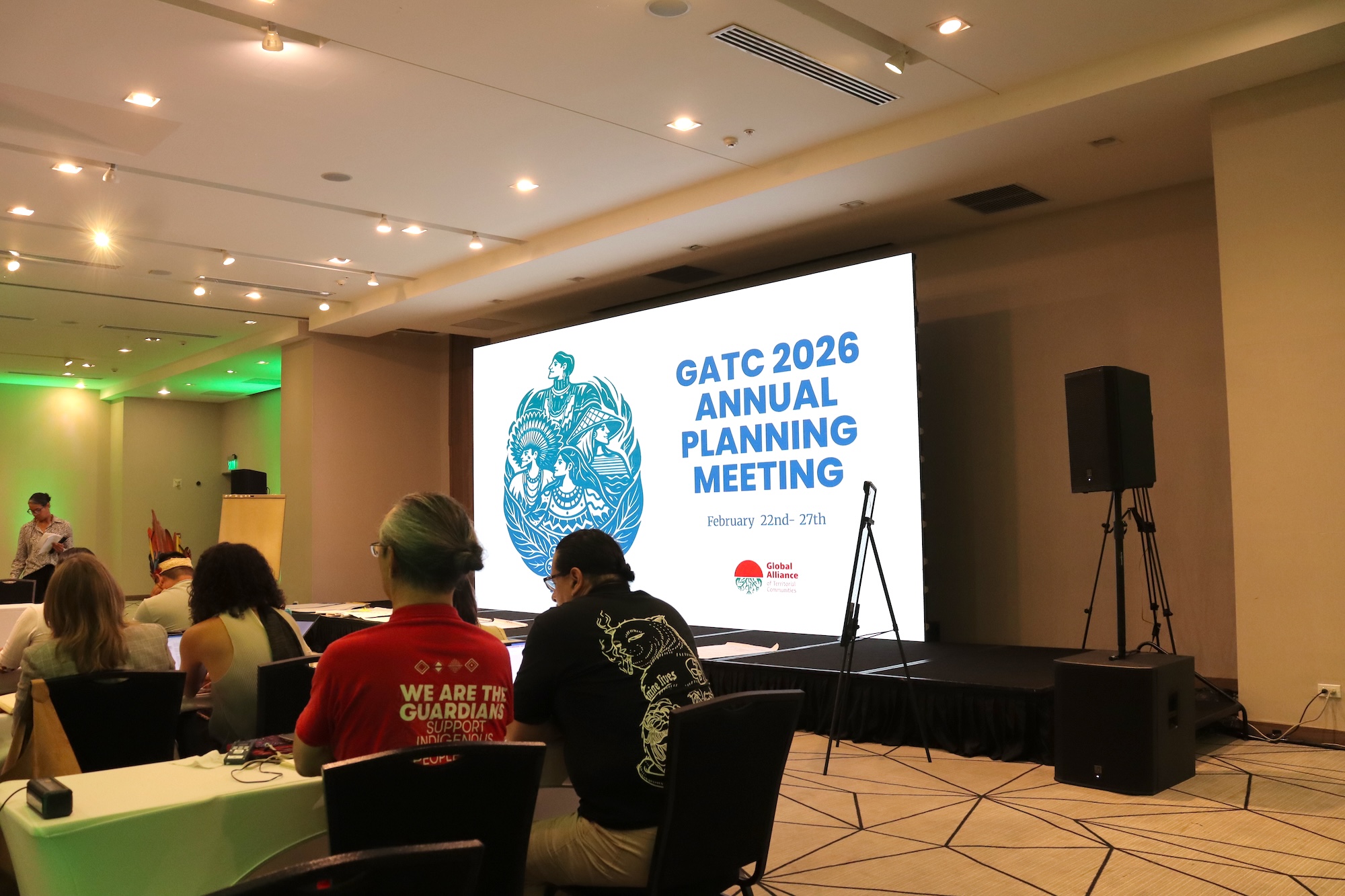
Participants aligned key priorities for the year ahead, including governance and budget discussions, updates from member organizations, the Women’s and Youth Movements, the Shandia Platform, and the development of the 2026 strategy.
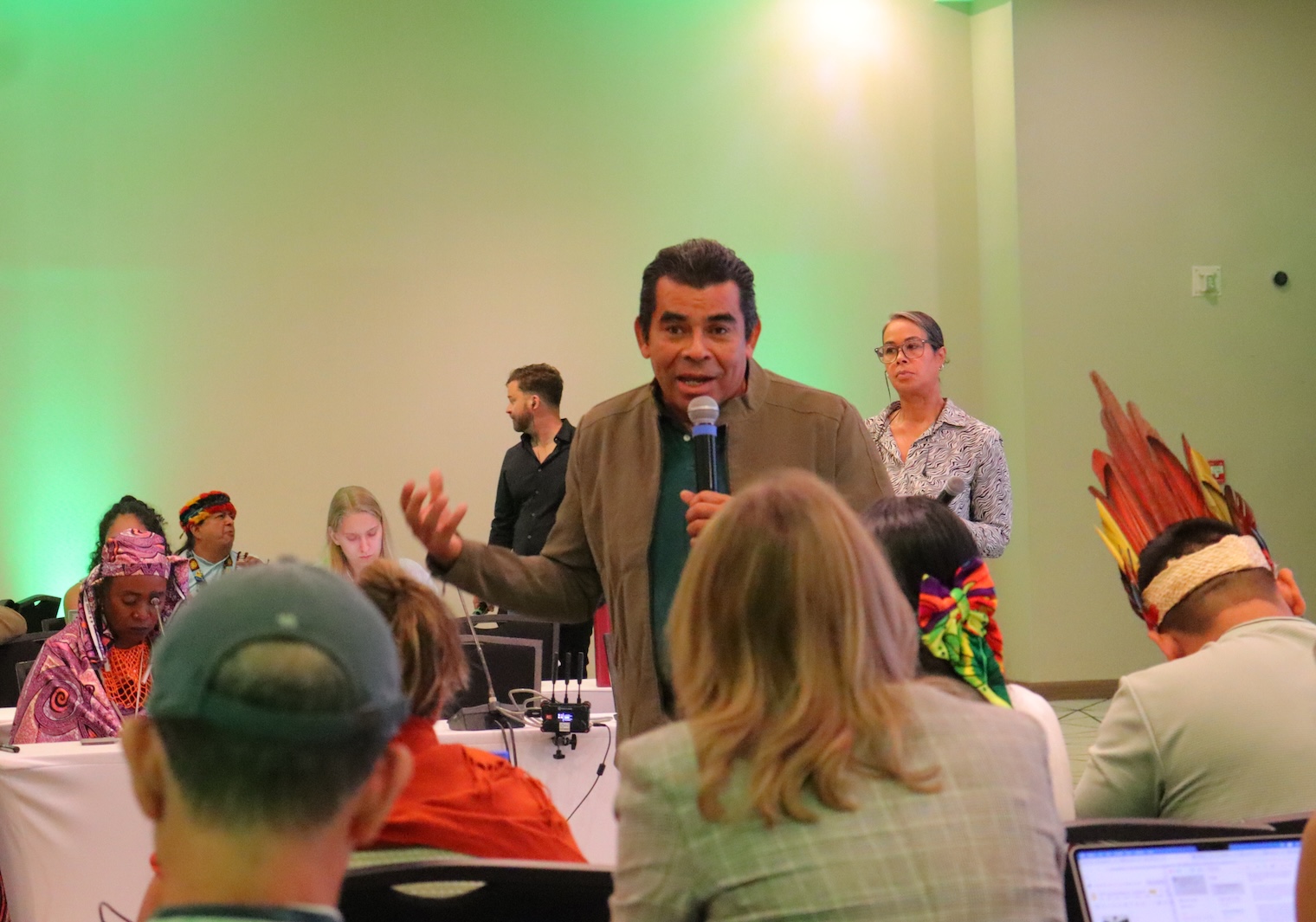
Levi Sucre, AMPB
During the gathering, FSC-IF Managing Director Minnie Degawan underscored the urgent need for stronger Indigenous solidarity in the face of climate change, biodiversity loss, and shrinking civic space, emphasizing that no single organization can address these challenges alone. She reaffirmed FSC-IF’s commitment to collaboration with GATC, including joint fundraising, technical exchange, and practical support such as strengthening global alliances across regions.
Minnie Degawan, FSC-IF
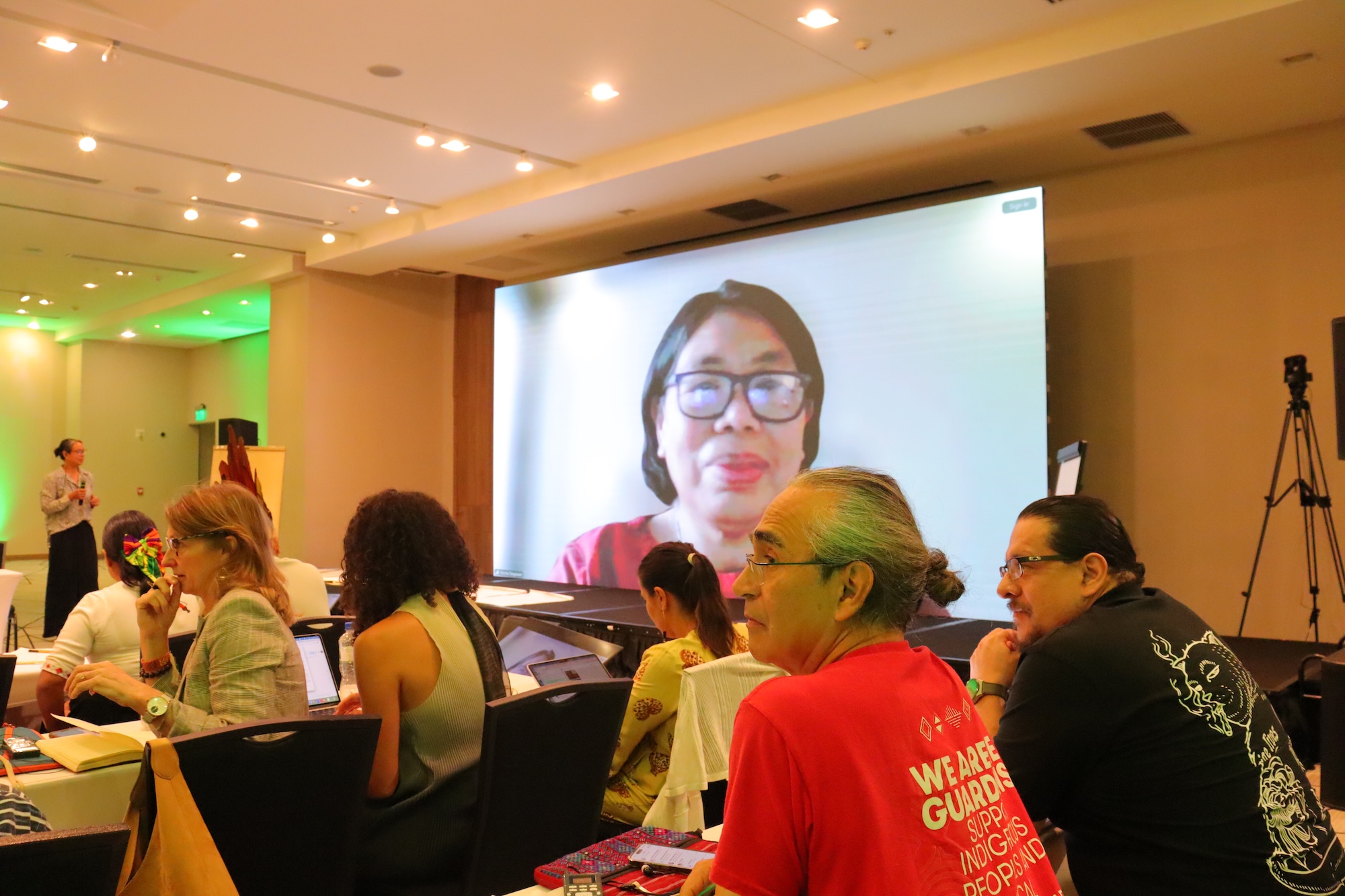
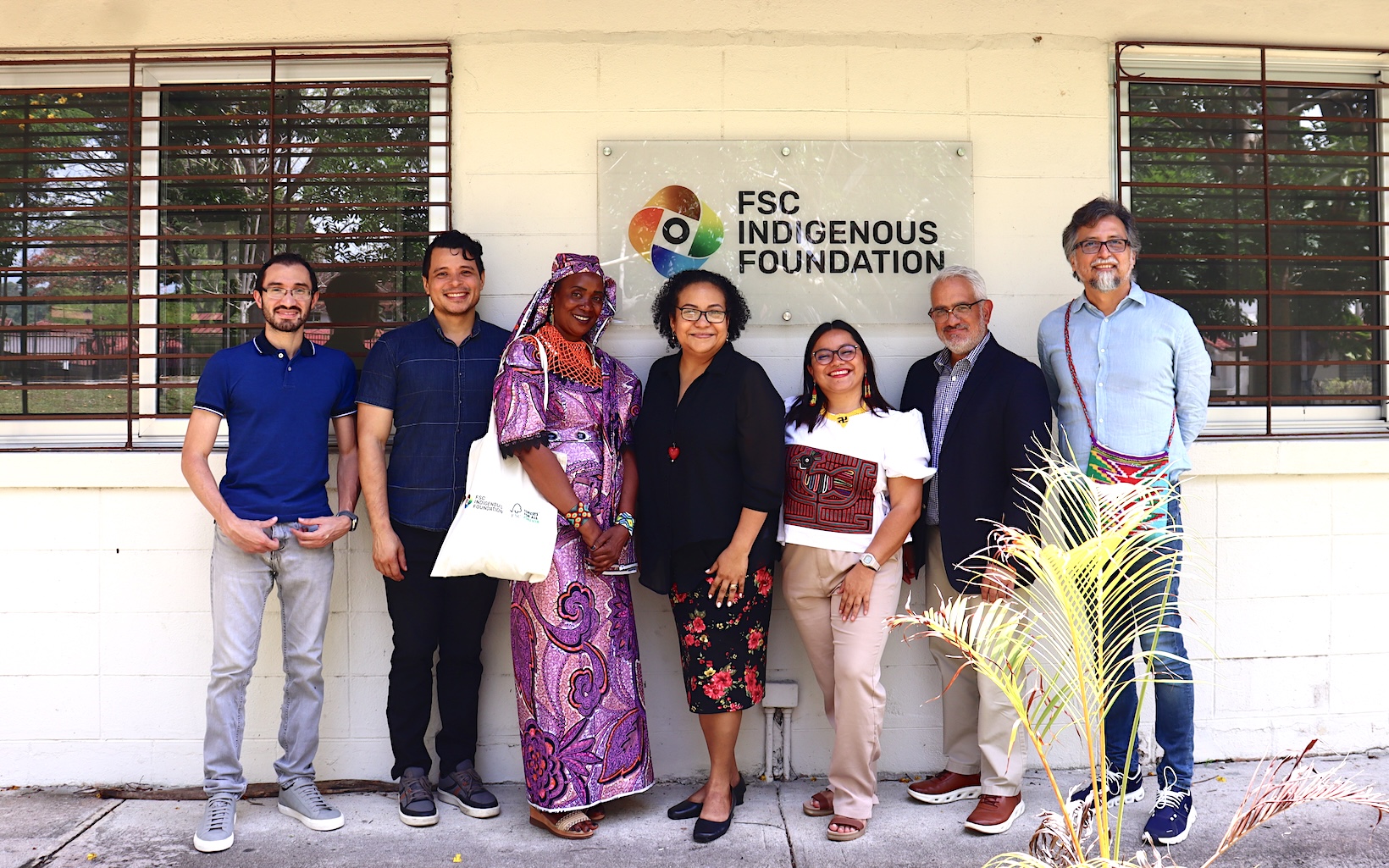
Aissatou Ibrahim, FSC PIPC Representative for Francophone Afric, co-leader of the GATC Women’s Movement, and Deputy Coordinator of REPALEAC in Central Africa, highlighted the shared struggles faced by Indigenous communities across basins and raised concerns about the lack of dedicated funding for the Women’s Movement. She stressed that it’s a very serious problem because women are the core of the family, and the family is what makes up the community.
Aissatou Ibrahim, FSC PIPC/ REPALEAC
Research Spotlight
First Nations-led Circular Bioeconomies: Social and Economic Impacts and Social Perceptions
This report provides an in-depth analysis of First Nations-led circular bioeconomies in Australia, examining their social, economic, environmental, and cultural impacts. It captures the perspectives of various First Nations groups, emphasising their traditional responsibilities for caring for Country, preserving ancestral knowledge systems, and engaging in sustainable practices that support community wellbeing and environmental health.
Researchers: Tolita Davis-Angeles and Timothy McBride
20th Community-Based Adaptation Conference hosted by IIED
The 20th International Conference on Community-Based Adaptation to Climate Change (CBA20) will be held from 11 to 14 May 2026 in Manila, Philippines, convening global practitioners to share lessons, strengthen partnerships, and advance locally led climate adaptation in practice.
Re-Earth Initiative’s Climate Policy Fellowship for Indigenous Youth
Re-Earth Initiative is proud to launch its Climate Policy Fellowship for Indigenous Youth. A year-long capacity-building and policy engagement program designed to support Indigenous youth in meaningfully engaging in international climate negotiations under the UNFCCC. Applications for the 2026 cohort open on March 2nd and will be reviewed on a rolling basis until March 16th.
We thank our allies and partners for their continued support and collaboration. We also invite financial institutions and organizations interested in investing in Indigenous nature-based solutions to connect with us so we can work together to strengthen Indigenous-led climate and forest action worldwide.
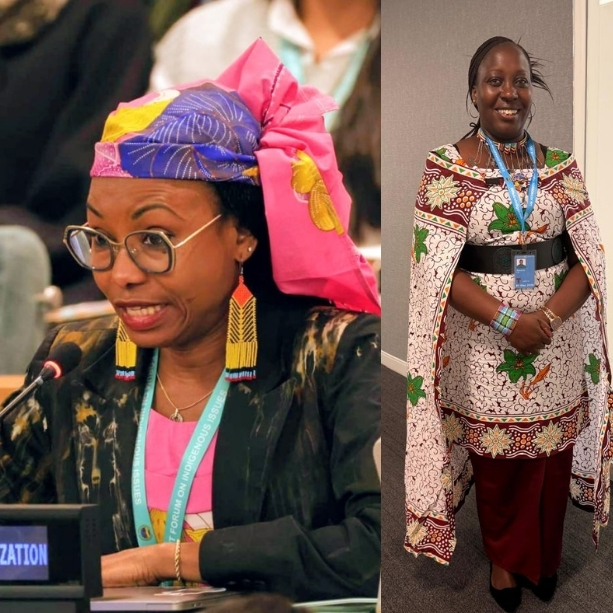
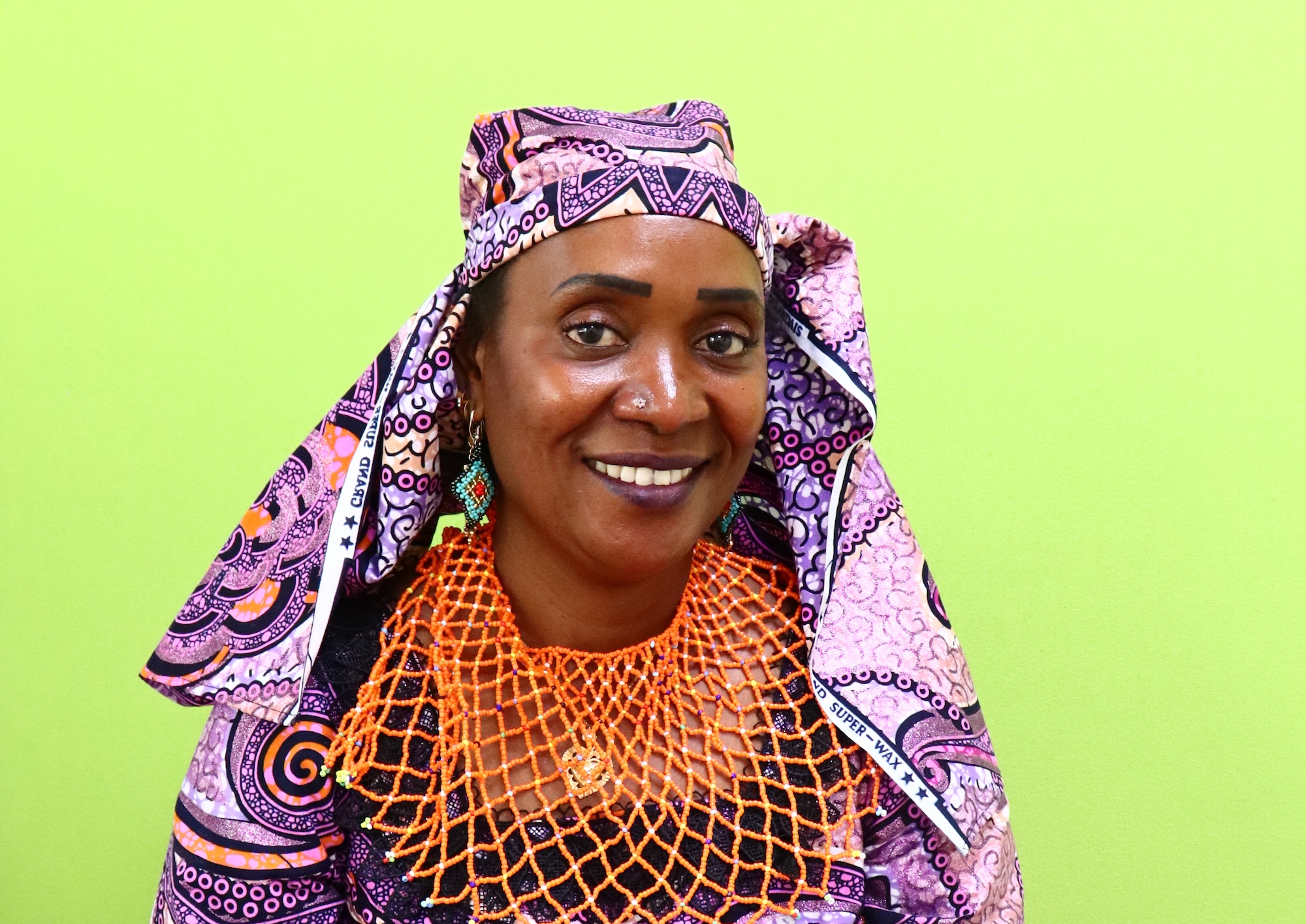
Aissatou Oumarou is FSC PIPC representative for Francophone Africa.
Aissatou Oumarou Ibrahim is the FSC Representative of the Permanent Indigenous Peoples Committee (PIPC) for Francophone Africa.
FSC IF
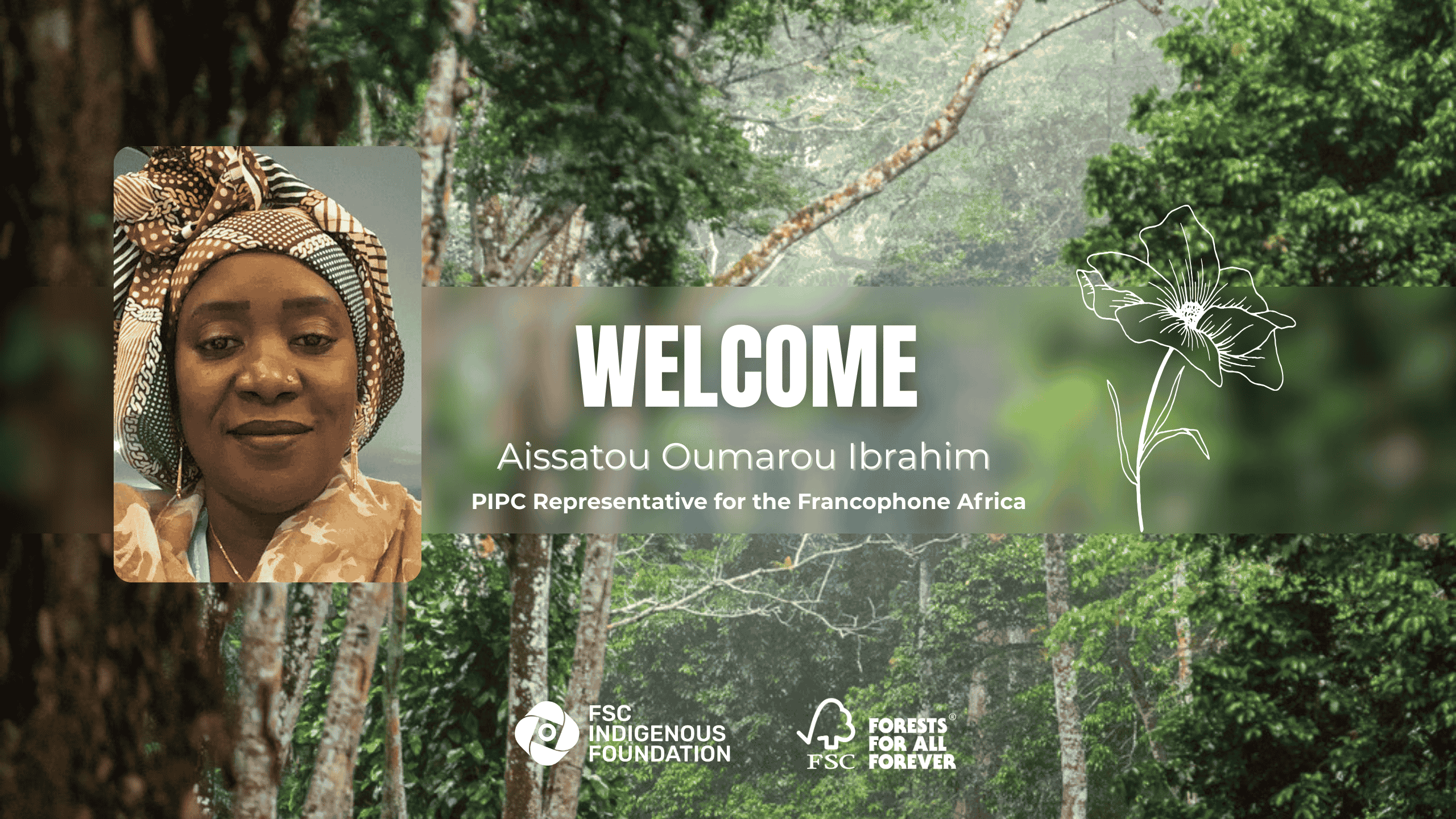
We are pleased to congratulate Aissatou Oumarou Ibrahim, from the Mbororo Fulani People, on her appointment as the FSC Representative of the Permanent Indigenous Peoples Committee (PIPC) for Francophone Africa.
Through its work, the PIPC also contributes to increasing Indigenous Peoples’ market access, share, and value within FSC systems.
In her new role, Aissatou Oumarou Ibrahim will represent the perspectives, priorities, and knowledge of Indigenous Peoples from Francophone Africa, contributing to FSC’s global governance and to the advancement of Indigenous rights and leadership within forest stewardship.
We warmly welcome sister Aissatou to this important role and look forward to collaborating closely with her as part of our collective work with the FSC, PIPC and the FSC Indigenous Foundation.
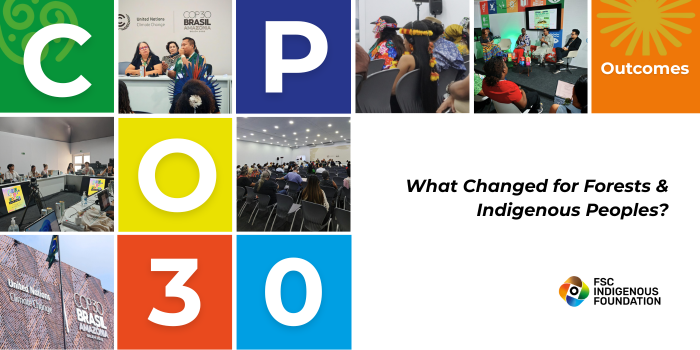
Newsletter: COP30 Outcomes Report
Key outcomes that matter for Indigenous forest stewardship
FSC IF
The Forest Stewardship Council and the FSC Indigenous Foundation worked together during COP30, collaborating on side events, engagement activities with strategic allies, spaces for dialogue, and other coordination actions to highlight Indigenous priorities and strengthen their participation and advocacy.
COP30 is over, but its impact will be decided in implementation. Today, we break down the outcomes for forests and Indigenous Peoples: what shifted, what to watch, and what it could unlock if finance and policy are delivered with rights, transparency, and Indigenous governance at the center.
COP30 announced new resources for standing forests and land tenure—implementation and safeguards will determine whether communities benefit.
Key points:
Tropical Forest Forever Facility (TFFF) in plain language: long-term, results-based payments; early capitalization; commitment share for Indigenous Peoples and local communities.
Forest and Land Tenure Pledge: donor/philanthropy funding to advance legal recognition, demarcation, governance reforms, and community-led conservation.
Intergovernmental Land Tenure Commitment: country commitments to secure hectares by 2030; why collective tenure matters.
Global Mutirão: From Negotiation to Mass Mobilization
COP30 elevated Mutirão as a model for collective action. Its impact will depend on whether communities have real control, rights, and resources.
Key points:
What is Global Mutirão? Meaning and origins; a framework for collective mobilization beyond formal negotiations.
Why it matters for Indigenous Peoples: validates communal stewardship and traditional ecological knowledge; invites Indigenous and Afro-descendant peoples into climate action pathways.
What success looks like: financing, technical support, recognition of land and tenure rights, respect for Indigenous governance, and protection against extractive pressures.
The Implementation Era: Adaptation, Loss & Damage, Gender—and Who Gets to Decide
COP30 advanced frameworks, but participation, direct access, and rights-based safeguards will determine real impact for communities.
Key points:
Adaptation: Global Goal on Adaptation indicators and political signals to scale finance; risks of voluntary/weak indicators and uncertain funding.
Loss & Damage: progress on coordination and technical assistance; persistent gaps in rights-based safeguards, direct access for Indigenous Peoples, and governance inclusion.
Belém Gender Action Plan (BeGAP): recognition of Indigenous women; success depends on meaningful decision-making power and financing access.
Article 6 & Carbon Markets
International carbon markets are moving into implementation, strong safeguards, FPIC, and tenure security are essential.
Key points:
Opportunities: potential resources for forest protection and restoration if designed with strong rights and environmental integrity.
Risks: non-permanence, double counting, weak additionality; displacement/injustice without FPIC, tenure security, and fair benefit sharing.
Guardrails: FPIC, land rights, Indigenous governance, community-defined benefit sharing, transparency, grievance and remedy.
Matters relating to Finance
Finance remains a decisive factor in turning climate commitments into real action.
Key points:
Loss & Damage Fund: Rapid operational progress; USD 817.01M pledged; 2026 workplan focuses on faster, accessible grants with strong safeguards.
GCF improvements: Faster approvals/disbursement, stronger direct access support, inclusion of Indigenous Peoples, better risk management, align with Belém Gender Action Plan.
Adaptation Fund & GEF: AF expanding locally led adaptation but short of USD 300M target; GEF exceeded GEF-8 target and delivered 1.85B tCO₂ reductions (by June 2025), urging strong GEF-9 funding and Indigenous/gender safeguards.
FSC-IF Engagement in COP30 Side Events
Side events made rights, tools, standards, and direct finance concrete, and built partnerships for what happens next.
Key points:
FSC-IF joined 8 COP30 side events centering Indigenous rights, FPIC, and leadership in forest stewardship and climate action.
Called for equitable, direct, predictable climate finance, removing barriers linked to land rights and self-determination.
Stressed credible sustainability standards through continuous improvement, grievance/remedy, and capacity building.
Highlighted community forest management (with data ownership under FPIC) and Indigenous leadership in wildfire prevention/response/restoration with rapid financing.
If you wish to engage in the UNFCCC, learn more about the Indigenous Peoples Caucus!
It is the official coordination body for Indigenous Peoples participating in UNFCCC sessions, including COP, SB sessions, and related climate negotiations.
It brings together representatives from Indigenous organizations, nations, communities, and global/regional networks.
Why it exists:
To provide a unified voice for Indigenous Peoples in global climate decision-making.
To protect Indigenous rights and promote Indigenous-led climate solutions.
To track, interpret, and influence negotiation text across agenda items (mitigation, adaptation, finance, Article 6, loss & damage, etc.).