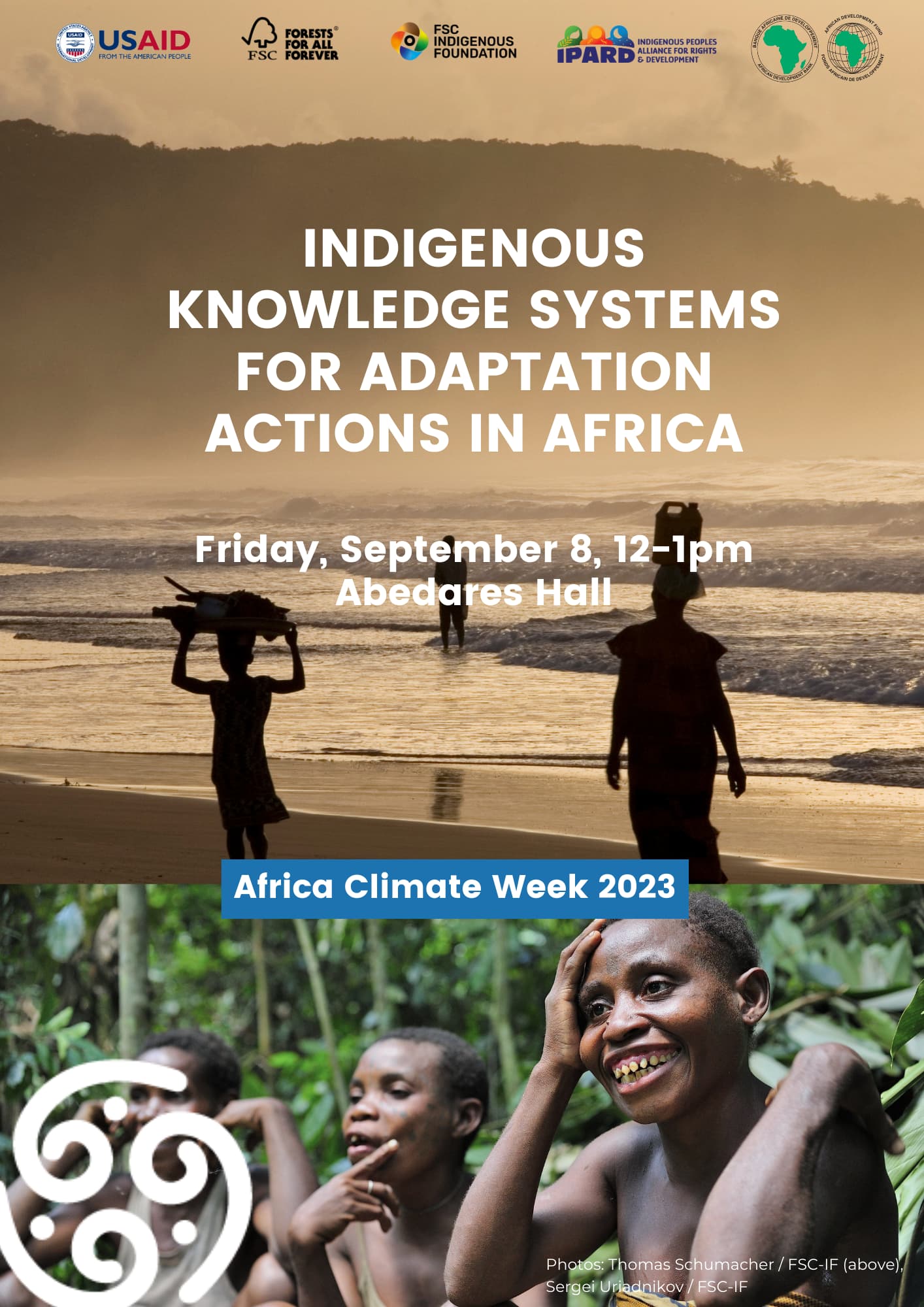
Join us at Africa Climate Week 2023: Indigenous Knowledge Systems for Adaptation Actions in Africa
As guardians of 25% of the world's land, our knowledge holds the answers to tackle climate challenges through collaborative, multisectoral efforts.
FSC-IF
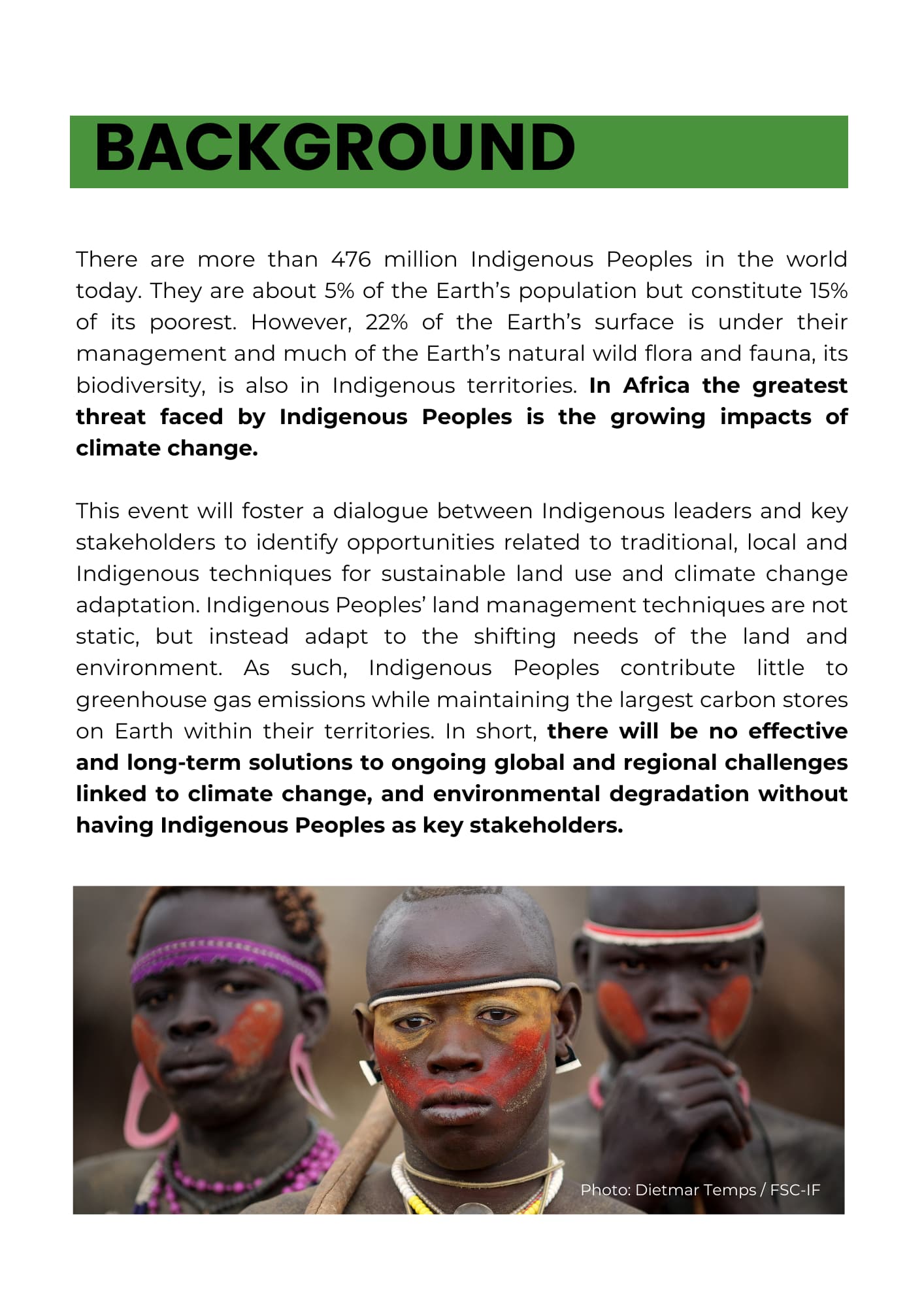
In Africa, the greatest threat faced by Indigenous Peoples is the growing impacts of climate change. However, Indigenous knowledge is an effective climate solution. Indigenous Peoples’ land management techniques are not static but instead adapt to the shifting needs of the land and environment. Indigenous Peoples contribute little to greenhouse gas emissions while maintaining the largest carbon stores on Earth within their territories. Effective and long-term solutions to climate change must involve Indigenous Peoples as key stakeholders.
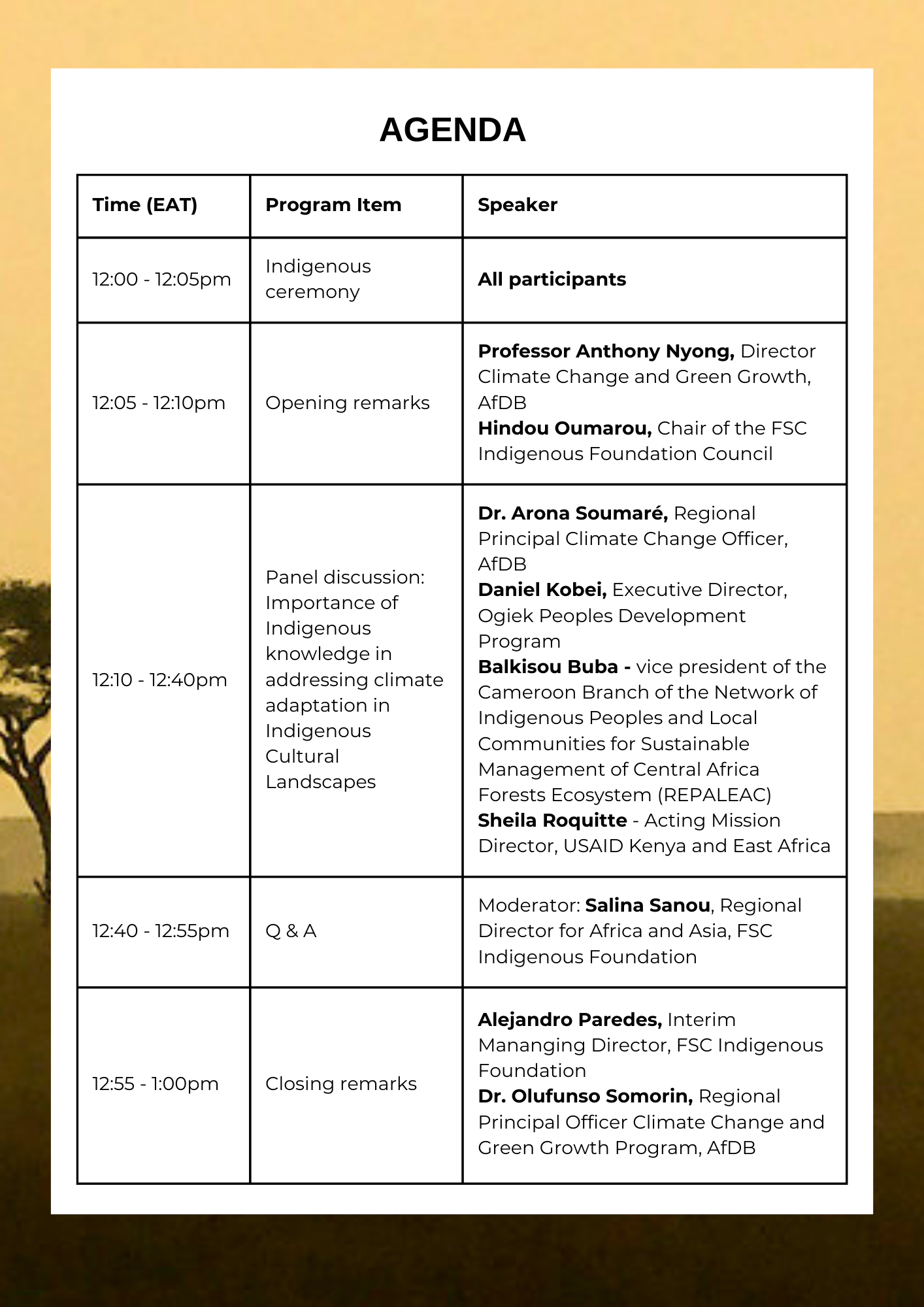
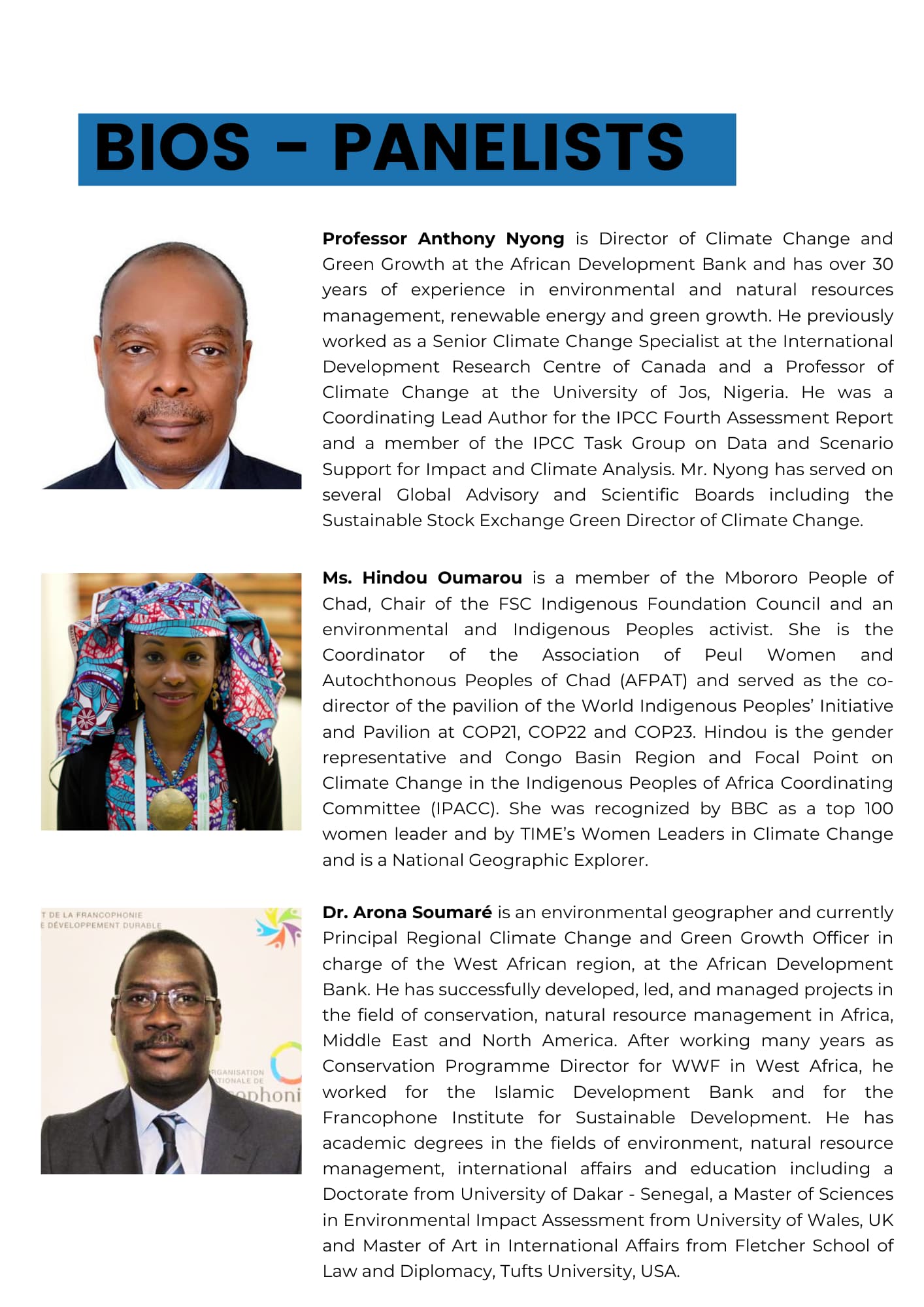
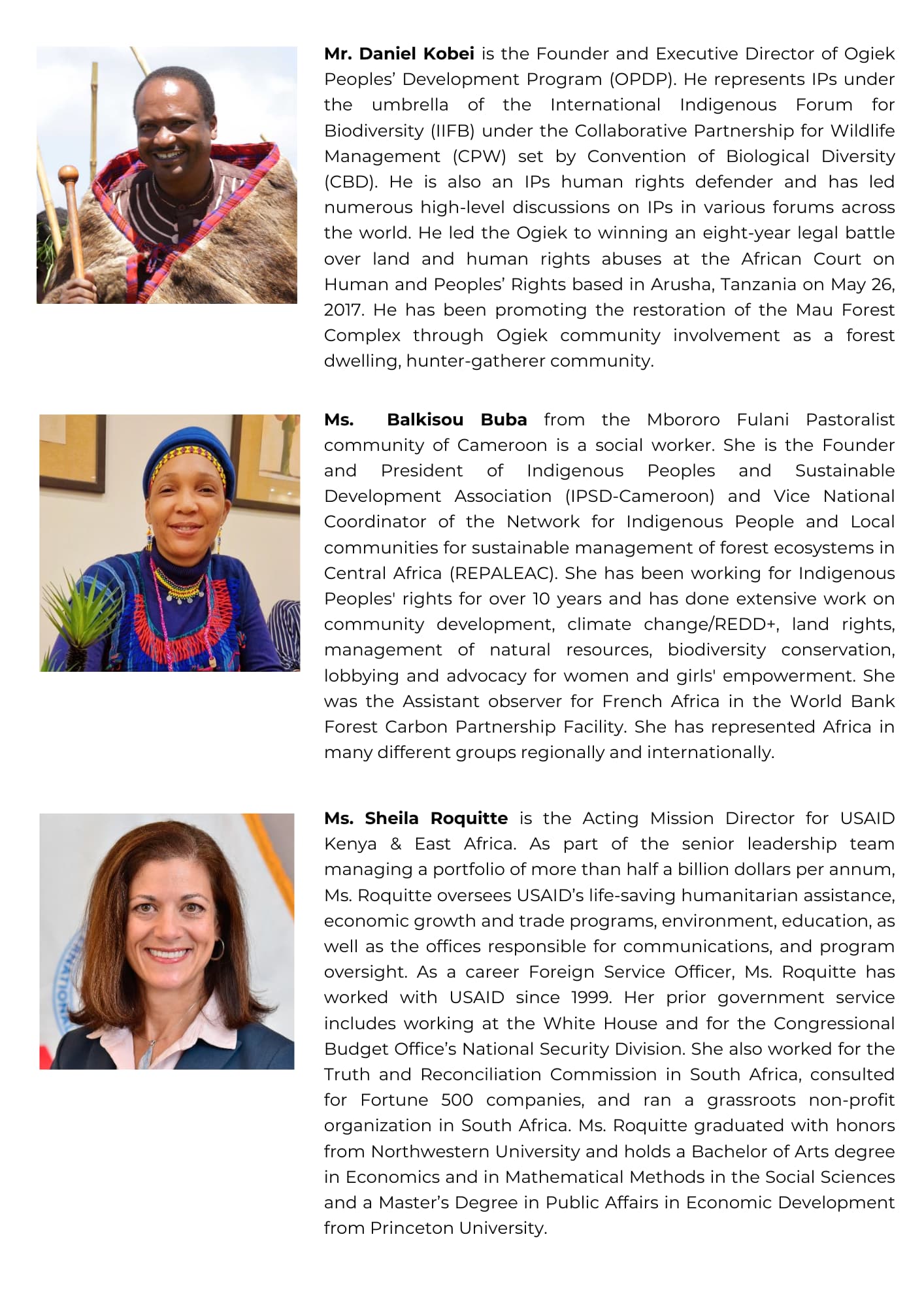
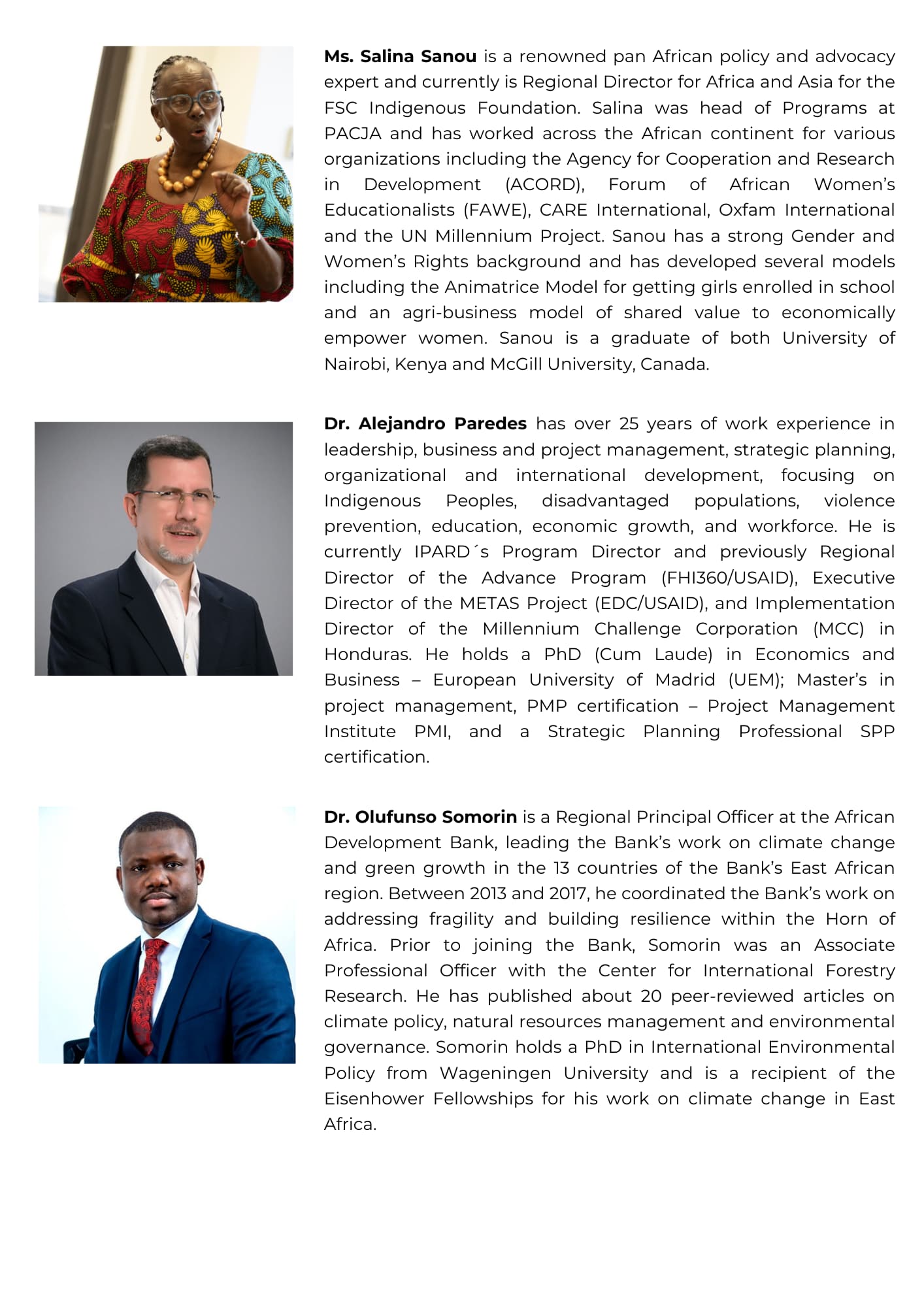
To learn more, join us at a side event at Africa Climate Week, organized jointly by the FSC Indigenous Foundation and African Development Bank, Indigenous Knowledge Systems for Adaptation Actions in Africa. The event will take place on Friday, September 8, 12:00 pm – 1:00 pm in Abedares Hall and will foster a dialogue between Indigenous leaders and key stakeholders to identify opportunities related to traditional, local, and Indigenous techniques for sustainable land use and climate change adaptation.
Find more information below.
Open Letter: Global South Voices in Support of REDD+
Indigenous Peoples worldwide voice urgency to fight deforestation with high-integrity and inclusive carbon markets.
FSC-IF
Despite historically contributing the least to climate change, our communities in the Global South bear the brunt of its impact. We shoulder this burden while simultaneously serving as guardians of what is left of Mother Earth’s most biodiverse ecosystems. Using the knowledge passed down from our ancestors, we have effectively managed the Earth’s natural capital for generations and now are the ones preventing the climate crisis from teetering to the point of becoming cataclysmic.
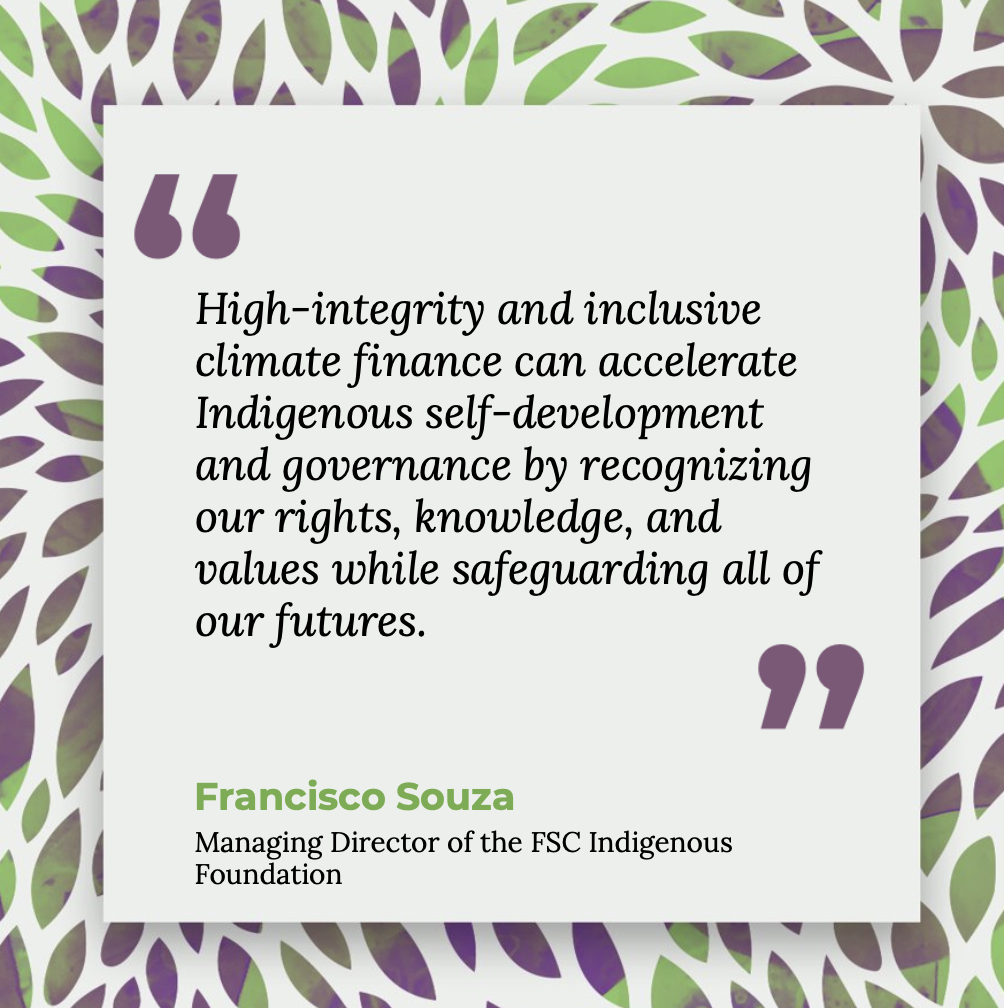
Globally, Indigenous and community lands hold at least 22% of the carbon stored in tropical andsubtropical forests, 17% of the total carbon stored in forests, and 80% of the world’s biodiversity. If we are to halt deforestation and keep global warming to 1.5°C by achieving a net-zero world, high-integrity climate finance must be scaled and channeled to Indigenous-led conservation efforts. It is only by respecting our rights, tradition, and ancestral knowledge that the international community will be able to preserve the planet for future generations of all communities and peoples.
As it stands now, there are very few ways for our communities to access the finance that we are due for our efforts and successes in protecting nature. REDD+ (Reducing emissions from deforestation and forest degradation) projects provide one of the only proven avenues available to our communities to access the finance required to not only conserve and protect our environments, but also to drive sustainable development for our communities that are shaped by our traditions and values. Recent criticisms on the validity of REDD+ as a conservation mechanism have ignored these positive benefits and have put this critical source of finance at risk–ultimately putting the well-being of our communities at risk.
Not only has the scientific analysis underpinning the critique been repeatedly rebutted, but once again, the voices from our communities were nearly absent from the narrative. In our eyes, well-implemented conservation projects using the REDD+ model are some of the most powerful ways for businesses and governments in the Global North to effectively channel much-needed finance directly to communities in the Global South. This transfer of resources from North to South will ultimately protect climate-critical forests while also prioritizing the livelihoods and needs of our people, bringing forth sustainable development to local communities, and preserving our traditions, cultures, and knowledge. Those who doubt the potential of REDD+ to deliver nature conservation have claimed that the positive impacts of these
projects are being overestimated. Yet, no one asked those of us who live on the land in question, what the impacts are, and how we can become partners to strengthen and improve high-integrity climate finance mechanisms, including REDD+ crediting programs, to achieve net zero and protect our land. Whatever new measurement methods yield, they simply cannot stand up to what we see everyday living in and next to what remains of Earth’s natural habitats. Those interested in knowing the impacts of REDD+ projects should be incorporating our knowledge and observations into their analysis if they want an accurate picture.
In addition to the robust effects these projects have on fostering healthy, biodiverse, ecosystems, the anti-REDD+ narrative has failed to take into consideration the robust positive effects REDD+ is having on our communities, including:
Providing us with the resources to build a future defined by our own traditions, cultures, and values
High integrity and quality climate finance, including high-integrity carbon credits, help us generate income from our natural resources on our own terms. Instead of relying on half-hearted aid commitments made by leaders abroad, we can be sure that finance will directly end up in the hands of our communities.
Those signing this letter are concerned that recent incorrect criticisms of REDD+ projects will do harmful damage to an essential financing mechanism. We are well aware that this path is not without challenges, but should journalists, or anyone with concerns, have asked for our perspective, it would be clear that there is much more to the REDD+ story than inaccurate measurements of deforestation impacts on our land.
We consider REDD+ crediting programs in our territories as the most direct pathway to recognizing, safeguarding, and receiving compensation for our traditional conservation efforts. This is a critical tool to ensure that we have the resources we need to develop and that our future is defined by our own cultures and values.
A clear path toward sustainable development
Well-managed REDD+ projects enable local communities to build strong Indigenous-led and nature-based economies that do not have to depend on extractive activities.
Many REDD+ projects also yield impactful societal benefits, including economic ones. We support these projects because, to date, they have provided a significant avenue to secure our legal rights, provide the financial means to value our ancestral practices, and protect our lands and Mother Earth. These projects have created the conditions to strengthen Indigenous finance to drive sustainable livelihood opportunities, access to healthcare and education, women’s empowerment, community development initiatives, and much more.
Those in the Global North must do more to ensure our perspectives are being considered before publishing a story that risks taking away critical resources from our communities based on a narrative that doesn’t portray the full picture.
REDD+ methodologies are not perfect, and we agree on that — but improvements are being continuously made based on scientific evidence. REDD+ carbon crediting programs must be given the opportunity and support to grow to their full potential as an important part of a market that prioritizes transparency and integrity.
However, if our lands, peoples, and posterity are to survive and thrive, we cannot turn our heads away from high-integrity climate finance, including that delivered by carbon markets and REDD+ projects. When it comes to promoting Indigenous-led nature-based solutions, at the scale and speed required to meet global climate targets, they are our most critical resource.
We need immediate and steadfast support from Global North governments and buyers – they must keep responsibly
engaging with the voluntary carbon market and other REDD+ crediting programs as they continue to evolve and ensure finance continues to flow to the Global South.
This letter is signed by the Indigenous-led groups and organizations working to support Indigenous Peoples in 40+ countries worldwide:
FSC Indigenous Foundation is a global organization created by and for Indigenous Peoples that seeks to provide long-term solutions supporting Indigenous communities worldwide.
The Peoples Forest Partnership (PFP) is an equitable partnership between forest communities and organizations across all sectors of the economy, civil society, and government committed to driving climate finance directly to Indigenous Peoples, traditional owners, and local communities (IPLC).
The following global south organizations have also co-signed in support of this letter:
VNV Advisory Services is an Environmental Services company based in Bangalore, India.
NBS Brazil Alliance is a private is a private, non-profit organization aiming to promote and encourage an agenda to combat deforestation and forest degradation by creating guidelines and good practices, generating a safe and reliable business environment.
BaiAni Foundation provides support to cacao and abaca smallholder farmers in an integrated landscape approach that fuses economic development as well as environmental protection.
Integradora de Comunidades Indígenas y Campesinas de Oaxaca (ICICO) is a non-profit organization comprised of 12 communities from five regions of the state of Oaxaca, dedicated to promoting sustainable development, employment generation, local capacity building, as well as the maintenance, improvement, and conservation of forest, agroforestry and agricultural ecosystems of the communities.
Our Voices
The truth we see is that these projects not only have a demonstrable impact on reducing deforestation, but also serve to channel finance to our communities, putting value on our contribution to global climate solutions and supporting our development. Without these projects in place, the deforestation rates would continue to rise and our communities would continue to bear the brunt of climate change with fewer resources to mitigate and adapt.
Below are the real voices of Global South communities on the benefits that REDD+ carbon credit revenue can bring to communities on the ground:
Mariamu Anyawire Mwakilosa, Community Coordinator in the Yaeda-Eyasi Project, Qangdend Village, Tanzania: “Carbon finance has brought significant benefits to the community here. The project has promoted responsible forest management, proper land use planning, and conservation. Together, these practices have improved the local environment and supported the preservation of existing wildlife. Moreover, the project has brought new and additional sources of income. The funding we receive from the sales of carbon credits funds many important things for our community, such as the construction of schools and healthcare facilities and paying the salaries of local people to be Village Game Scouts, who protect the forests.”
Regina Nada Safari, Community Coordinator in the Yaeda-Eyasi Project, Qangdend Village, Tanzania: “I urge companies buying carbon credits to continue or increase their purchases. This finance is crucial to the project’s success and for the benefits provided to individuals and communities to continue. I thank you and leave with the words: no forest, no life.”
Faraja Oswald Alberto, Finance Officer for the Ntakata Mountains project, Western Tanzania: “Before the start of the Ntakata Mountains forest protection project, there was an invasion and massive clearing of forest areas. Our lands were badly damaged. After that, the community decided to make a plan for the best use of land and implemented a forest carbon project. Gradually, the environment began to improve as the community received carbon finance to support sustainable projects and forest conservation. In addition, now, over 25,000 people within the eight villages of the project areas benefit from developments such as [health] clinics, schools, and health insurance. This is improving the local community and our economy.”
Supuk Olekao, Manager of the Makame WMA, representing five Maasai villages, Irkiushoibor, Makame, Katikati, Ndedo, and Ngabolo, and their communities, Tanzania: “Financial revenue from carbon credits means we now earn from protecting our forests in the way we always have and we now have the resources to ensure our land is not invaded and our forests stay standing. Importantly, the carbon finance also enables health and education for our communities, and we can protect our livelihoods and our culture as Maasai.”
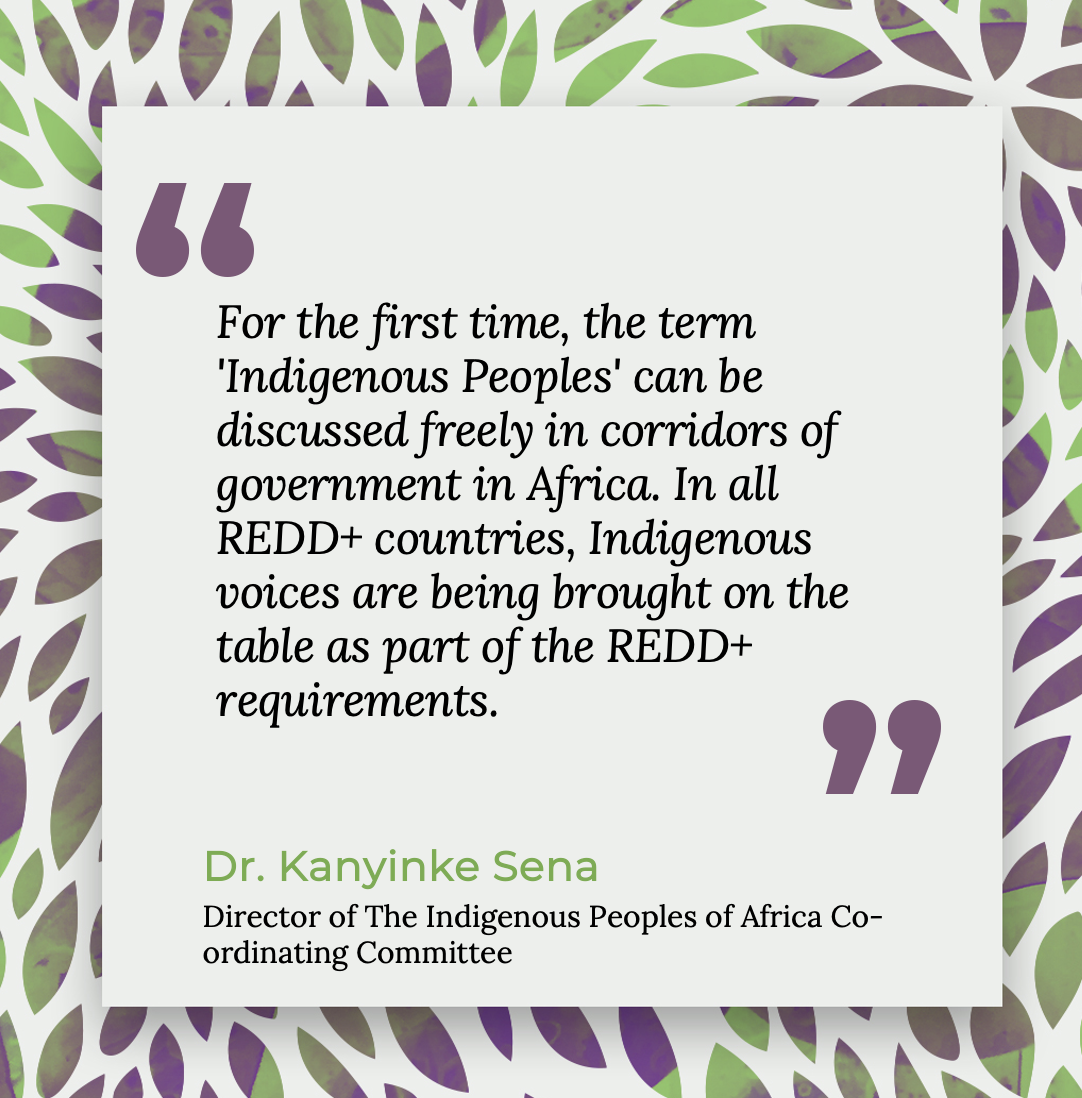
Dr. Kanyinke Sena, Director of The Indigenous Peoples of Africa Co-ordinating Committee: “As one of the key drivers of REDD+ in Africa, it provided a bid opportunity for Indigenous Peoples. For the first time, the term “Indigenous Peoples” could be discussed freely in corridors of government in Africa. In all REDD+ countries, IPLC voices were brought to the table as part of the REDD+ requirements. REDD+ also contributed to the establishment of IPs dedicated grants mechanism for example in the Forest Carbon Partnership Facility and under the UNREDD FPIC Guidelines in Kenya. However, jurisdictional REDD+ has not achieved its potential because of insistence on layers & layers of safeguard policies. This slowed down the programs and has greatly disillusioned communities.”
Joseph Mwakima, Community Relations Officer of the Wildlife Works Kasigau Corridor REDD+ Project: “My hopes are not just for our project but for the whole world. My hope is that we can embrace REDD+ and similar initiatives that invest in communities to conserve the environment. In Kasigau, through the Wildlife Works REDD+ project, we have a way to take care of the forest and help humans co-exist with wildlife. Through REDD+ work, we are able to fund what we need like education, access to clean water, and clinics. Why wouldn’t we want to replicate REDD+ around the world? This is a message for everyone. Let’s work together. Climate change is here and we have to do something to have an Earth we can live in and leave for future generations.”
JR Bwangoy-Bankanza, DRC Country Director, Wildlife Works: “I have personally experienced the potential of the voluntary carbon market to deliver for both climate and social justice. Carbon revenue has paid for teachers’ salaries, new schools, healthcare infrastructure, agriculture intensification, and clean water facilities. While the outcomes may superficially appear unrealistic compared to those of traditional Global North aid, carbon finance is a serious departure from that model. Crucially, the voluntary carbon market enables us to generate income from our own natural resources. We are not reliant on half-hearted aid commitments made by leaders abroad. Instead, we can be sure that finance will end up in the hands of local communities. While I am the first to acknowledge that REDD+ needs strong safeguards, I fear that the critics are missing a crucial point. Many of us here in the Mai Ndombe have seen transformative improvements to our quality of life that will last for generations, due to the finance we have generated through forest conservation.”
Faraja Oswald Alberto, Finance Officer for the Ntakata Mountains project in western Tanzania: “Before the start of the Ntakata Mountains forest protection project, there was an invasion and massive clearing of forest areas. Our lands were badly damaged. After that, the community decided to make a plan for the best use of land and implemented a forest carbon project. Gradually, the environment began to improve as the community received carbon finance to support sustainable projects and forest conservation. Over 25,000 people within the eight villages of the project areas benefit from developments such as [health] clinics, schools, and health insurance. Also, the presence of modern classrooms and food for students in schools vastly improves education in the community. Village Game Scouts are now fully employed by their respective villages to protect the forests and are paid a monthly salary from the carbon credit revenue. Groups of entrepreneurs benefit from small loans made possible by carbon finance from Cocoba (Community Conservation Banks) to run their various wealth-producing activities. This is improving the local, community economy.”
Supuk Olekao, Manager of the Makame WMA, representing five Maasai villages, Irkiushoibor, Makame, Katikati, Ndedo, and Ngabolo, and their communities in Tanzania: “We set up a community conservation area, or Wildlife Management Area (WMA) in 2009 to stop the invasion of our land and its deforestation by nearby subsistence agriculturalists. However, the WMA management authority was unable to put it into practice because of a lack of finance. We had the organization, the ideas and the people, but not the resources to really protect our land and our forests. We partnered with Carbon Tanzania to set up a forest carbon project in 2016. The financial revenues from the carbon credits we now earn from protecting our forests in the way we always have, mean that we now have the resources to ensure our land is not invaded and our forests stay standing. Importantly, the carbon finance also enables health and education for our communities, and we can protect our livelihoods and our culture as Maasai.”
Regina Nada Safari, Community Coordinator in the Yaeda-Eyasi Project: “Due to a lack of education on the importance of environmental education, there was an increasing amount of environmental damage near Domanga village. Many people were simply unaware, both of the harm caused by deforestation, and of the benefits of conserving nature. However, since the carbon project has begun, forests are increasingly seen as a foundation of all community activities, and the numerous benefits they provide are recognised. Furthermore, the carbon revenues generated from protecting the forest has improved access to education for many in Domanga Village, including me. This process is working here on the ground. I urge companies buying carbon credits to continue, or even to increase their purchases. This finance is crucial to the success of the project and for the benefits provided to individuals and communities to continue. I thank you and leave with the words: no forest, no life.” [translated from Swahili]
Mariamu Anyawire Mwakilosa, Community Coordinator in the Yaeda-Eyasi Project, Speaking from Yaeda Valley: “Qangdend is a village formed of farmers, livestock herders, and hunter-gatherers. Before entering into a contract with Carbon Tanzania, deforestation posed a significant challenge for us. At the time, many new settlers were arriving in the village, drawn by the increasing popularity of onion farming. While it is a highly commercial crop, onion farming has been progressively worsening forest degradation in the Eyasi region. But carbon finance has brought significant benefits to the community here. The project has promoted responsible forest management, proper land use planning, and conservation. Together, these practices have improved the local environment and supported the preservation of existing wildlife. Moreover, for the villages who have signed an agreement with Carbon Tanzania, the project has brought new and additional sources of income. Finance we receive from the sales of carbon credits funds many important things for our community such as the construction of schools and healthcare facilities as well as paying the salaries of local people to be Village Game Scouts, who protect the forests.” [translated from Swahili].
Dominique of Ambodimanga, a municipality in Madagascar: “I come from Ambodimanga. In the past, there were many forests here, but they had been destroyed by excessive cutting and bush fires. Now, Bôndy company is giving us seedlings and we are willing to reforest to cover our land with trees again. We are motivated to do this reforestation in Ambodimanga because for us it represents a heritage that we can leave to future generations. Various species of fauna were found here before, such as the ankomba who lived in the trees, and the trandraka who lived in the ground, but now they have disappeared from the area. We therefore wish to bring back everything that existed before through reforestation.”
Jonathan Joson, Director, BaiAni Foundation, Philippines: “BaiAni Foundation continues to provide agri-based livelihood support to smallholder farmers and Indigenous communities in Mindanao. It has integrated this with climate solutions to sustain its rural transformation initiatives. Farmer and Indigenous Peoples-focused programs are unsustainable relying mainly on short-term donor support and corporate contribution. Working with upland communities to develop high integrity carbon credits provide a viable funding path for communities and climate benefits as well.”
Eleuterio Manaytay, Provincial Tribal Chieftain and Indigenous Peoples Mandatory Representative of Davao Oriental in the Philippines: “The Mandaya and Kagan Indigenous Peoples of Davao Oriental have long been customary stewards of forests in their ancestral domains. However, due to pressures brought about by incursions in our land, poverty, and changes in land use, our forests have been diminishing at a fast rate annually. Government alone cannot solve the problem ofdeforestation. IP communities have long expressed their resolve to protect the remaining forest with support in forest guarding, enforcement, and livelihood. Performance-based forest protection through REDD+ provides a sustainable support for our tribal communities to not only defend our source of food, biodiversity, and heritage, but is also our small contribution to the world in fighting climate change. Losing this opportunity is almost pronouncing a death penalty to our tribe and culture.”
Tulasi Sangraula, Chairperson of the Federation of Community Forestry Users Nepal (FECOFUN) for Koshi Province, Nepal: “As the Provincial Chairperson of the Federation of Community Forestry Users Nepal (FECOFUN) for Koshi Province, I am very happy to share with you the uniqueness of our territory and the experiences from the top of the world. Everest and an additional four eight-thousand meters peaks lie in this province which tapers down to 60 mals within a span of around 150 kms, making this terrestrial ecosystem extremely diverse. Sharp altitudinal variation has given rise to many ecological zones bearing different forest types that harbour a diversity of flora and fauna, many of which are of global significance. Community groups manage the forest in this biological hotspot through grassroots level institutions called community forestry user groups (CFUG) which forms the hallmark of participatory forest management globally. These are local-level democratic institutions with their own constitution, socially inclusive governance system, management and operational plans, and bank account. There are altogether 3,758 CFUGs in this province managing 421,529 hectares of forest by active involvement of over half a million household members which translates to an outreach to over 2 million population.”
Rumini, who works at Yayaysan Konservasi Pesisir Indoneisa (Yakopi), a non-profit working to conserve and restore mangrove forests. “I live at Klantan Luar, Langkat District, I am 56 years old, I have 5 children and 4 grandchildren. I have long joined the mangrove group. I have always followed the activity. I joined this because I wanted to keep protecting the mangrove. We want this plant to be sustainable for all of our grandchildren. My husband and I joined him to protect the mangrove for our future for the fish, crab, and shrimp for their home to breed like me and family. I have 2 children that still study and we need money to pay for them so this is very helpful to us. As long as there are mangroves my family’s economy is helped. From the mangrove, we can take fish, crab and shrimp which now are much better, because the mangrove can grow up better and be a home for all of them and I always can help our economy who has lived here for 50 years.”
Mariya Lakshi Kosta, Entrepreneur, Mohuttuwarama, Puttlam Lagoon, Kalpitiya, Sri Lanka. “I am grateful to this project. I have been able to get an additional training programme under this mangrove restoration project. I learned many handcrafts, dressmaking methods, crochet and also cookery. It has given me a marvellous opportunity to improve my skills and capabilities. These new skills and knowledge have helped me to become a self-confident and successful woman entrepreneur. I am really happy that I am enable to support not only for my family wellbeing but also to our community livelihood through this project.“
A.S. Vihaldeen, Farmer, Sammatiyavadi, Pallivasaithurai, Puttlam Lagoon, Sri Lanka. ‘’We have been living within this mangrove forest and this lagoon ecosystem for many generations .This is the environment we are living in. But for many reasons this ecosystem got destroyed and natural habitats got disturbed. This project gave us good knowledge and encouraged us to continue growing crops and to protect the soil. This gave us a good yield. I also should emphasize that this is the main income source for our families. Therefore this is a benefited project for our community.‘’
P. Sylvester Fernando, Fisherman, Mohuttuwarama, Puttlam Lagoon, Kalpitiya, Sri Lanka. ‘’This is a sustainable way to protect the environment. In this project they give us plants to plant and also they pay for us to look after them. This encourages us to give priority and make more concern about the environment. Also this project helps me to make an extra income for my family. I am excited to be part of this project and also to be team leader in this project. My son and my wife are also being part of this project now. Therefore myfamily appreciates this project.‘’
W.D Daminda, Farmer, Puttlama Lagoon, Sri Lanka.“This project gave lots of benefits for our mangrove forests and lagoon diversity. Lagoons are known to be nursery areas to breed fish and especially shrimps. But nowadays due to unplanned tourism and usage ofDolomite for fishing and also some chemicals like chlorine usage destroys the habitats and pollutes the environment. This project theme is to conserve mangroves in order to protect the community. Therefore this is a very good project and me and my family members wanted to give huge thanks for this project and also to ask others also to join with this project.”
W.T.P Krishnan, Inland Fisher from Pambattihandiya, Mundal Langoon, Sri Lanka. “This is a very good project for our community and also for the Sri Lankan people. Most importantly being an island we have a great stretch of mangrove and lagoon ecosystems in our country. To protect these wetlands and brackish water bodies, soil is very much necessary. This project helps to protect the environment with appropriate management and to conserve the mangroves and the ecological system. Collectively this enhances the lifestyle of our community. I give thanks to this project from the bottom of my heart.”
S.P. Somapala, Inland Fisher, Panakala Lagoon, Sri Lanka. “Our lagoon fishing community makes their livelihood in fisheries. Lagoon has an expansive mangrove swamp with its inhabitants of many animal and plant species like fishes, crocodiles, birds, and flora and fauna. Due to the Sri Lankan Civil war much of it got destroyed, and we became very poor people. But after this mangrove restoration project we are now actually given many opportunities and would say this gave us a new birth for our lives. This project collaborated with the wildlife department, Timber Corporation and many other government bodies and helps us to improve our lifestyles and also helps to conserve mangroves and the environment in a sustainable manner. I am proud and privileged take part of this project as a team leader.”
A. Vignashwaran, Inland Fisher, Mundalama Lagoon, Sri Lanka. “Our family thanks and appreciates this mangrove restoration project for helping us to make an extra income and also to secure our children’s future. Also this project allows to protect the environment and lagoon wetland biodiversity of flora and fauna. Through this programme develops the nursery areas where shrimps and many varieties of fishes are concentrated. My family is happy to work with this project.”
Mon Samien, Ork 4 Village, Koh Nhek District, Mondulkiri Province, Cambodia. “Before the project intervened in my community, my livelihood depended on non-timber forest products because I did not know what to do besides this. About the weather, it is now affecting the community concerning the effects of climate change. In the rainy season, people started farming and growing vegetables, but the rain did not regularly fall as it would be. It would have steady rain, but it dries up. There is no continuous rain so that farmers to do farming and crop well. After the project intervention, it encouraged farmers to do different types of farming and vegetable as the livelihood source of income. Since then, I started to change my livelihood activity.”
Veronica Moniz, Village Chief, Anahun, Odomau Village, Timor-Leste. “I do believe that this project will be very helpful for Timor-Leste (in) becoming the greenest country in the world. There is a great potential for my community to change their attitude by following the guidelines of sustainable integrated farming agroforestry practice and permanent farming practices, in order to sustain and guarantee (a victory in the fight against) climate change to the lead the new generation of Timor-Leste. This project will also allow us to continue cultivating crops and increase the income in our family. My dream will become (a) reality if this project (is used to create) mentors of my farmers within the long term period in order to achieve the objectives of improving (every) family’s income.”
Lucia Pereia, Village Chief, Moleana, Ritabou Village, Timor-Leste. “I am confident that the project will assist my farmers’ capacity to improve the quality and quantity of the crops through the sustainable agroforestry practice, livestock fencing, plant livestock’s feed, and planting crops for the food security, people will plant trees to produce carbon benefit. All those products will be taken to the market and the (people) will be excited by making money from their own farms. The farmers are ready to give their land to be utilized for the implementation of this project in order to make money in the future through their hard work.”
Maria Borges, Women’s Group Leader, Miligo, Lia bote Village, Timor-Leste. “From this project, we will also receive business training which will help us in doing business with our farming products. The money that I get from selling out my farming products, I will save some into my cooperative group and the rests I will continue buying products and selling them to the market. The money from the cooperative is helpful to pay the school fees of my children, to buy the daily needs at home. I am a group member which makes it easy to take a loan from the cooperative with a decreased interest rate. Through these activities, as a small business woman, I am supported by my husband and children to run the business.”
Rodina Gama, Women Farming Group And Local Products Promoter, Tapo Meak, Manapa Village, Timor-Leste. “This integrated agroforestry project shows a sign of positive impact that will help us for good farming practice, training on local food processing to be sold in local and national market. We get training on peanut butter, we produce the peanut butter and we sell it to the market. The money we get, we save into two boxes; one used for the peanuts processing and the other one our basic needs in the household and for children schools’ needs. The results of this learning really help increasing the income in our family.”
Alina Liviet, Vice-Chair of FSC Permanent Indigenous Peoples Committee, Ixtan de Juarez Community, Oaxaca, Mexico. “The Ixtlán community ventured 2 years ago into the sale of carbon credits, it has forests certified for more than 20 years by the FSC and in order to have strong and healthy forests the community requires a large economic investment that ranges from the seed collection, tree cultivation, reforestation, maintenance, combating pests and fires, conservation of aquifers, preservation of native and endangered flora and fauna, among other activities. For more than 40 years, the Ixtlán community has carried out all these activities with its own resources and with some support from the government, therefore, the sale of carbon credits has brought economic resources that have been used in part to finance these activities and thereby giving back to the forest a minimum part of everything it offers us.”
Eugenio Yatz Sacul, leader of the El Cedro community in Livingston, Izabal, Guatemala. “As a community of El Cedro we participate with 345 hectares of forest that are conserved through the REDD+ Project. With this we receive a variety of benefits for families and bring well-being to the community. In addition, through the project we acquired 7 camera traps with which We have been able to observe all the biodiversity that inhabits our forests where it stands out that many felines such as the ocelot and the tigrillo have been observed.”
Mayra Pop, scholarship program recipient, Izabal, Guatemala. “Through the REDD+ Project, adolescents and young people from communities like mine can continue and finish their studies. In addition, we have access to basic health services and personal advice on our Human and Women’s Rights. Through the project, I was able to be the first woman in my family to begin (and very soon finish) University studies, and the first in my community to break the barrier of marriage with children at an early age.”
Comarca Naso Tjër Di continues the revision of its Organic Charter in Drudi
The Organic Charter is fundamental to legalize and recognize Indigenous Peoples’ rights in a territory
FSC-IF
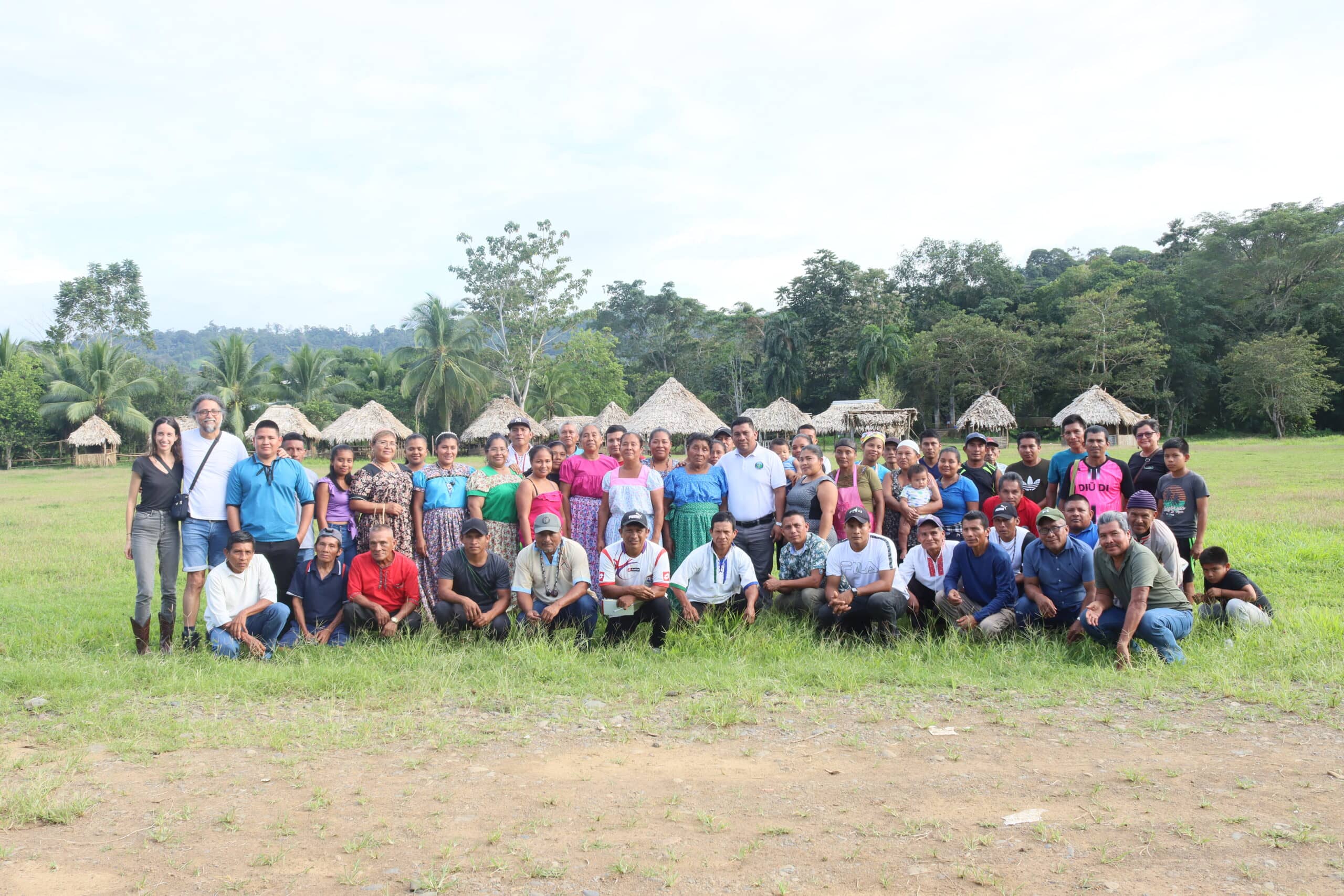
The project Strengthening of the Indigenous Agenda of Panama (FAIP for its initials in Spanish) concluded the elaboration of the Organic Charter of the Naso Tjër Di Comarca (territory) on February 21st in the community of Drudi.
This process of revising the articles of the Naso Organic Charter began last October in the community of Sieyllik, the capital of the comarca. At that time, the project’s technical team reviewed more than half of the articles that make up the official document.
The Organic Charter organizes the method to elect authorities, the geographical limits of the comarca, the cultural organization of the Naso people, land use regulation, and relations between state institutions, among other topics.
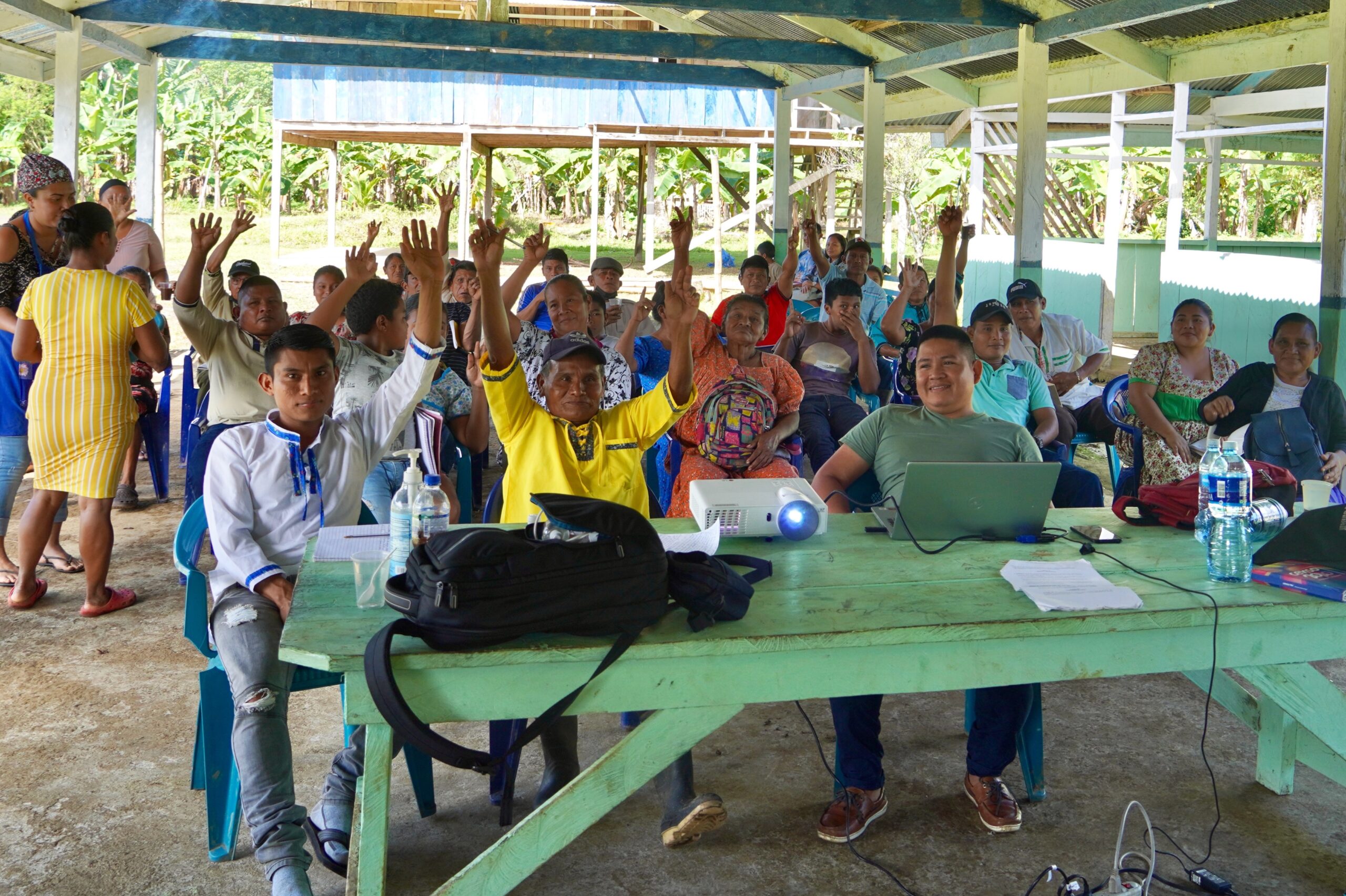
During the five days of the workshop, the technical team, traditional authorities, experts in Naso culture and history, and community representatives agreed on several points of the Naso constitution.
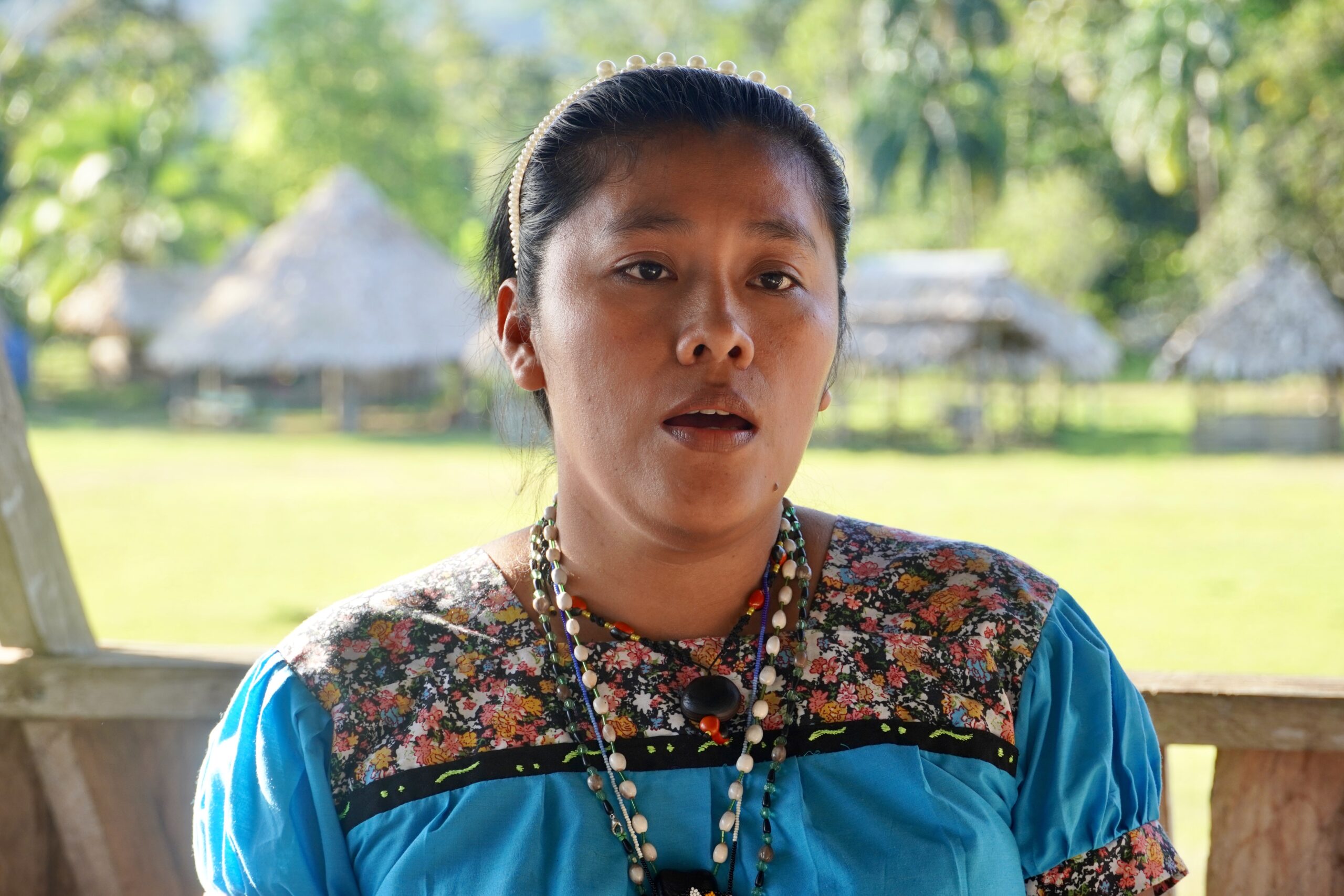
“For us, it is a new world to start writing the Organic Charter. We had no idea what the Organic Charter was, but after researching, we discovered that it is a statute where the laws that regulate the coexistence and social peace of the Naso region are located. When we were given this challenge, I did not know what I was going to face, but I believe that we assumed it with responsibility.”
Yeraldin Villagra, teacher in the Comarca Naso
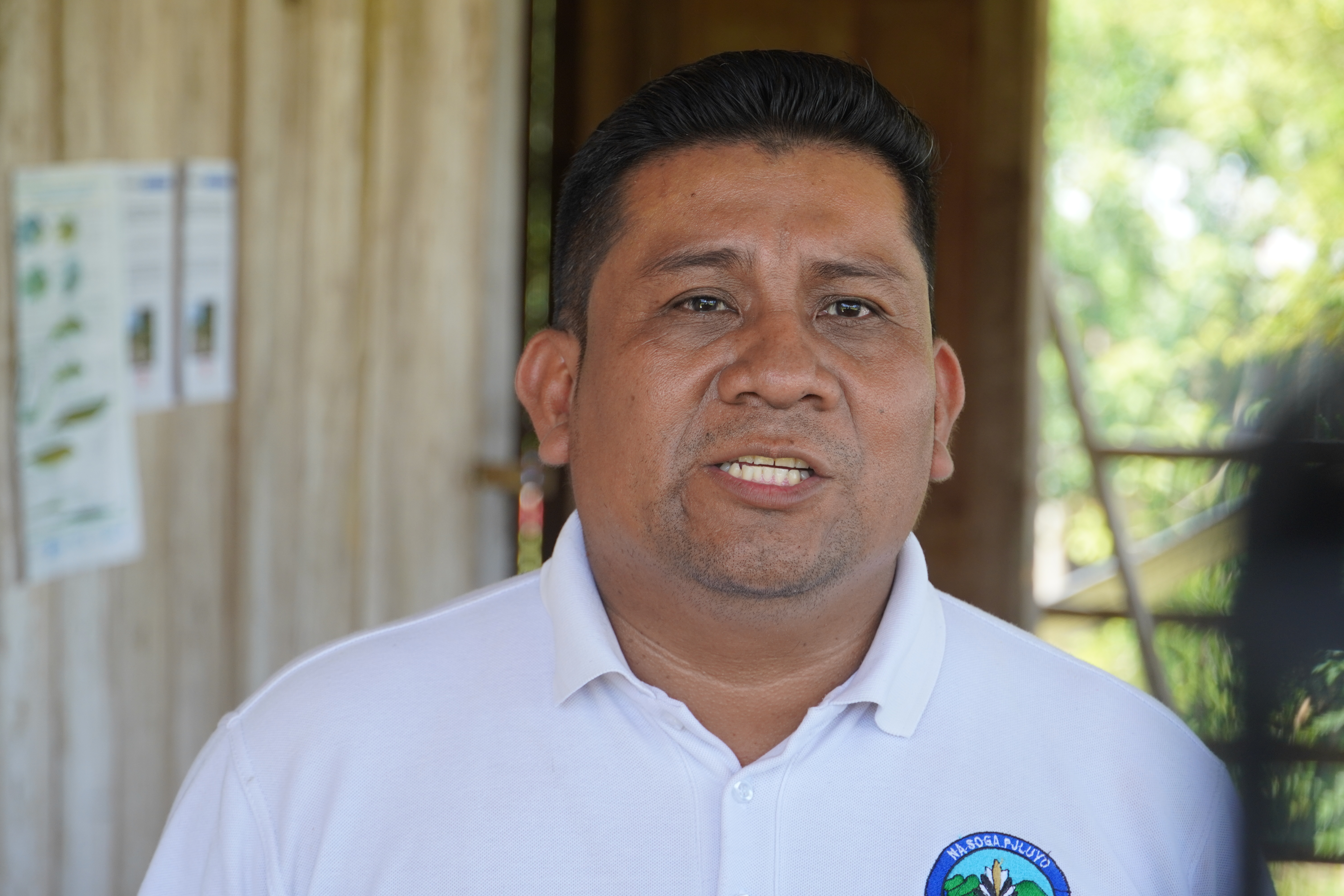
“We are securing our future generation so that we can conserve our identity and our natural resources.”
Reynaldo Alexis Santana, King of the Naso Comarca
FAIP is an inter-institutional and international effort that seeks to strengthen Indigenous governance in Panama through the elaboration and publication of Organic Charters of four Indigenous territories. We chose to use a methodology of workshops convened by the authorities and facilitated by a recognized expert in Indigenous Law, doctor in Peace, Conflict, and Democracy Alejandro Bonilla, where community members discuss various issues such as restorative justice, international law, and land systems.
About the community
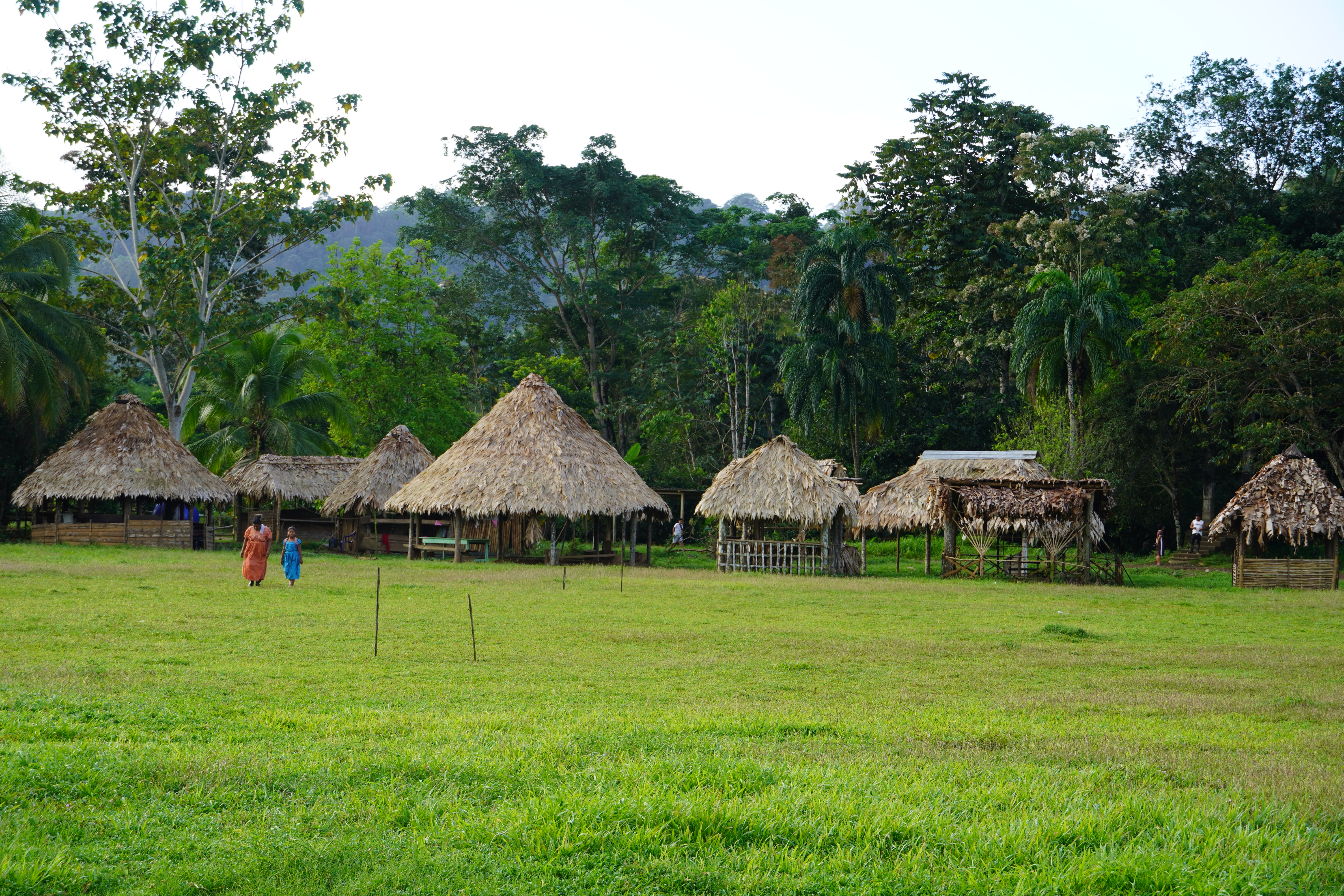
The community of Drudi is settled on a plain surrounded by mountains and the Ganadera Bocas Livestock Company, about 45 minutes from Changuinola through extensive pastures for cows and horses that were created by deforesting the province.
Drudi was the scene of years of struggles between the community and Ganadera Bocas. At its peak, around 200 uniformed men broke into Drudi and burned the 20 houses that made up the settlement. The residents went to Panama City and slept in Santa Ana Park waiting for a response from the government.
Today the Naso Tjër Di Comarca celebrates two and a half years of having been recognized by the State, when President Laurentino Cortizo signed the Law creating the comarca in December 2020 and returned sovereignty over their land to the Naso people.