
News

FSC-IF celebrates the launch of the Ogiek Peoples’ Cultural Center 

Center represents resilience, recognition, and preservation of Indigenous cultural heritage.
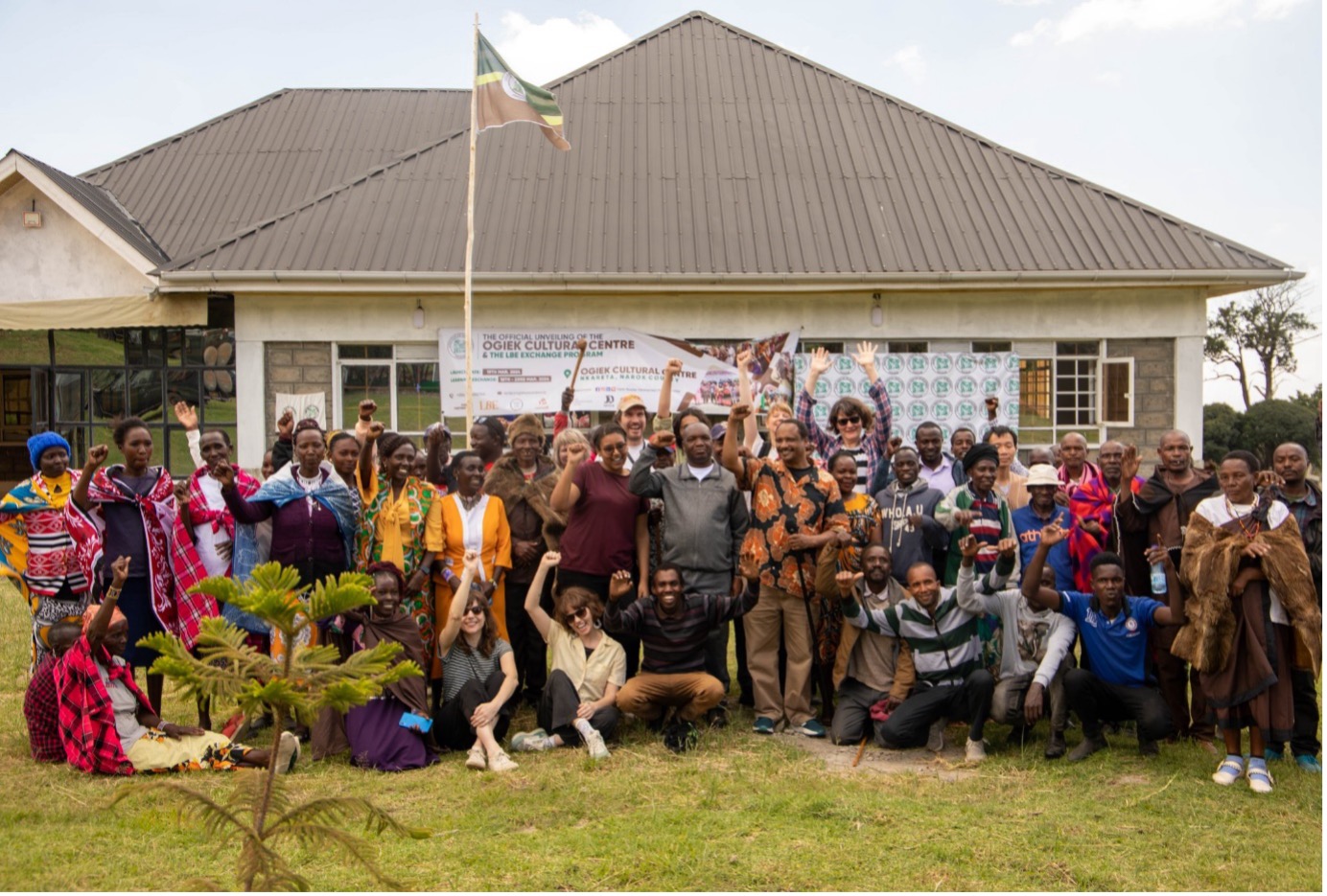
Partners and community members pose for a photo in front of the Ogiek Cultural Center. Photo credit: OPDP 

The official launch of the Ogiek Cultural Center on March 19, 2024, marked a significant milestone in the preservation and celebration of the Ogiek people’s rich culture and heritage. Organized by the Ogiek Peoples’ Development Program (OPDP) in partnership with Land Body Ecologies, Wellcome Trust, and other partners, this event was held at Nkareta ward, Narok County, Kenya, drawing attention to the deep-rooted culture, history, and traditions of the Ogiek community. The FSC Indigenous Foundation was invited as a partner.  

The Center, which also houses the Ogiek Museum, is now positioned to serve as a pivotal educational resource and a beacon for biodiversity conservation. 

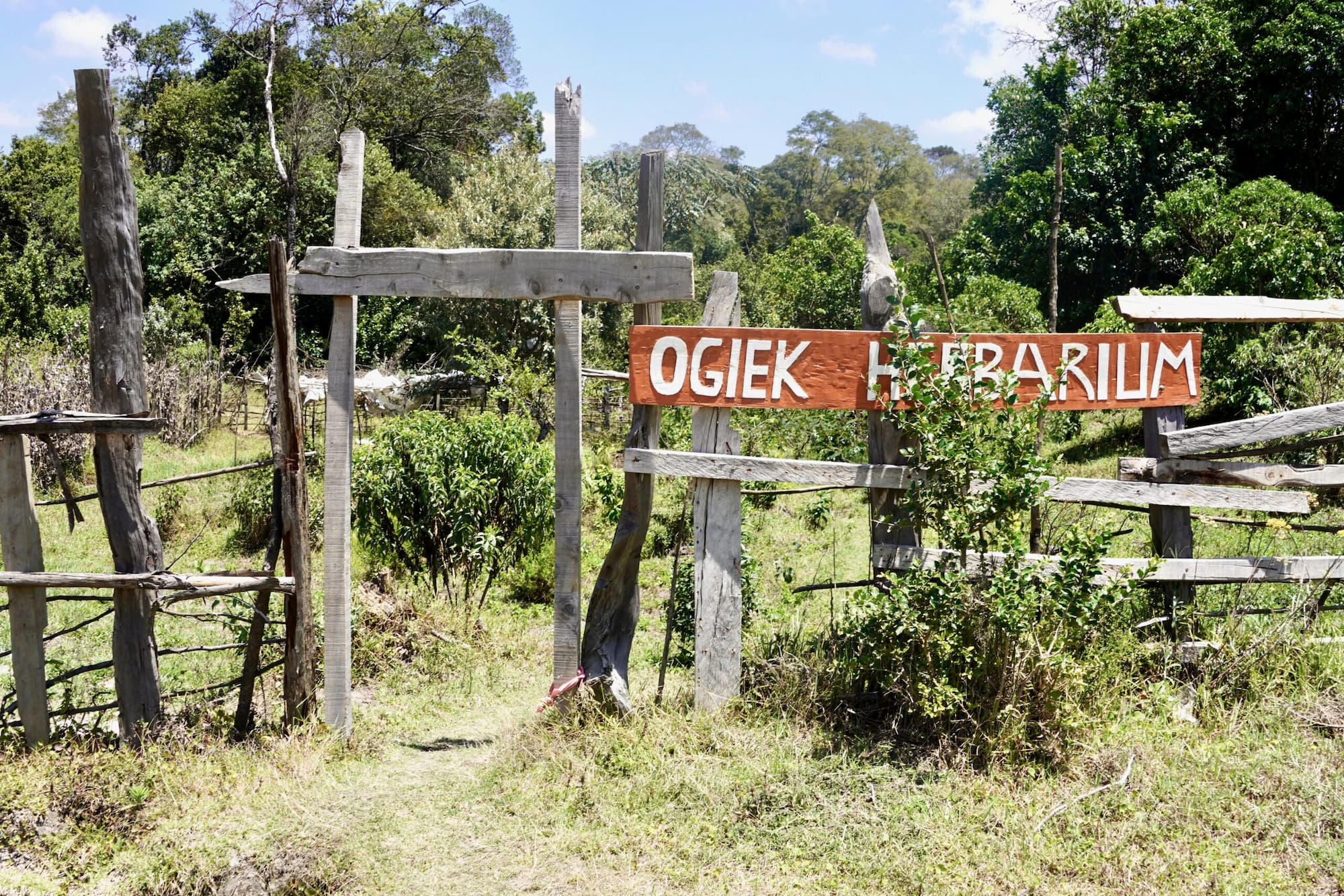
The inauguration week kicked off with an enriching learning exchange among partner learning hubs from across the globe, including Uganda, Thailand, India, the Arctic, and London, all of which are part of the Land Body Ecology (LBE) Project. This interaction paved the way for an immersive tour of the Ogiek Cultural Center, featuring the Ogiek Museum, the Ogiek herbarium — a repository of traditional herbs — and the Ogiek village, which offers a window into the community’s traditional lifestyle within an authentic Ogiek forest setting. The highlight of the day was a guided tour through the Mau Forest, allowing visitors to connect firsthand with the ancestral lands of the Ogiek people. 
The event was graced by community members from various regions, government officials, partners, donors, and other stakeholders. The chairperson of OPDP’s Board warmly welcomed attendees, emphasizing the center’s role in fostering an understanding of the intrinsic relationship between land, body, and health, as well as preserving the Ogiek’s traditional knowledge and practices. He also underscored the community’s commitment to sustainable development.  

Notable speakers, including Dr. Liz, strong Ally and Lawyer of the Ogiek community, voiced their determination to reclaim historical ownership of their lands and stressed the importance of community titles in protecting the forest. The day was charged with a spirit of resilience, with speakers from the Ogiek and other Indigenous communities such as the Sengwer and Endorois, sharing their experiences and the challenges they face, notably the loss of their territories and the need for more trees. The solidarity among Indigenous Peoples was noticeable and appreciated, with the Ogiek being applauded for their role in leading the way for Indigenous rights from national, regional, and international levels. 
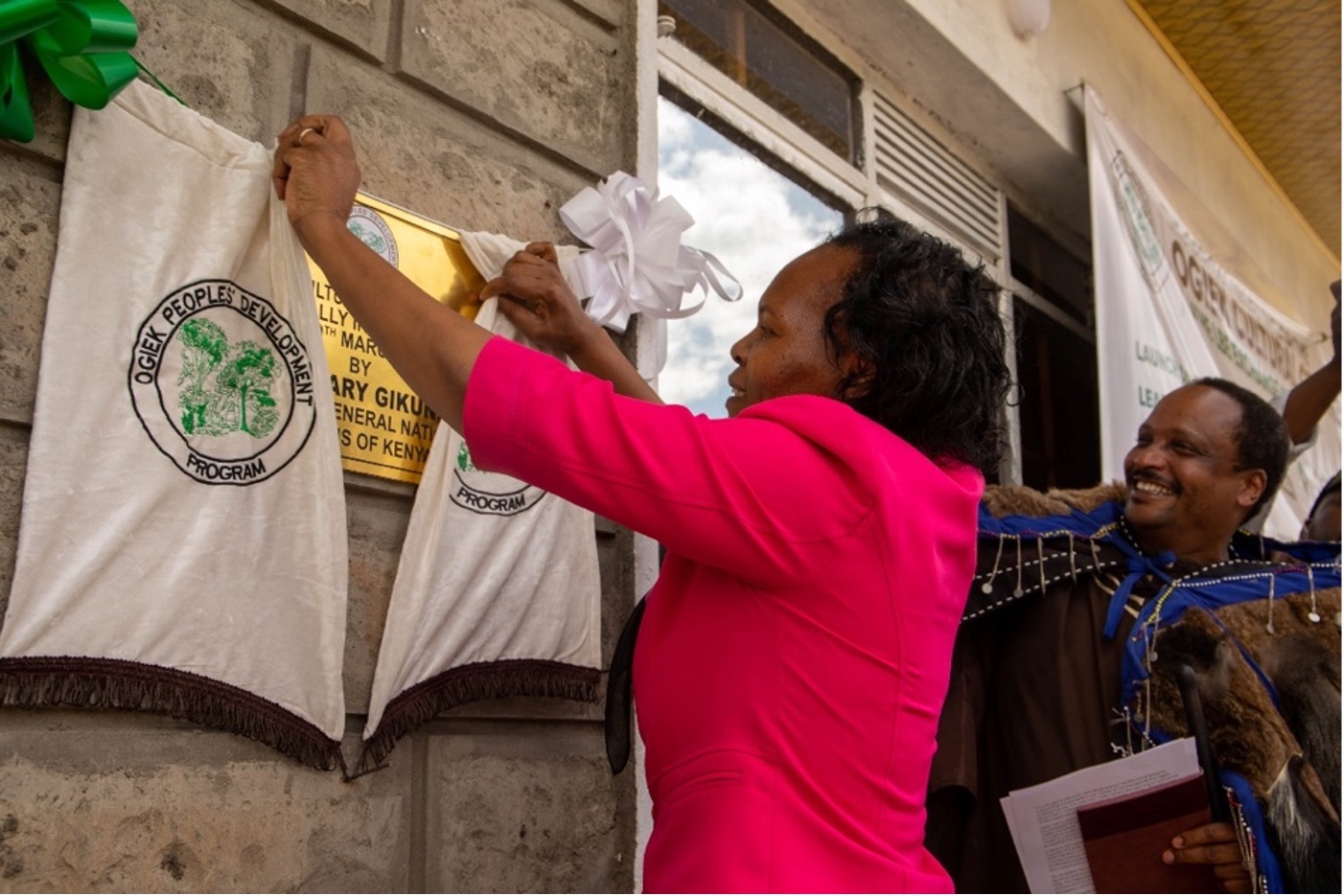
The Chief Guest Prof. Mary Gikungu Director General, National Museums of Kenya emphasizing the importance of documenting natural and cultural heritage, celebrated the centre as a testament to the Ogiek community’s resilience and dedication to preserving their culture. The message was clear: “culture is not only a link to the past but a bridge to the future, connecting us to our roots through unique songs, stories, and traditions that capture the essence of the Ogiek people.” 

The center was ushered in as a crucial facility for understanding and promoting the Ogiek culture, language, and traditional practices. The commitment to continue protecting their forests and the ongoing training in the Ogiek language during holidays were highlighted as key components of their continued legacy. 

Promoting Socio-Economic Empowerment among Ogiek Women  

This event also underscores the strengthening partnership between the FSC Indigenous Foundation and the Ogiek Peoples’ Development Program (OPDP). Our collaboration on the “Promoting Socio-Economic Empowerment among Ogiek Women of Mau, Kenya” project, implemented through the Indigenous Peoples Alliance for Rights and Development (IPARD) Program, represents a shared commitment to empowering Indigenous communities while fostering sustainable economic models. IPARD is funded by the USAID, the Forest Stewardship Council, and private sector partners.  

FSC-IF’s presence at the launch amplifies our joint commitment to cultural preservation and the empowerment of Indigenous Peoples on an international stage. Secondly, the center serves as a physical space where the objectives of our partnership — such as socio-economic empowerment, particularly of women, and the promotion of sustainable livelihoods — can be visualized and realized. Lastly, it strengthens the bond between FSC-IF and OPDP, enhancing our collaborative efforts towards achieving greater recognition and effective participation of Indigenous Peoples in decision-making processes in Kenya and beyond.  

Watch a video for more information on the launch: https://youtu.be/0BafEJHviGk  
News

Cultural references  

Indigenous women of the Emberá Ipetí community preserve and share their ancestral knowledge

Indigenous women are creators and guardians of culture, and their identity and belonging stem from this role. Recognition of identity and culture is crucial for the personal, social, and economic empowerment of Indigenous women. 

“Our cultural value, our identity, our language, will not die. That our way of living does not die, that our dance does not die, that our hair does not disappear, that our water does not disappear, that our way of being does not disappear. So, that is why identity is very important, because we want to continue resisting. Because nobody will value us, nobody will recognize us, nobody will respect us, if we do not maintain our identity in order to resist,” says Omaira Casama, leader in the Emberá Ipetí community located in eastern Panama. 

The FSC Indigenous Foundation, through the Indigenous Peoples Alliance for Rights and Development (IPARD) Program, is making a pioneering commitment to support the rescue of the cultural heritage of Indigenous Peoples. This project is part of the Economic Empowerment Plan for Indigenous Women of Panama (PEMIP 2025), developed by the Committee of Indigenous Women of Panama (CAMIP) and supported by the Government of Panama, the Inter-American Development Bank, and the FSC Indigenous Foundation.  

To develop a methodology for the restoration of cultural references of the Indigenous Peoples of Panama and apply it in a first pilot project, we worked in co-creation with the women of the Emberá Ipetí community. ENRED Panama and Norlando Meza of TV Indígena supported this project. 

Together we gathered a vision of the Emberá culture, based on the empowerment and self-determination of the women and men of the community. The community identified the thirteen priority cultural references to be mapped and documented in two focus group sessions, each lasting 6 hours, in which a total of 17 women and 4 men participated.  

None of this work could have been accomplished without the community, its traditional governments and representatives, and without their free, prior, and informed consent. 

Everything is collective  

An important element of the Emberá culture is that everything is collective, including the process to restore cultural practices. “Starting with the spiritual theme and the vision that spirituality teaches us, is that our way of living is collective,” explains Omaira.

“We cannot only see a theme of cultural rescue with a single woman or a single young woman or a single man. Because what we live is a collective coexistence. The food is not cooked by just one woman, it is cooked by all the women who come to talk, to tell that story and it is always the adolescents and the girls who are learning, so that is why it also has to do with a process of sharing, with a process of teaching and with a process that the food we are giving is healthy, that everything is natural.” 

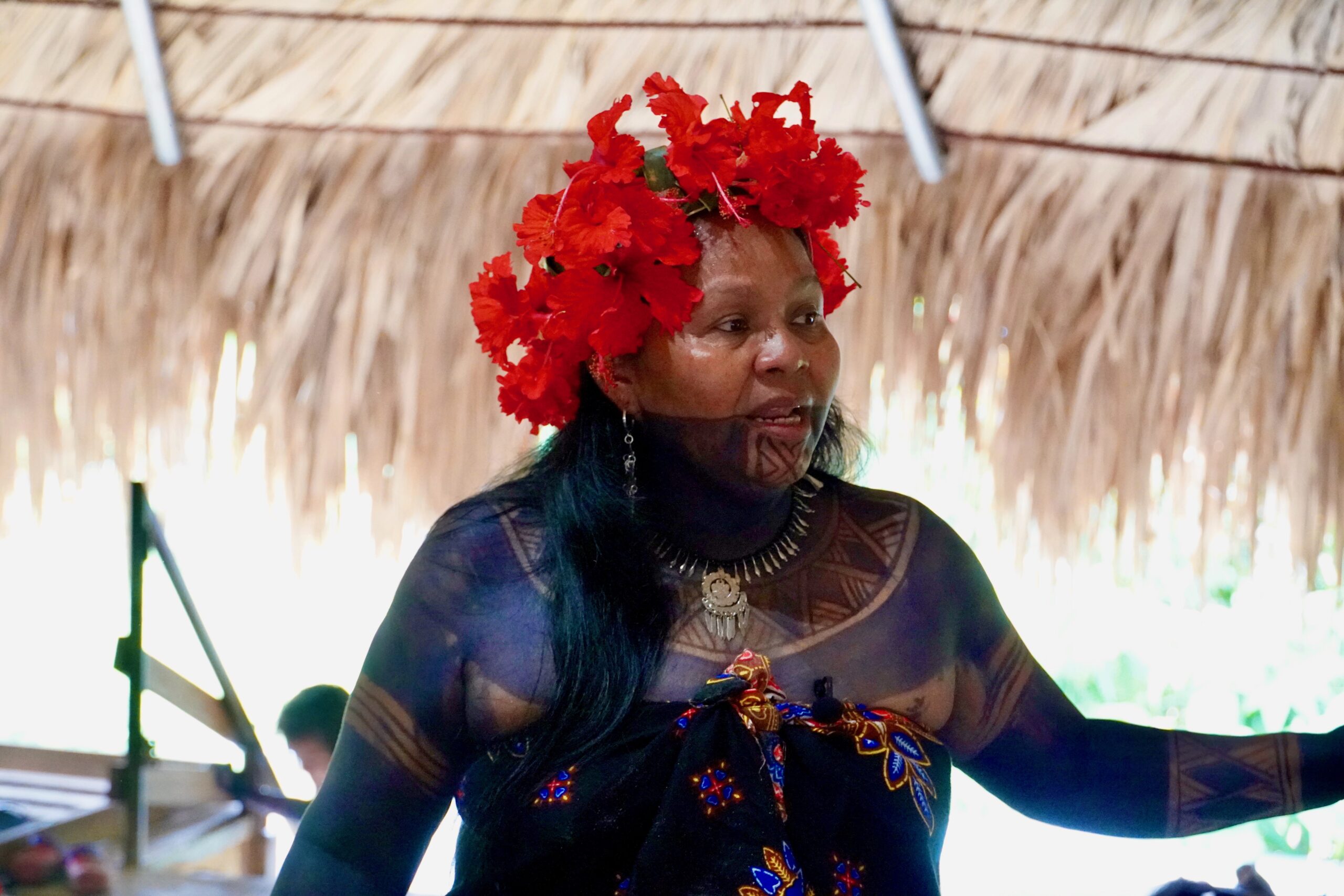
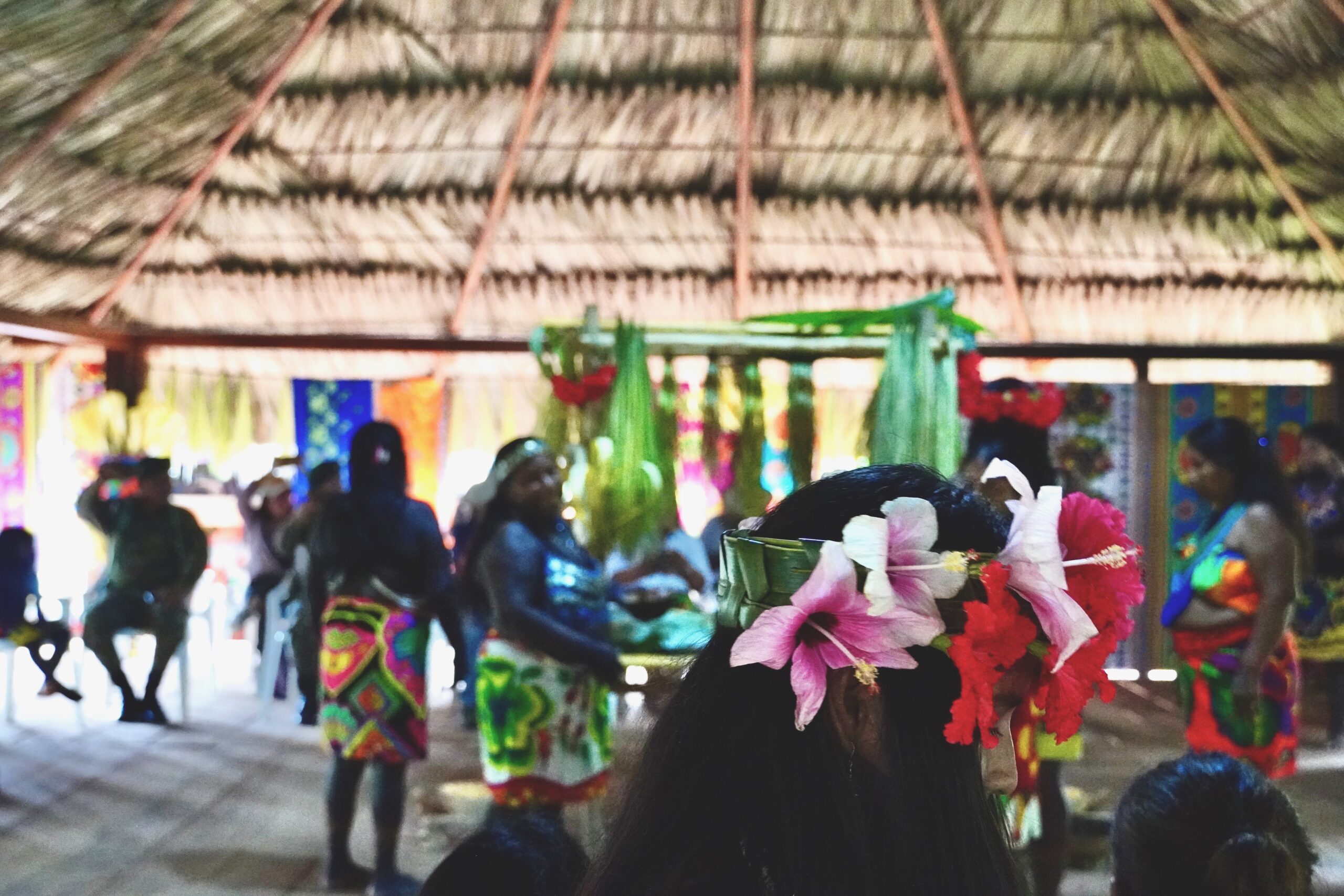
Embera face and body painting is linked to their cosmovision. It is one of the most important manifestations of their culture. Painting each other’s skin expresses the relationships between the members of the community, where each plant, each animal, and each element has a place in their cosmovision and a reason for being. 

Methodology and database 

The methodology developed in the pilot project presents a tool to provide Indigenous women with an organized and authentic vision of their culture to enhance social cohesion, transmission to youth, communication, and generation of economic activity. 

The guide establishes three main categories of cultural references:  

  • The body  
  • The structures and dynamics of community life  
  • Relationships in the territory and with the land of their ancestors.  

Everything points to a continuum between nature and culture, natural order and social order, and individual and community. In addition, time and the calendar occupy a prominent place as a meta-element. Time, in this case, is presented as the way to move forward, to develop the rescue of cultural references. 

We also produced twelve audiovisual references of the Emberá Ipetí community with accompanying texts and created a Database of Cultural References of the Indigenous Peoples of Panama where these resources are classified and can be accessed. 

In this series of videos, the women of the community explain and demonstrate their knowledge, including: 

  • Baby ritual (Warrazaque) 
  • Cultural house (Wera de) 
  • Rice ball (Bododji) 
  • Collection of chunga (Iwa / Nawal, Jupijapa, Carludovica palmata) 
  • Dyeing of the chunga (Iwa Zoadia) 
  • Senora Nely’s basket (Hösig di) 
  • Body painting (Kiparada Odia / Jawa) 
  • Preparation of pumpkin (Zan Dodi Karea) 
  • Preparation of corn (Be badia) 
  • Preparing the sacred space (Dau Zadia Jaibana) 
  • Opening of the room (Chimbombom / Karidia Werada) 
  • Spiritual cleansing (Dau Zadia) 

Watch the videos here: (in Spanish) 

“We Indigenous women need organizations, like the [Indigenous] Foundation, that give us hope, that give us confidence to continue challenging the process of social construction of Indigenous women, because many times when we do not have that confidence, we do not have those strategic allies. There are many people who continue speaking on behalf of Indigenous women and that is what we are not looking for. Maybe we have been able to reach their thoughts and their hearts and to be able to implement this great project of the needs and aspirations of Indigenous women, so that this knowledge can be transmitted from generation to generation,” says Omaira. 

Future pilots will be carried out with other Indigenous communities of Panama to expand the Database of Cultural References and involve more Indigenous women in the cultural restoration process for empowerment, the transmission of knowledge to future generations, and for the promotion of economic activity.  

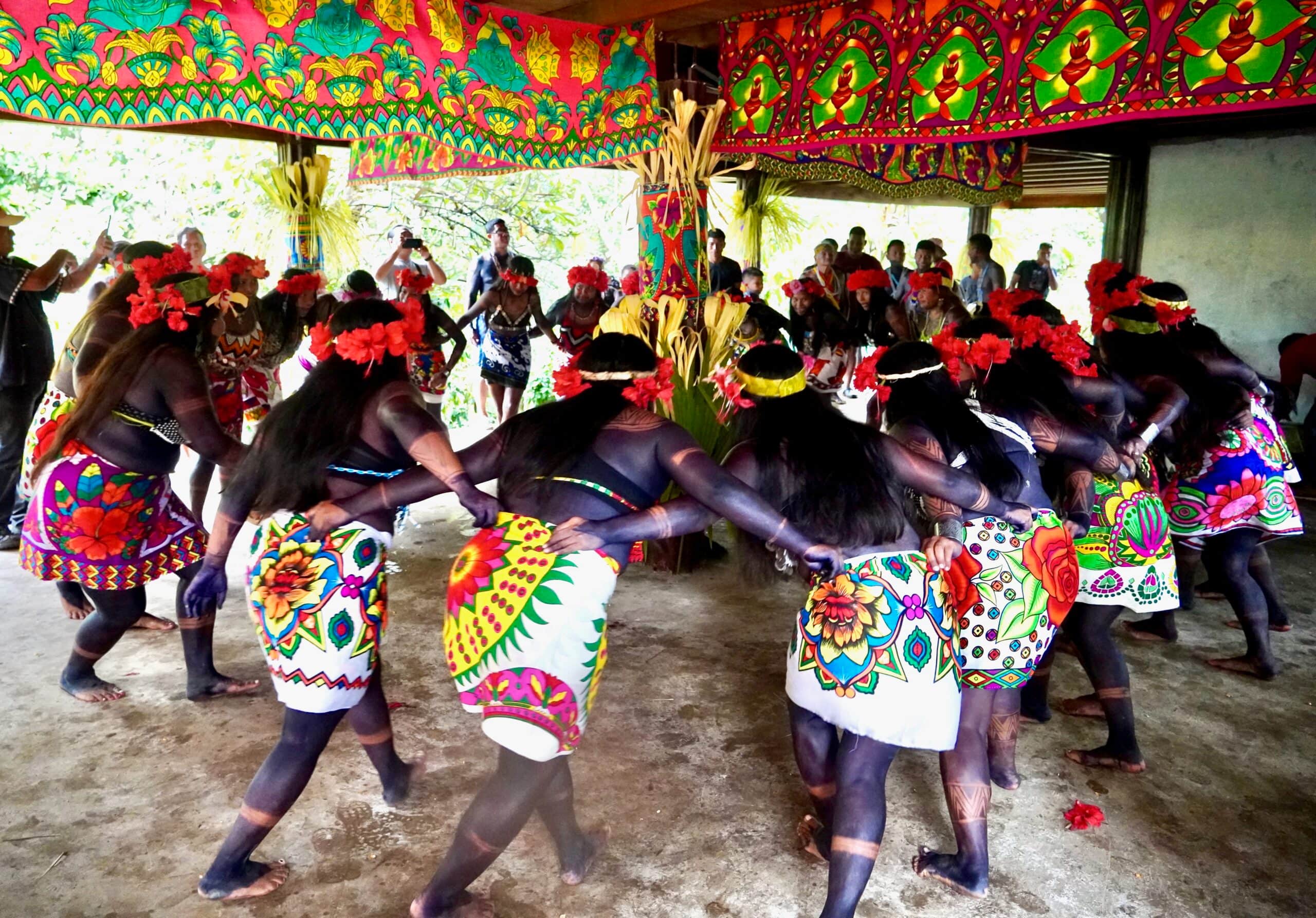
There are different forms of cultural houses: the bat house, with a trunk in the center, representing men, and the women’s house, without a trunk because the women support themselves collectively. For the Emberá community it is important to take good care of nature and build the house with love, for the good of the new generations.