Babbel partners with the FSC Indigenous Foundation to facilitate English language learning with Indigenous Peoples
Language is a tool that empowers and promotes participation in crucial global discussions.
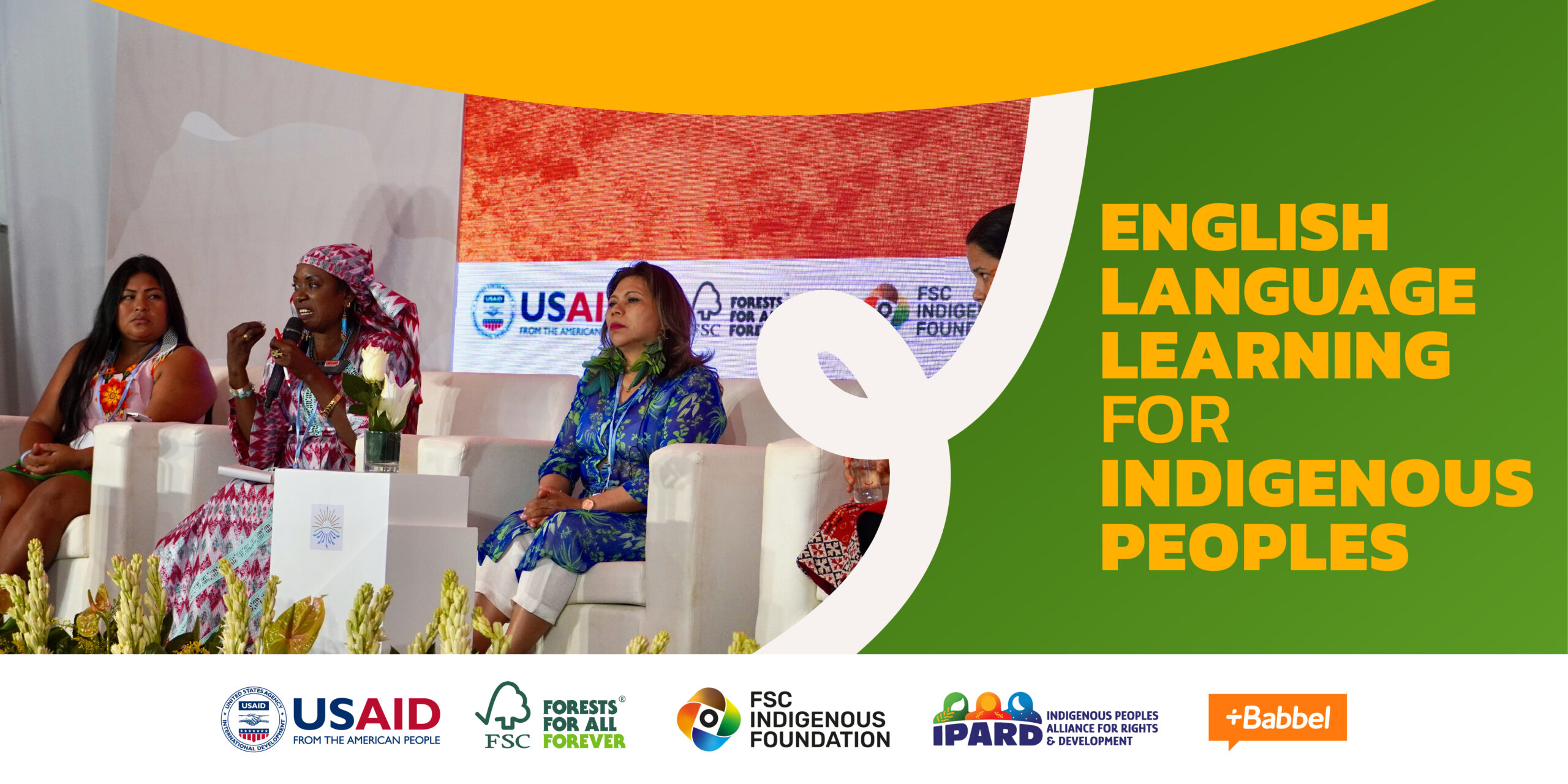
Panama / Berlin, November 14, 2023 – The FSC Indigenous Foundation, a global Indigenous organization working with and for Indigenous Peoples worldwide, and Babbel, the world’s leading language learning platform, announce a partnership to offer English lessons to Indigenous Peoples around the world.
Babbel will support Indigenous Peoples with the self-paced learning app as well as its live classes with teachers to learn English, so they can actively participate in international events and meetings, and get access to more opportunities for the benefit of their communities and the planet. English will make it easier for them to find information on activities that improve their lives and territories.
Babbel’s purpose is to create mutual understanding through language. In addition to providing a platform for millions of learners who want to learn new languages and get to know cultures, the company is committed to making a positive impact on the world, reducing the environmental footprint and fostering diversity, inclusion and equality.
“For the Indigenous population, English is a language that we must master to have better communication and promote our agenda, this strengthens the economy in tourism, environmental management and all issues related to international cooperation,” said Florita Martínez, a Bribri Indigenous leader from Costa Rica and member of the Coordinating Committee of Women Territorial Leaders of Mesoamerica (CMLT).
“This would be a very fundamental initiative for the Ipeti Embera Artisan Women’s Association to improve communication with visitors and strategic allies,” said Omayra Casama, President of the Ipeti Embera Artisan Women’s Association (AMARIE), an Indigenous women’s organization in Panama.
With nearly two billion speakers worldwide, English is the official language of 55 countries and is spoken widely in over 100. These numbers are growing. It is predicted that by 2050, half the world will speak English. Indigenous Peoples should be included in this worldwide trend as their perspectives and knowledge are crucial in important global discussions from climate change to business, tourism, and culture.
“I think that the English language is dominating the world, we have to prepare ourselves as Indigenous Peoples and also prepare the youth to continue defending our territories,” said Briceida Inglesias, wise woman of the Guna people, Panama, and member of the Coordinating Committee of Women Territorial Leaders of Mesoamerica (CMLT).
Babbel is supporting the FSC Indigenous Foundation, as a partner in the Indigenous Peoples Alliance for Rights and Development (IPARD) Program, in strengthening Indigenous Peoples’ English skills by granting licenses to leaders and youth around the world who wish to learn with Babbel’s ecosystem and live classes (Babbel Live). IPARD is funded by the United States Agency for International Development (USAID) and the Forest Stewardship Council (FSC) and other private sector partners.
“At Babbel, we believe that language shouldn’t be a barrier, but a bridge to connect people around the world. Our goal is to make language learning easy, effective and flexible, so businesses and organizations can communicate better with international clients and partners, and thrive in the global market. We’re here to support people in breaking down language barriers and achieving success in our interconnected world. That’s why I’m very excited to start this collaboration with the FSC Indigenous Foundation”, commented Cristian Silva, responsible for this partnership at Babbel.
We will soon share information about the application process for English lessons.

About Babbel
Babbel develops and operates an ecosystem of interconnected online language learning experiences and is driven by the purpose of creating mutual understanding through language. This means building products that help people connect and communicate across cultures. The Babbel App, Babbel Live, Babbel Podcasts and Babbel for Business products focus on using a new language in the real world, in real situations, with real people. And it works: Studies by linguists from institutions such as Michigan State University, Yale University and the City University of New York demonstrated the efficacy of Babbel’s language learning methods.
The key is a blend of humanity and technology. Babbel offers more than 60,000 lessons across 14 languages, hand-crafted by 200 didactics experts, with user behaviors continuously analyzed to shape and tweak the learner experience. This results in constantly adapting, interactive content with live classes, games, podcasts, and videos that make understanding a new language easy, from Spanish to Indonesian.
Because Babbel is for everyone, its team is as diverse as its content. From its headquarters in Berlin and its U.S. office in New York, 1,000 people from more than 75 nationalities represent the backgrounds, characteristics, and perspectives that make all humans unique. Babbel sold over 10 million subscriptions by creating a true connection with users
More information: www.babbel.com
About the FSC Indigenous Foundation
The FSC Indigenous Foundation is a global Indigenous organization with a mission, values, and actions driven by, for, and with Indigenous Peoples. We work to elevate Indigenous Peoples in their contribution to the protection of Mother Earth and recognize them as providers of solutions and partners to fight against global challenges.
We envision a future where Indigenous-led solutions and actions, generated within one-quarter of the planet, safeguard the future of everyone and our planet. To reach this goal, we support Indigenous Peoples’ self-development, self-governance, and self-reliance through Indigenous-based solutions, multi-sectoral partnerships, and funding.
The FSC Indigenous Foundation is committed to capacity development for Indigenous Peoples and stakeholders. We know that development, leadership, management, technical, and negotiation skills are key to building capacities to protect Indigenous Peoples’ rights, territories, and livelihoods. Developing skills and capacities is essential when working with Indigenous Peoples, as this will allow them to negotiate, participate, and influence decision-making process on their own conditions.
More information: www.fscindigenousfoundation.org/
Contact: