

David Flood appointed as new chair of the FSC Permanent Indigenous Peoples Committee
FSC PIPC New Chairperson
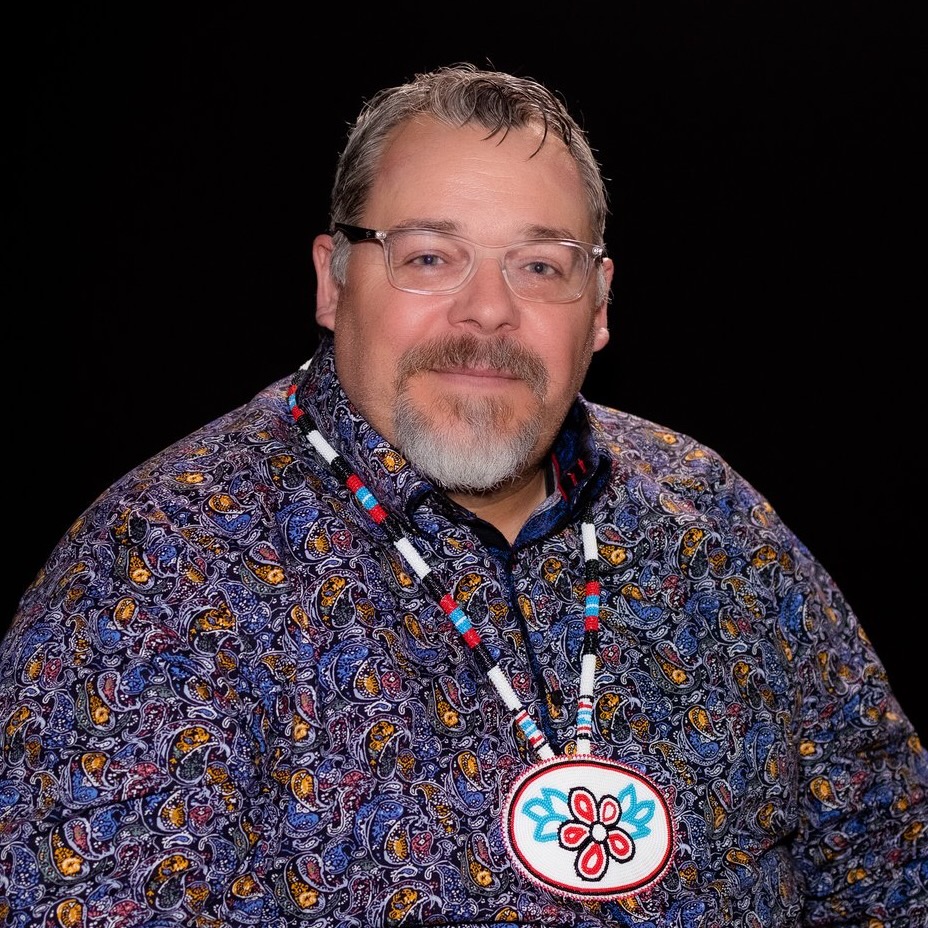
It is our pleasure to announce the election of David Flood, PIPC Representative for North America, Canada, as Chairperson of the FSC Permanent Indigenous Peoples Committee for the period of 2 years from 2026 – 2028.
The role of the PIPC is to be a global advisory committee to advise the FSC International Board on the FSC certification system, safeguard Indigenous Peoples’ rights, enhance forest management, and support Indigenous Peoples in building FSC certified forest stewardship, increasing their market share and value.
As part of how the PIPC operates, members elect a chair every two years to ensure continuity, shared leadership, and ongoing support for the committee’s work.
“It is with much gratitude that we receive David Flood as the new PIPC Chairperson. His election as Chair is an indication of how indigenous values guide the work of the PIPC, indigenous leadership has always been a shared role and PIPC has demonstrated this by electing David and ensuring continuity of leadership. We welcome David in his new role and look forward to working with him to ensure indigenous voices and values are clearly articulated and acted upon in FSC.” – Minnie
Reflections from David Flood
Stepping into Leadership:
David Flood is a Registered Professional Forester (RPF) and steps into the role of Chair with a strong awareness of the relationships that shape the PIPC’s work. Having been part of the committee for just over a year, he has focused on understanding how the PIPC interacts with the FSC Indigenous Foundation Council, the Secretariat, and FSC International governance. He sees the Chair’s role as helping to navigate and strengthen these connections, while ensuring that the PIPC remains an effective advisory body within the broader FSC system.
Further more, he recognizes that this responsibility extends beyond institutional coordination.
“There’s a lot of dynamic relationships. And meanwhile, we’re supposed to, across eight regions of the world lead indigenous international change to uphold UNDRIP and FPIC as it relates to the standard and the good governance in forestry and in the spirit of a reconciliation, at least in Canada, we use the word reconciliation. In other parts, it’s justice,” shares David.
His experience with FSC began in 2007, when he worked as an auditor under the Rainforest Alliance. One of his early assignments involved an Iisaak (Nuu-chah-nulth word meaning “respect or appreciate”) forest which was deemed to be 51% owned by Indigenous people. As David described, it was “the first of its kind forest tenure shift where the forest was owned by the Indigenous people,” emerging from sustained efforts to change how the land was managed.
While this transition represented an important milestone, the audit revealed that management practices had not evolved at the same pace. As he noted, “they just took the old name off and put a new name on, and they kept all the managers the same,” with the forest continuing to operate under industrial systems. This highlighted the gap between changes in ownership and meaningful shifts in governance and decision-making.
The audit process identified major non-conformances, which led to the suspension of the FSC certificate. Reflecting on this, David emphasized that “a suspension is a big deal,” underscoring both the rigor of the FSC system and the challenges involved in aligning practice with Indigenous-led approaches.
The experience became a defining moment in David’s engagement with FSC. It shaped his understanding of both the potential and the limitations of certification systems, and the importance of ensuring that Indigenous leadership is meaningfully reflected not only in ownership, but also in how forests are governed and managed over time.
In the years that followed, David remained engaged with FSC through standard development processes and governance roles, including his time on the FSC Canada Board and his membership in the Indigenous chamber in Canada for over a decade to date. These experiences contributed to his view of aligning FSC systems with Indigenous values, leadership, and decision-making.
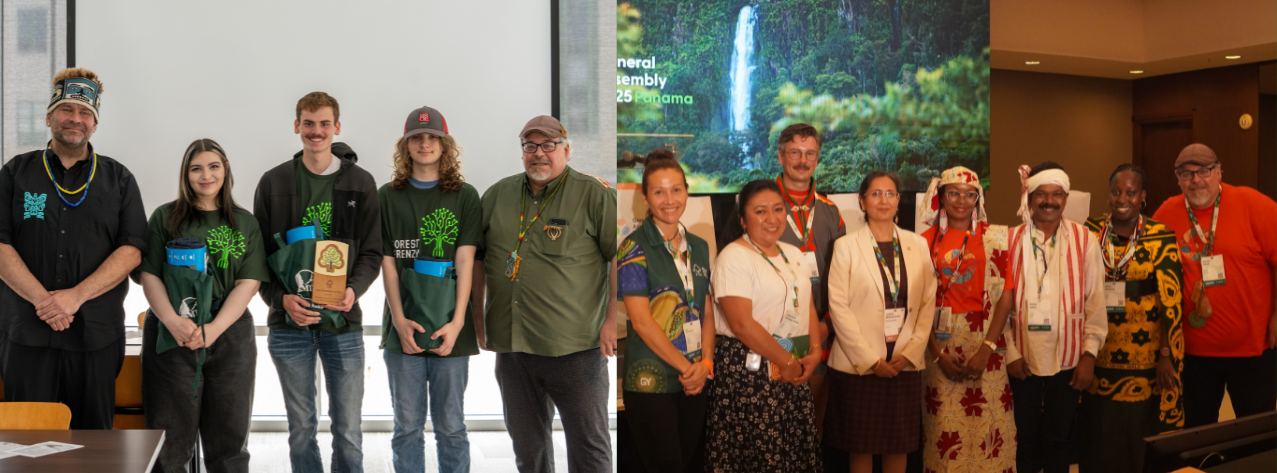
Last year, in 2025, David stood alongside the Menominee People to celebrate a shared vision of forest stewardship, and participated in a side event at the FSC General Assembly in Panama on FSC’s Principle 3, while also engaging in Indigenous-led discussions around a fourth chamber in proposed Motion 5.
Looking ahead: A shared vision
David sees the PIPC as a platform made up of Indigenous leaders who bring lived experience and a strong commitment to creating change. Supporting initiatives that reach communities on the ground remains central to this vision.
At the same time, he recognizes the broader context in which this work takes place. Efforts to uphold Indigenous Peoples’ rights are happening within complex global systems, where the scale of challenges often exceeds the reach of any single organization. Within this reality, the PIPC and the FSC Indigenous Foundation continue to play a focused but meaningful role, working together alongside FSC to help advance change and strengthen the recognition of Indigenous Peoples’ rights.
The work is not only about governance, but about contributing to a larger movement.
As David expressed, it is about continuing to “shine the light in the darkness of colonialism,” while ensuring that “Indigenous Peoples remain a key component in FSC.”
David Flood, RPF
The election was conducted last 19 February 2026 with all members of the PIPC joining online. We extend our gratitude to Ms. Alina Santiago for serving as Chairperson for the past period.
“While 2025 was a difficult year for the Foundation, we were lucky to have you as the Chairperson of the PIPC. Your leadership helped us through a difficult phase and we hope that as we move forward you will continue to be there to provide advice. Thank you, and as my people say MABUHAY! (long live!)” – Minnie Degawan