

WWF & AJET’s Report on Indigenous Peoples and Just Energy Transition
Report and webinar on Indigenous Peoples and Just Energy Transition.
On December 10th, the World Wildlife Fund (WWF), together with Alliance for a Just Energy Transformation (AJET), launched the report “Indigenous Peoples & Just Energy Transition,” supported by the FSC Indigenous Foundation.
Webinar’s highlights:
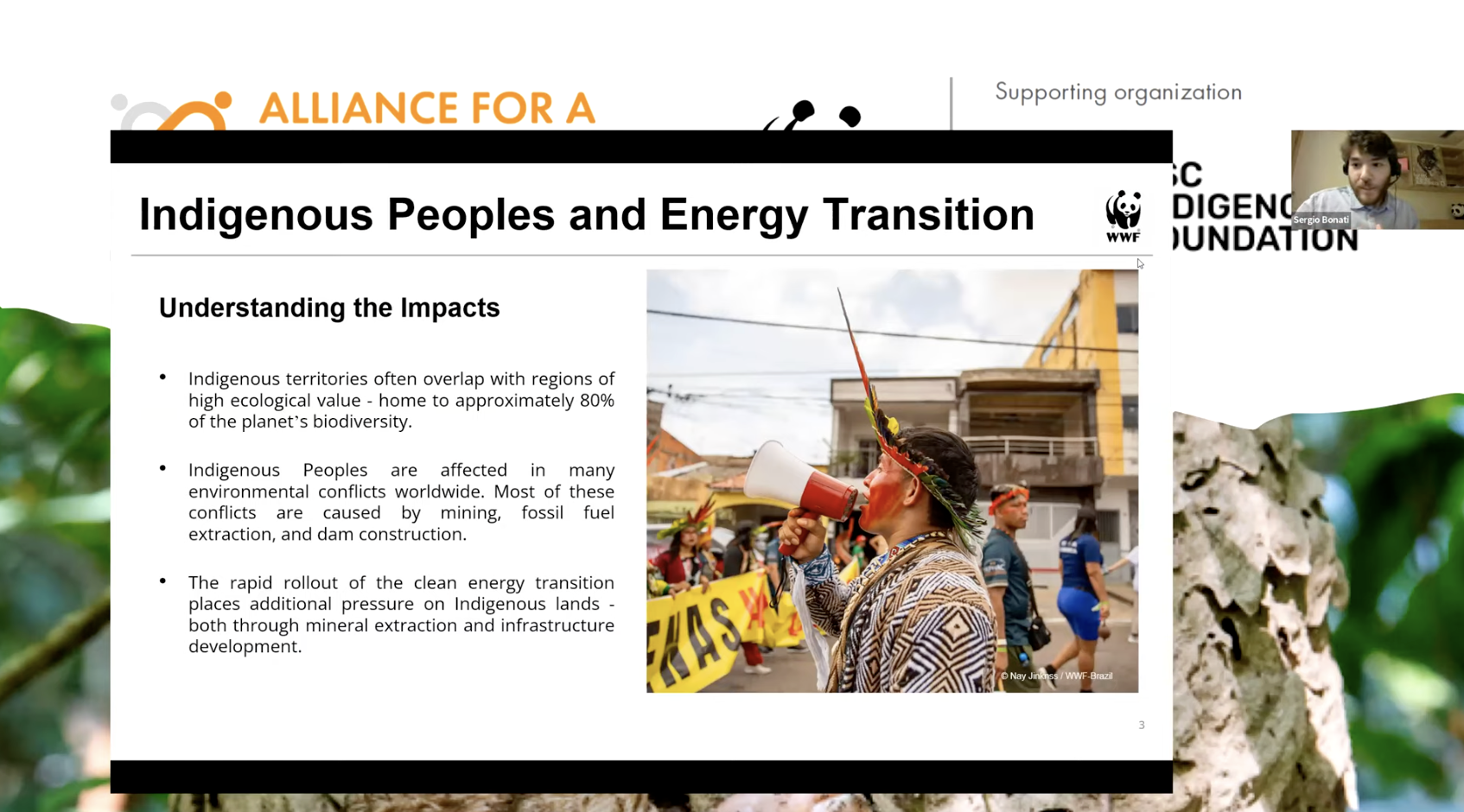
Sergio Bonati, Climate and Energy Officer in WWF Spain, positioned the report as a foundation for continued AJET work, provided policy recommendations like upholding Indigenous rights including FPIC, and shared two case studies from the report:
- “Solar Grandmothers” in Madagascar—local women trained as solar engineers.
- The Sámi in the Arctic facing disrupted reindeer migration routes due to mining, climate change, and renewable energy infrastructure.
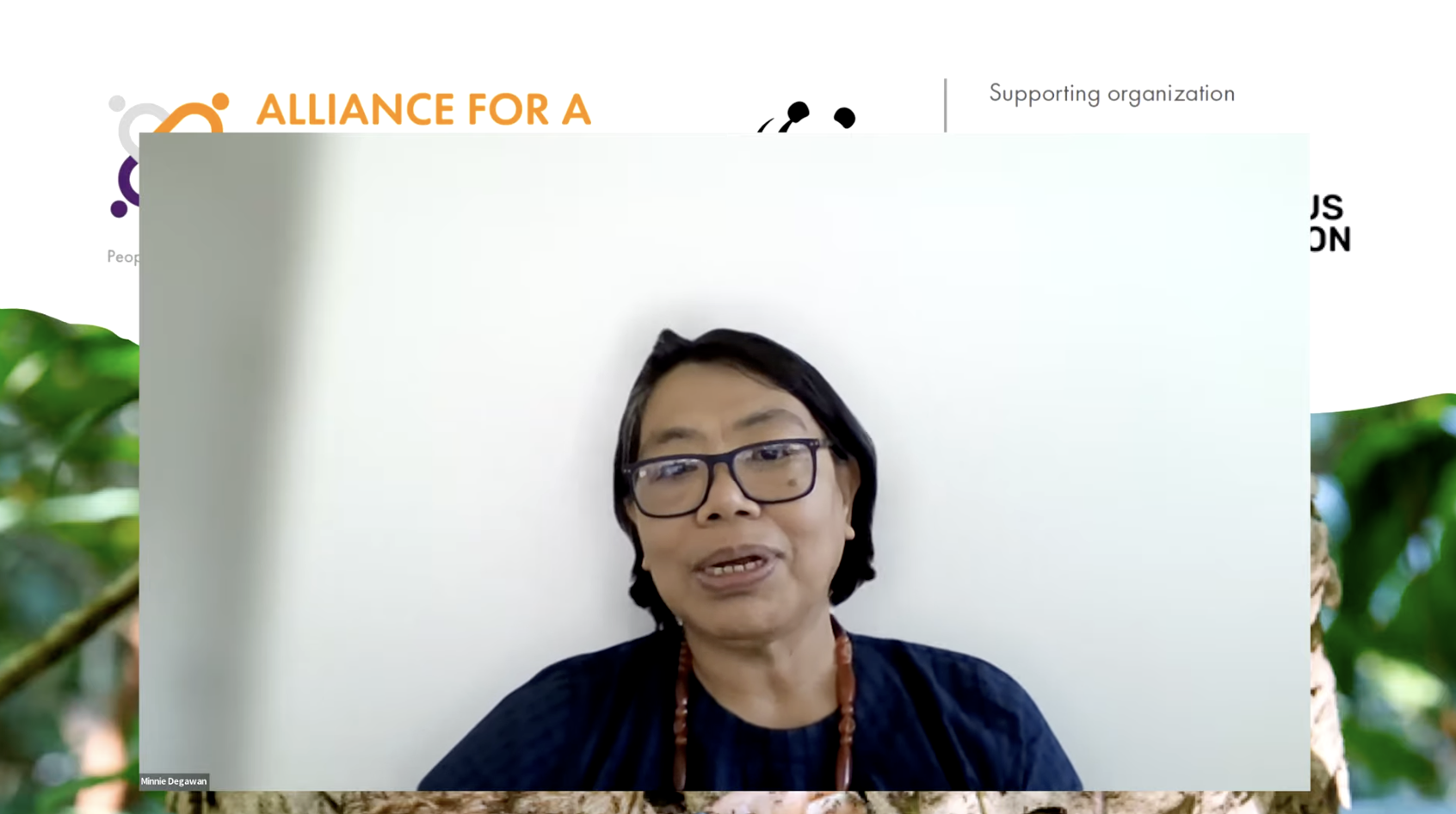
Minnie Degawan (Kankanaey-Igorot) Managing Director of the FSC Indigenous Foundation:
- Reflected on Human Rights Day, pointing out ongoing violations such as criminalization of Indigenous defenders.
- Warned against a “green transition” that harms Indigenous peoples through mineral demand or poorly planned renewable projects.
- Urged a narrative shift and invited partners to see Indigenous inclusion not as a cost, but a path to sustainable outcomes.
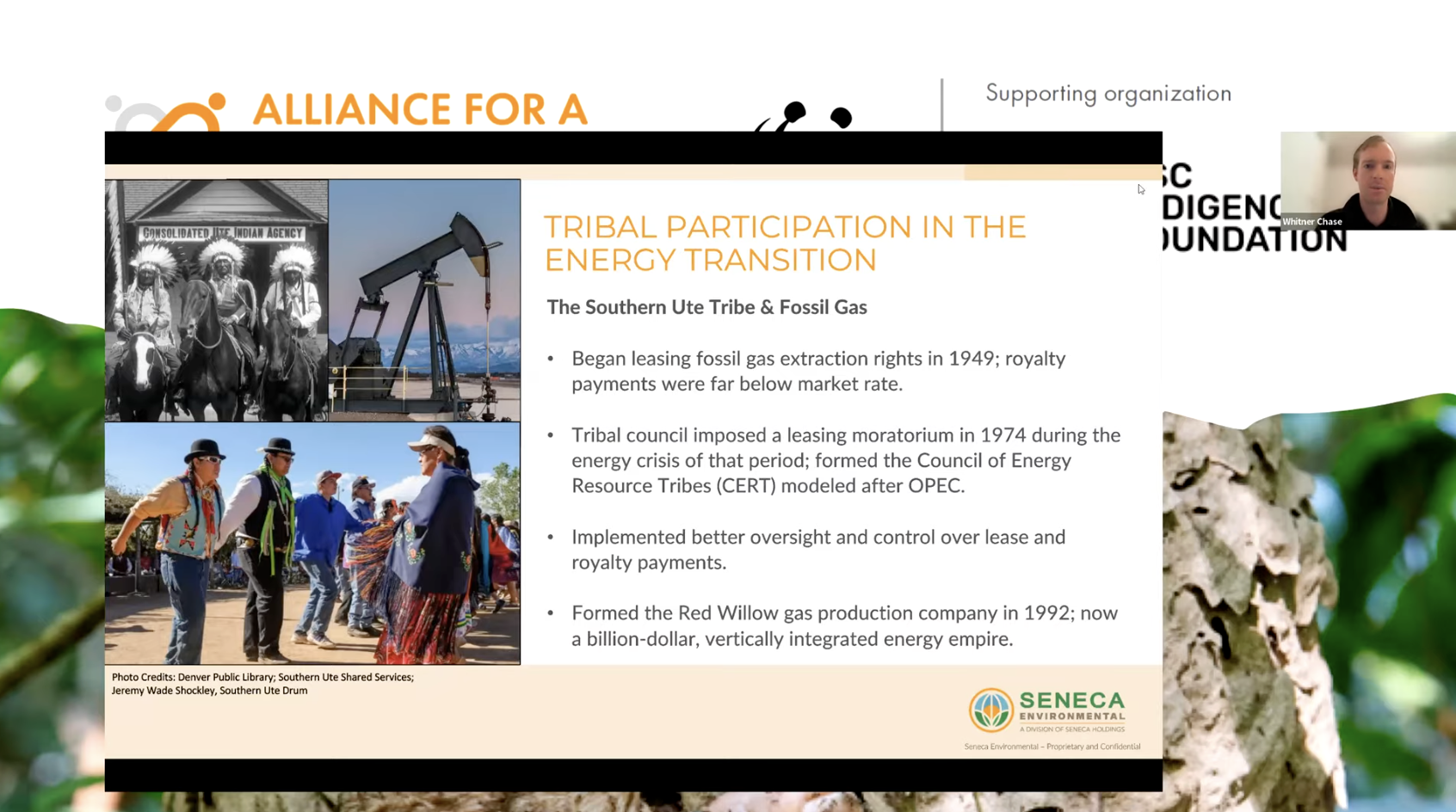
Whitner Chase, Senior Manager at Seneca Environmental:
- Explained how Seneca Environmental helps bring tribally owned renewable energy certificates (RECs) to market, connecting tribal projects with corporate buyers.
- Encouraged collaboration and highlighted the economic and sovereignty benefits of tribally owned clean energy projects.
- Shared present-day success stories from large-scale solar projects providing revenue and jobs to wind energy serving thousands of homes and reducing reliance on fossil gas.
Bryan Bixcul (Maya-Tz’utujil), Global Coordinator at SIRGE Coalition:
- Described ongoing fights from governments pushing to remove references to mining impacts to the Indigenous movement continuing to advocate for no-go zones, FPIC, and protection mechanisms.
- Shared key COP30 achievements for Indigenous peoples:
- Explicit recognition of rights to self-determination.
- First-ever UNFCCC recognition of Indigenous peoples in voluntary isolation.
- Reference to the UN Guiding Principles on Business & Human Rights, creating obligations for companies—not just states.
Dean Cooper, Global Energy Lead, WWF, provided the opening and closing remarks:
- Framed the report as a tool to raise awareness and promote Indigenous engagement as partners, not stakeholders, in the energy transition.
- Reiterated that the report is the beginning, not the end, of this work.
- Highlighted key themes raised:
- Energy, climate, and nature are interconnected.
- Indigenous rights and land stewardship are central, not optional.
Learn how you can be part of the Alliance for a Just Energy Transformation here.
Questions and Answers from the webinar:
Q: Thank you for the report. When will it be available in Spanish?
A: Many thanks for your question. We have not planned for a translation at the moment. But please check AJET’s and WWF’s web page and social media for any news on translation. Thanks!
Q: What an excellent point that relationships are expected from Indigenous Peoples perspective; and a keen insight that shifting the narrative is necessary. Is there an agreed-upon approach to ensure consistency around this message as it pertains to FPIC?
A: As the report highlights there is a plurality of contexts and therefore there can be no one template for FPIC, each community has its own protocol and this must be respected. What is essential is the recognition that Indigenous Peoples are diverse and therefore building respectful relationships is essential.
Q: Clean energy certificates can sometimes replicate the problems of carbon offsets, allowing companies to buy credits instead of reducing their own emissions. What safeguards are in place to prevent certificates from becoming another loophole that lets firms keep polluting?
A: We see clean energy certificates as an effective tool to enable the development of new renewable energy projects and we believe that indigenous communities should be able to access this revenue stream as easily as other renewable energy asset owners. However, all of our customers have comprehensive climate strategies, of which the purchase of clean energy certificates is pursued alongside internal emission reduction efforts.
Q: The success story from Native America is very interesting, and I believe the ability to become a land or company owner is essential. Do you think other countries—where legal rights to land are contested by the government—could move in a similar direction? And are there any other lessons to be learned from those community?
A: Absolutely – to both of your questions! There are far too many lessons to be learned in a 10-minute presentation! Feel free to reach out at wchase@senecaenvironmental.com for any further discussion in your specific context.
Q: How can youth get involved 🙂
A: You play a key role by engaging your communities and carrying Indigenous knowledge and priorities into global spaces. You can reach out to the International Indigenous Youth Forum on Climate Change (IIYFCC) and help shape climate and energy solutions grounded in rights, culture, and self-determination.
Q: Whitner, could we get in touch with SENECA through you?
A: Yes, feel free to reach out at wchase@senecaenvironmental.com
Access the shared presentations here.
🔗 Watch the webinar on YouTube:
How to Enable Automatic Translation for YouTube Subtitles
- Click the Settings ⚙️ icon (bottom-right of the video).
- Select Subtitles/CC.
- Choose the available subtitle language first (often English (auto-generated)).
- Open Settings ⚙️ again → click Subtitles/CC → choose Auto-translate.
- Select your preferred language from the list (+80 languages, including Indigenous languages like Maori and Quechua)
- Not all mobile devices show the option the same way; sometimes you must update the app.