
Indigenous land, our future
The FSC Indigenous Foundation will attend the UNCCD COP16 to promote Indigenous land rights and solutions to combat desertification
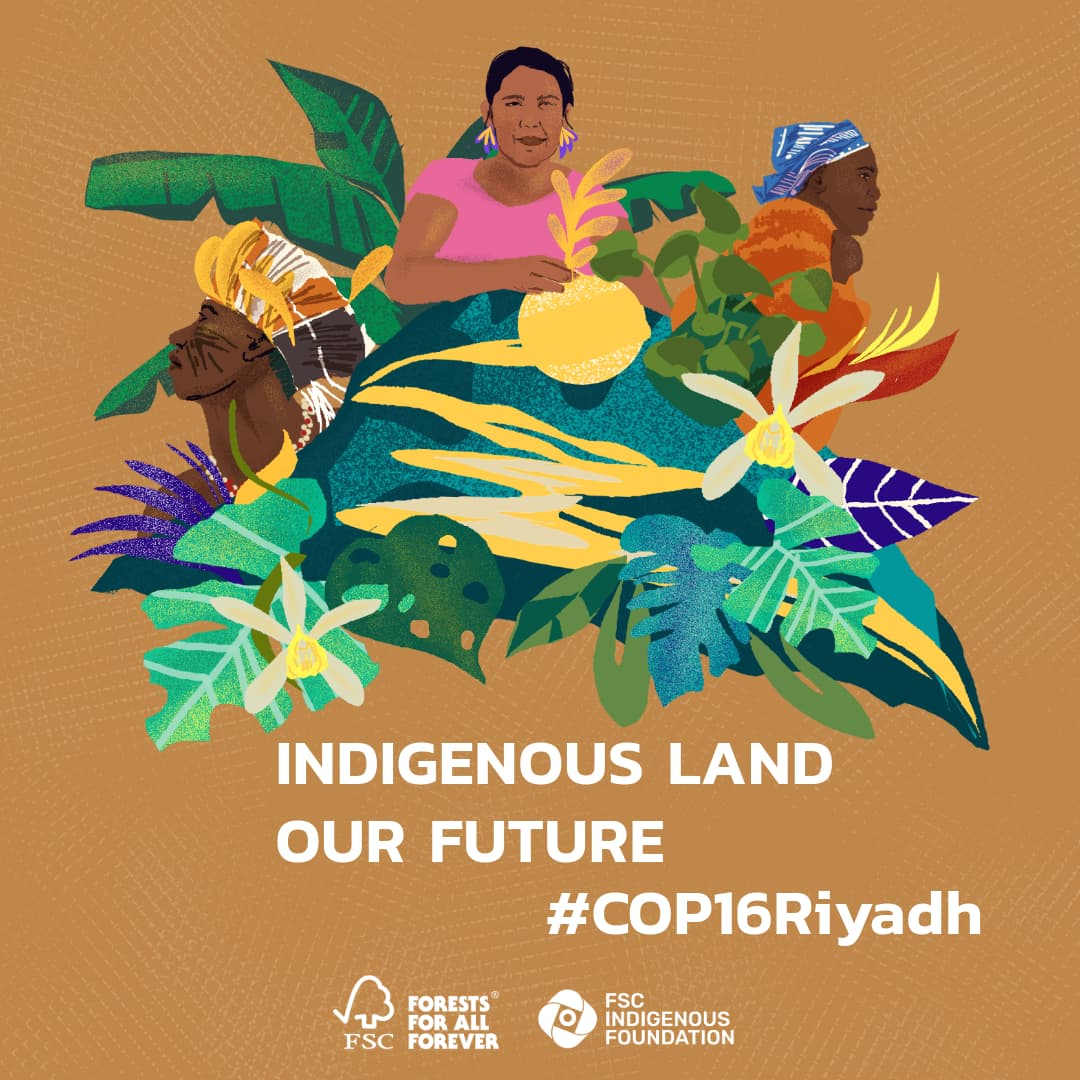
“But Mother Earth – it’s us. It is everything that we belong to and that belongs to us,” says Niila Inga of the Saami People and a member of the Forest Stewardship Council (FSC) Permanent Indigenous Peoples Committee, reflecting Indigenous Peoples’ deep spiritual connection with Mother Earth.
We see the land not as a resource to be exploited, but as a living, integral being that sustains all life and ensures the balance of ecosystems. It is the foundation of our identity, our culture, and our survival. It is through our connection to the land that Indigenous Peoples secure the future of our planet and for us all.
However, Indigenous communities often face threats to their land rights that hinder their ability to implement sustainable land practices effectively. Protecting Indigenous land rights and supporting their knowledge systems through partnerships and investments is crucial for addressing environmental challenges like desertification and drought.
For these reasons, the FSC Indigenous Foundation (FSC-IF) will actively participate in the 16th Conference of the Parties (COP16) of the UN Convention to Combat Desertification (UNCCD) in Riyadh, Saudi Arabia, from December 2 – 13, 2024. This crucial conference will unite leaders from governments, the private sector, civil society, and global stakeholders to accelerate progress in sustainable land management and combat the growing threat of desertification.
At COP16, we will promote Indigenous land rights as a key solution to combat desertification, influence global climate policies, and engage stakeholders to foster new collaborations and resource mobilization.
Our work for land rights
The FSC Indigenous Foundation is advancing Indigenous land rights and governance through a variety of global initiatives.
In partnership with the Fund for the Development of Indigenous Peoples of America (FILAC), we have conducted studies on Indigenous land rights across Latin America and are expanding our research into Africa, providing critical data for advocacy. We are supporting Indigenous communities in remedy processes, where rights to land have not been respected previously.
We also support Indigenous governance by supporting traditional authorities and communities develop Charters of Rights, which help consolidate Indigenous governance in both recognized and unrecognized territories. For territories yet to be recognized, the Charter can become a valuable instrument and tool for advocacy. With territorial regulations aligned with their cosmovision and values, Indigenous communities can better steward their land and natural resources and grow businesses aligned with their worldviews.
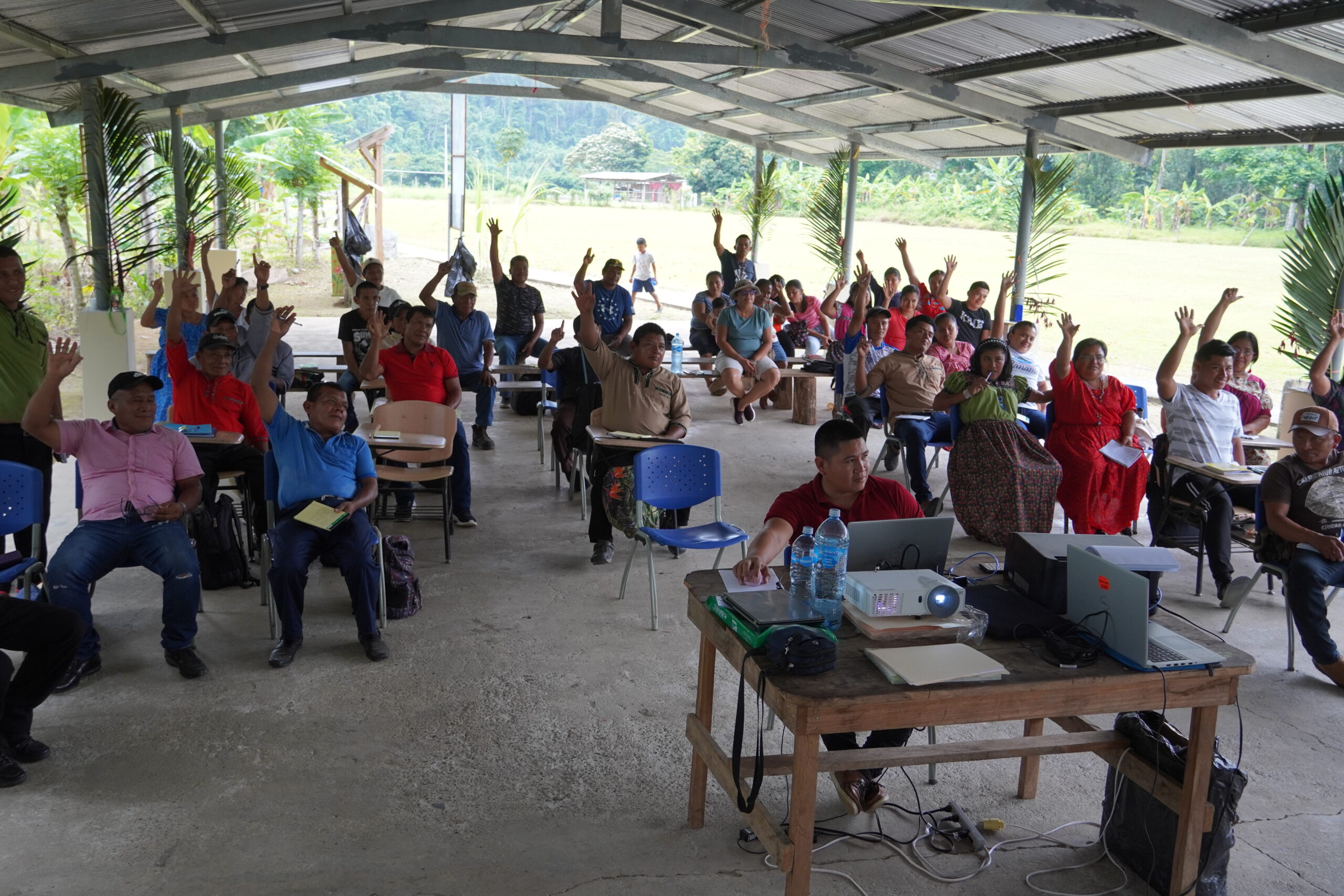
In Panama and Honduras, we are helping to advance policies that support Indigenous economic empowerment, land rights, and the Free, Prior, and Informed Consent (FPIC) processes. In Kenya, we are facilitating dialogue between the Ogiek Peoples and government institutions to align policies with Indigenous rights.
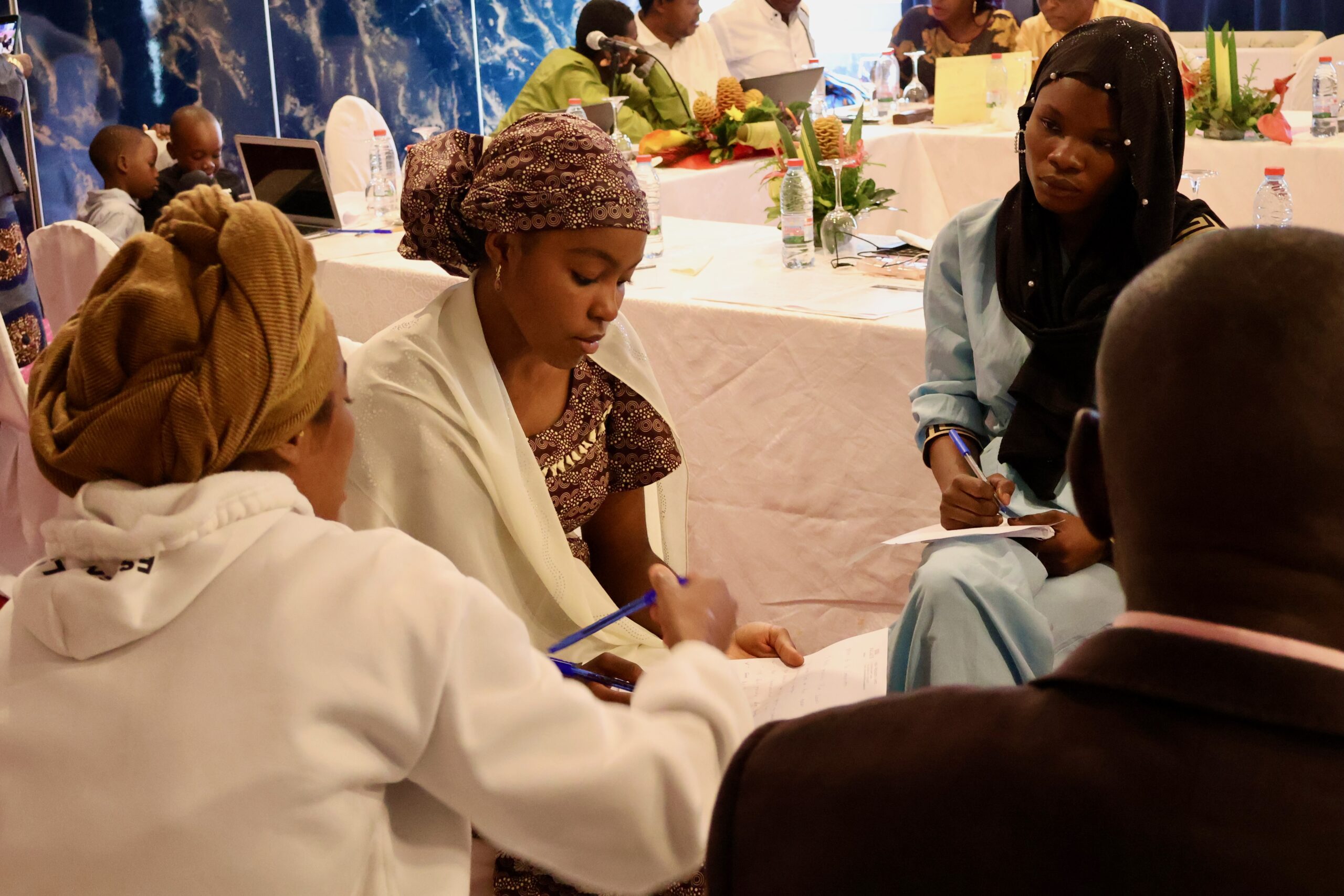
In Central Africa, we partnered with the regional network REPALEAC to organize a participatory mapping workshop, where 50 participants from eight countries developed a system for monitoring and collecting data on the rights, culture, lands, and territories of Indigenous Peoples, supporting REPALEAC’s goal of securing 4 million hectares of land by 2025.
Get involved
Indigenous Peoples are not just victims of land degradation but are integral to its solution. Indigenous land rights, traditional knowledge, and cultural landscapes offer powerful solutions to desertification and climate change. Protecting these rights and community land stewardship is key to restoring ecosystems, fostering resilience, and ensuring the future of all life on Earth.
Join us at COP16 and beyond as we bring Indigenous solutions to the center of global climate dialogues. Together, we can create a future where people and Mother Earth thrive in harmony.
Stay tuned for updates and reach out to us at fsc.if@fsc.org to get involved.