

Newsletter: COP30 Outcomes Report
Key outcomes that matter for Indigenous forest stewardship
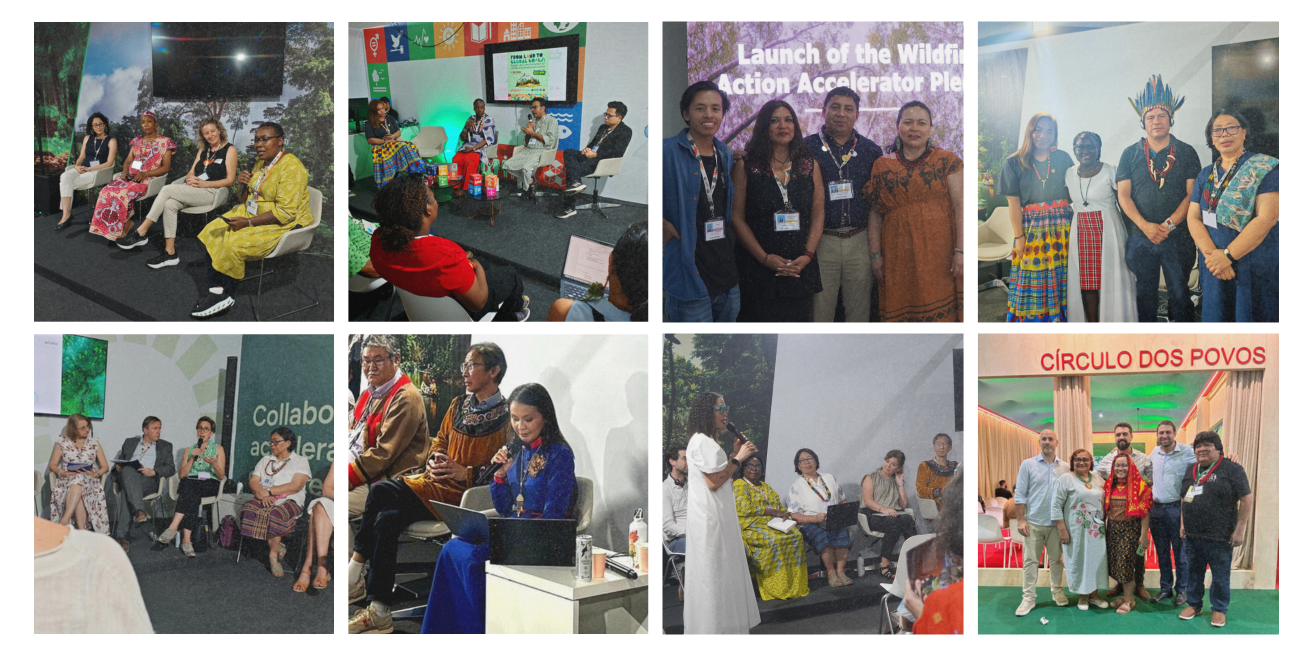
The Forest Stewardship Council and the FSC Indigenous Foundation worked together during COP30, collaborating on side events, engagement activities with strategic allies, spaces for dialogue, and other coordination actions to highlight Indigenous priorities and strengthen their participation and advocacy.
COP30 is over, but its impact will be decided in implementation. Today, we break down the outcomes for forests and Indigenous Peoples: what shifted, what to watch, and what it could unlock if finance and policy are delivered with rights, transparency, and Indigenous governance at the center.
Highlights of the report:
Forest Finance Breakthroughs: TFFF + Tenure Pledges
COP30 announced new resources for standing forests and land tenure—implementation and safeguards will determine whether communities benefit.
Key points:
- Tropical Forest Forever Facility (TFFF) in plain language: long-term, results-based payments; early capitalization; commitment share for Indigenous Peoples and local communities.
- Forest and Land Tenure Pledge: donor/philanthropy funding to advance legal recognition, demarcation, governance reforms, and community-led conservation.
- Intergovernmental Land Tenure Commitment: country commitments to secure hectares by 2030; why collective tenure matters.
Global Mutirão: From Negotiation to Mass Mobilization
COP30 elevated Mutirão as a model for collective action. Its impact will depend on whether communities have real control, rights, and resources.
Key points:
- What is Global Mutirão? Meaning and origins; a framework for collective mobilization beyond formal negotiations.
- Why it matters for Indigenous Peoples: validates communal stewardship and traditional ecological knowledge; invites Indigenous and Afro-descendant peoples into climate action pathways.
- What success looks like: financing, technical support, recognition of land and tenure rights, respect for Indigenous governance, and protection against extractive pressures.
The Implementation Era: Adaptation, Loss & Damage, Gender—and Who Gets to Decide
COP30 advanced frameworks, but participation, direct access, and rights-based safeguards will determine real impact for communities.
Key points:
- Adaptation: Global Goal on Adaptation indicators and political signals to scale finance; risks of voluntary/weak indicators and uncertain funding.
- Loss & Damage: progress on coordination and technical assistance; persistent gaps in rights-based safeguards, direct access for Indigenous Peoples, and governance inclusion.
- Belém Gender Action Plan (BeGAP): recognition of Indigenous women; success depends on meaningful decision-making power and financing access.
Article 6 & Carbon Markets
International carbon markets are moving into implementation, strong safeguards, FPIC, and tenure security are essential.
Key points:
- Opportunities: potential resources for forest protection and restoration if designed with strong rights and environmental integrity.
- Risks: non-permanence, double counting, weak additionality; displacement/injustice without FPIC, tenure security, and fair benefit sharing.
- Guardrails: FPIC, land rights, Indigenous governance, community-defined benefit sharing, transparency, grievance and remedy.
Matters relating to Finance
Finance remains a decisive factor in turning climate commitments into real action.
Key points:
- Loss & Damage Fund: Rapid operational progress; USD 817.01M pledged; 2026 workplan focuses on faster, accessible grants with strong safeguards.
- GCF improvements: Faster approvals/disbursement, stronger direct access support, inclusion of Indigenous Peoples, better risk management, align with Belém Gender Action Plan.
- Adaptation Fund & GEF: AF expanding locally led adaptation but short of USD 300M target; GEF exceeded GEF-8 target and delivered 1.85B tCO₂ reductions (by June 2025), urging strong GEF-9 funding and Indigenous/gender safeguards.
FSC-IF Engagement in COP30 Side Events
Side events made rights, tools, standards, and direct finance concrete, and built partnerships for what happens next.
Key points:
- FSC-IF joined 8 COP30 side events centering Indigenous rights, FPIC, and leadership in forest stewardship and climate action.
- Called for equitable, direct, predictable climate finance, removing barriers linked to land rights and self-determination.
- Stressed credible sustainability standards through continuous improvement, grievance/remedy, and capacity building.
- Highlighted community forest management (with data ownership under FPIC) and Indigenous leadership in wildfire prevention/response/restoration with rapid financing.
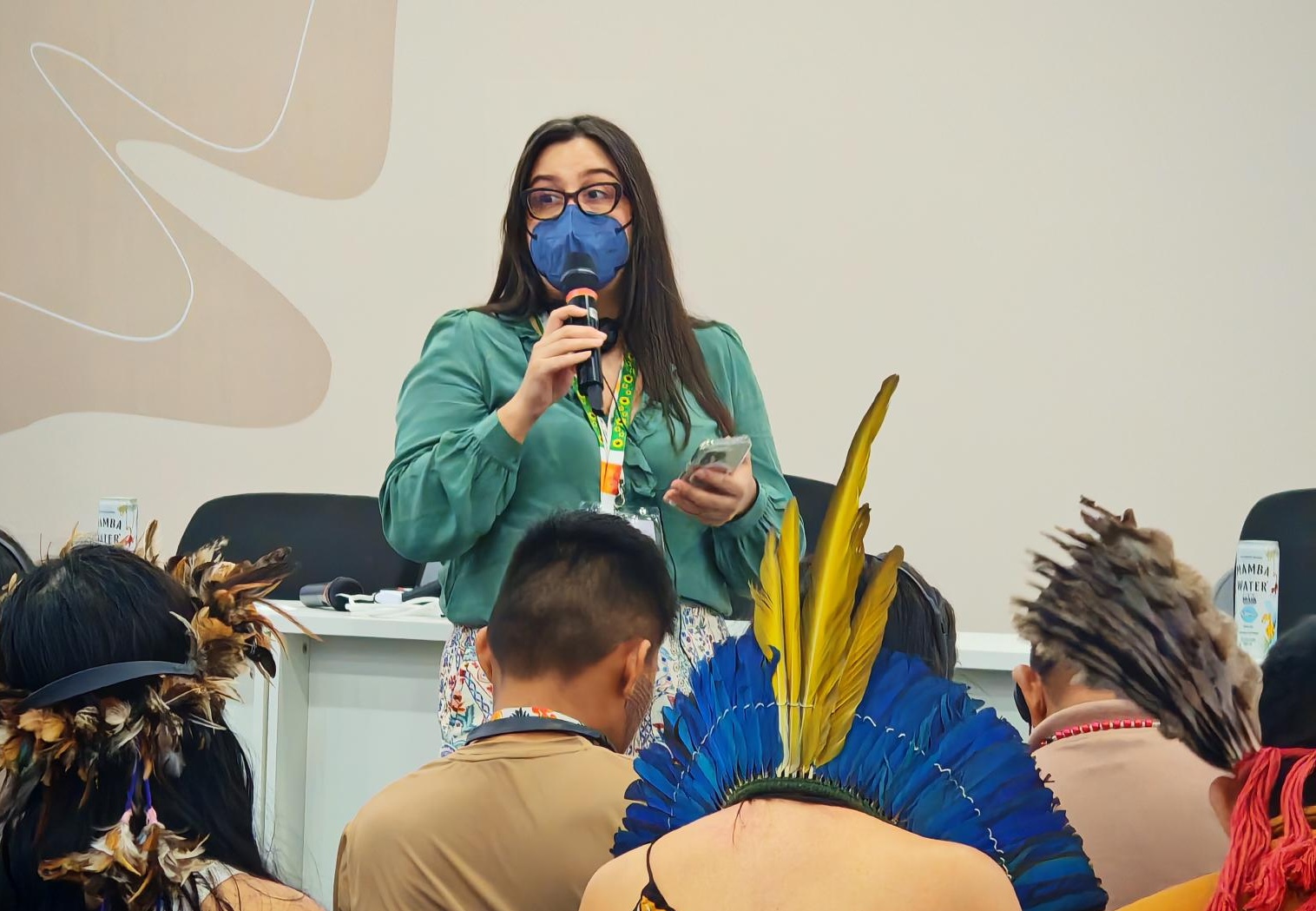
If you wish to engage in the UNFCCC, learn more about the Indigenous Peoples Caucus!
Within the UNFCCC process, Indigenous Peoples participate collectively through the International Indigenous Peoples Forum on Climate Change (IIPFCC), commonly referred to as the Indigenous Peoples Caucus.
- It is the official coordination body for Indigenous Peoples participating in UNFCCC sessions, including COP, SB sessions, and related climate negotiations.
- It brings together representatives from Indigenous organizations, nations, communities, and global/regional networks.
- Why it exists:
- To provide a unified voice for Indigenous Peoples in global climate decision-making.
- To protect Indigenous rights and promote Indigenous-led climate solutions.
- To track, interpret, and influence negotiation text across agenda items (mitigation, adaptation, finance, Article 6, loss & damage, etc.).
Learn more about the IIPFCC: https://www.iipfcc.org/
If you are young and want to participate, learn about the International Indigenous Youth Forum on Climate Change here.